Artificial intelligence is advancing quickly, and its physical footprint is expanding at the same rate. In the UK, AI growth is no longer constrained only by software capability or hardware availability, but increasingly by electrical infrastructure and heat rejection capacity within data centers. The densities now being deployed are exposing hard limits in grid connection capacity, electrical distribution design, and cooling systems.
Inside modern facilities, the shift is evident. Sites designed for steady enterprise workloads are being adapted for sustained high-density AI training and inference. Rack power densities have increased sharply, along with thermal output, and many UK data centers were not engineered for continuous operation at these levels. Electrical distribution systems and mechanical plant are operating closer to design thresholds as a result.

Achieving efficient data center cooling
Grid reality
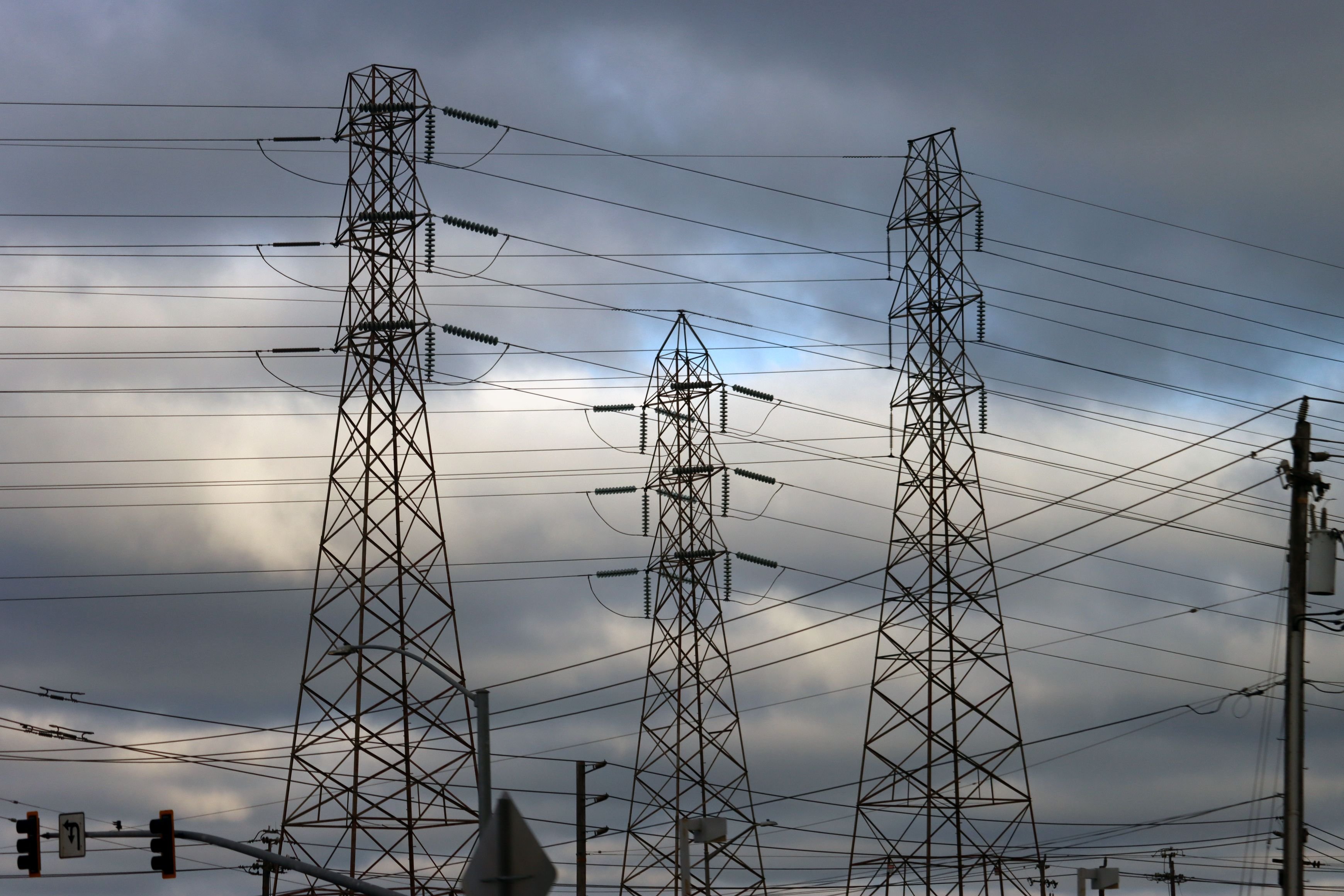
In established data center corridors such as West London, grid capacity is tight. Securing new high-voltage connections for large-scale deployments can take years, with some projected connection dates extending into the early 2030s. These timelines directly influence expansion strategy and capital planning.
The limitation is not generation alone. Transmission constraints, substation reinforcement programs, and local distribution upgrades all shape delivery schedules. Although renewable generation is increasing nationally, routing firm capacity into dense urban clusters remains technically and administratively complex. Grid reinforcement operates on multi-year planning cycles that do not align easily with AI deployment schedules.
Meanwhile, AI-driven demand continues to increase. Modern GPU-based training environments commonly operate between 60kW and 80kW per rack, with specialist configurations exceeding 100kW. Traditional enterprise racks historically operated at 5kW to 10kW, representing an order-of-magnitude shift within a similar footprint. This increase fundamentally alters facility design assumptions.
The electrical implications are significant. Transformer capacity, switchgear ratings, busbar systems, and UPS topology require reassessment under sustained high load conditions. Distribution systems designed for lower densities may not tolerate continuous 80kW racks without redesign. Backup generation strategies must also adapt as peak load profiles and runtime expectations change.
The mechanical challenge is equally demanding. Conventional air-cooling struggles at higher heat flux, where airflow volume and heat transfer limits are reached quickly. Containment design and chilled water systems operate with reduced tolerance margins under sustained AI loads. Liquid cooling is therefore becoming standard in AI-focused deployments because it supports higher heat density and tighter temperature control at rack level.
Retrofitting liquid cooling into brownfield facilities is rarely straightforward. Structural loading limits, ceiling height constraints, plant headroom, and pipe routing considerations can make adaptation costly and operationally disruptive. In some cases, the engineering scope approaches that of a new-build facility.
Efficiency before expansion
In a constrained grid environment, increasing supply is only part of the solution. Managing demand through computational efficiency is equally important.
Advanced GPU hardware frequently runs workloads developed for earlier processor generations. Without optimization, applications may perform redundant calculations, move unnecessary data across memory hierarchies, or underutilize available parallelism. The result is longer runtimes and higher cumulative energy consumption for the same analytical outcome.
Refining algorithms, improving memory utilization, and optimizing parallel execution can reduce compute time materially. Shorter runtimes translate into lower total energy consumption and reduced cooling demand across the facility. At higher densities, even modest percentage reductions in rack-level power relieve pressure on electrical distribution, cooling plant, and standby generation capacity.
Efficiency improvements also influence overall site performance. As rack densities rise and liquid cooling introduces additional pumping loads, maintaining competitive Power Usage Effectiveness becomes more challenging. Reducing IT load supports the wider energy profile of the building and can defer infrastructure upgrades where grid reinforcement remains uncertain.
Workload placement discipline
AI strategy also requires disciplined workload placement based on duty cycle and energy intensity. Cloud platforms provide rapid access to specialized hardware at scale and are well suited to experimentation and short-duration training runs, reducing immediate exposure to local grid limitations.
However, sustained training environments, predictable inference workloads, and regulated datasets may justify on-premises deployment. In these cases, infrastructure must be designed explicitly for high-density operation from the outset. Power distribution architecture, cooling topology, and resilience models need to reflect realistic load expectations rather than legacy enterprise baselines.
A hybrid approach becomes an engineering decision rather than a default position. Segmenting workloads by duration, density, and sensitivity allows organizations to distribute demand more effectively. This reduces pressure on constrained grid connections while maintaining operational control where required. Selecting infrastructure without analyzing duty cycle and energy impact risks embedding inefficiency at scale.
A systems-level response
AI infrastructure is narrowing the gap between software engineering and facilities engineering. Workload characteristics influence electrical capacity planning, while power density shapes cooling architecture and resilience strategy. Decisions in one domain now have measurable consequences in another.
Data centers operate within fixed electrical and thermal envelopes. As densities increase, coordination between software engineers, electrical designers, mechanical engineers, and energy planners becomes critical to avoid overprovisioned plant, thermal instability, or stranded capacity.
In the UK, where grid reinforcement progresses over extended timeframes, infrastructure decisions taken now will shape operational flexibility for years. Expansion based solely on adding more racks and more megawatts is unlikely to be fast enough or economically resilient under current conditions. Organizations that manage this transition effectively will combine high-density capability with disciplined efficiency and infrastructure planning grounded in realistic assessments of grid availability.
Power delivery and heat rejection now sit at the center of AI infrastructure strategy, and future growth will depend as much on engineering discipline as on computational capability.


Read the orginal article: https://www.datacenterdynamics.com/en/opinions/ai-growth-is-running-into-a-power-and-heat-constraint/