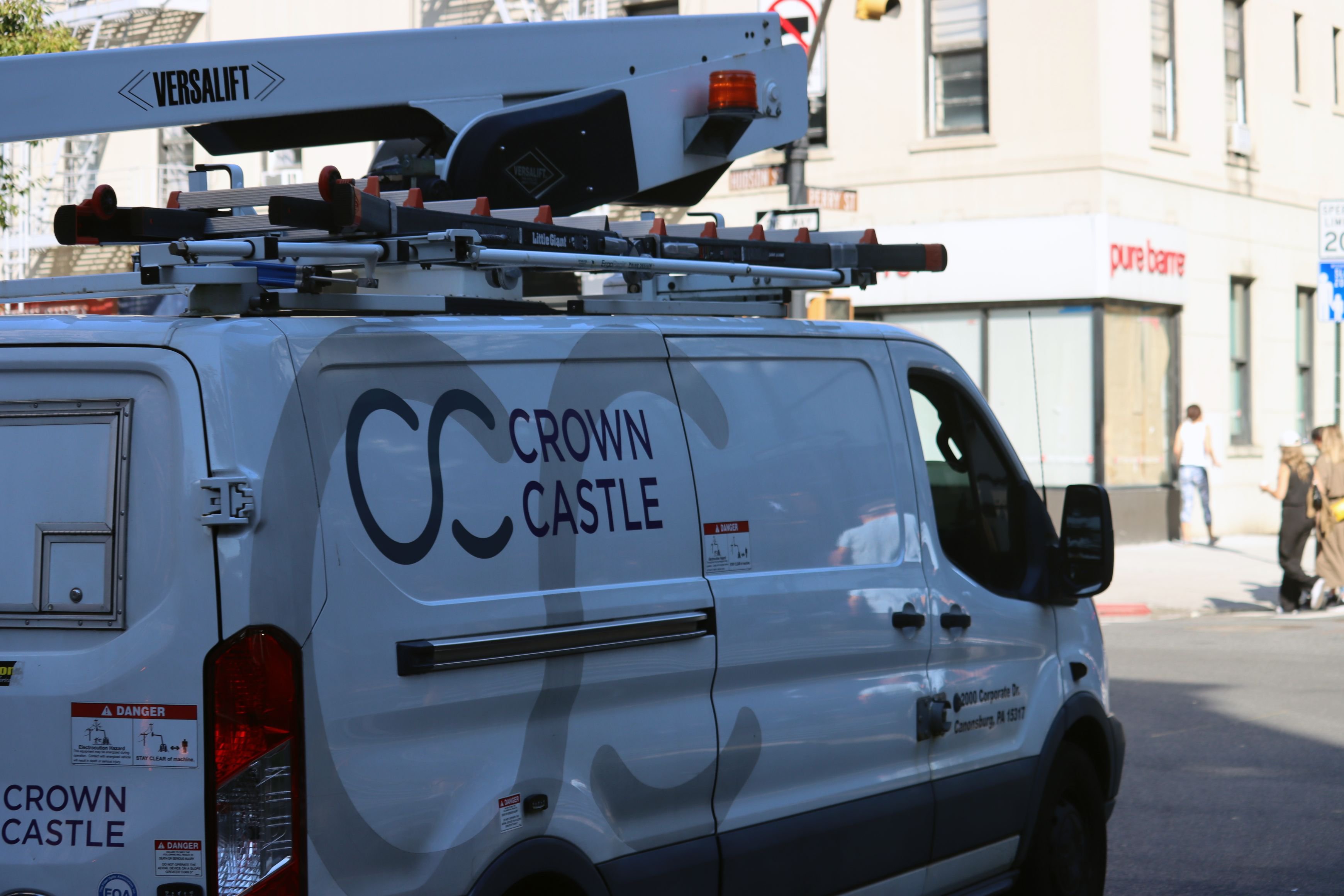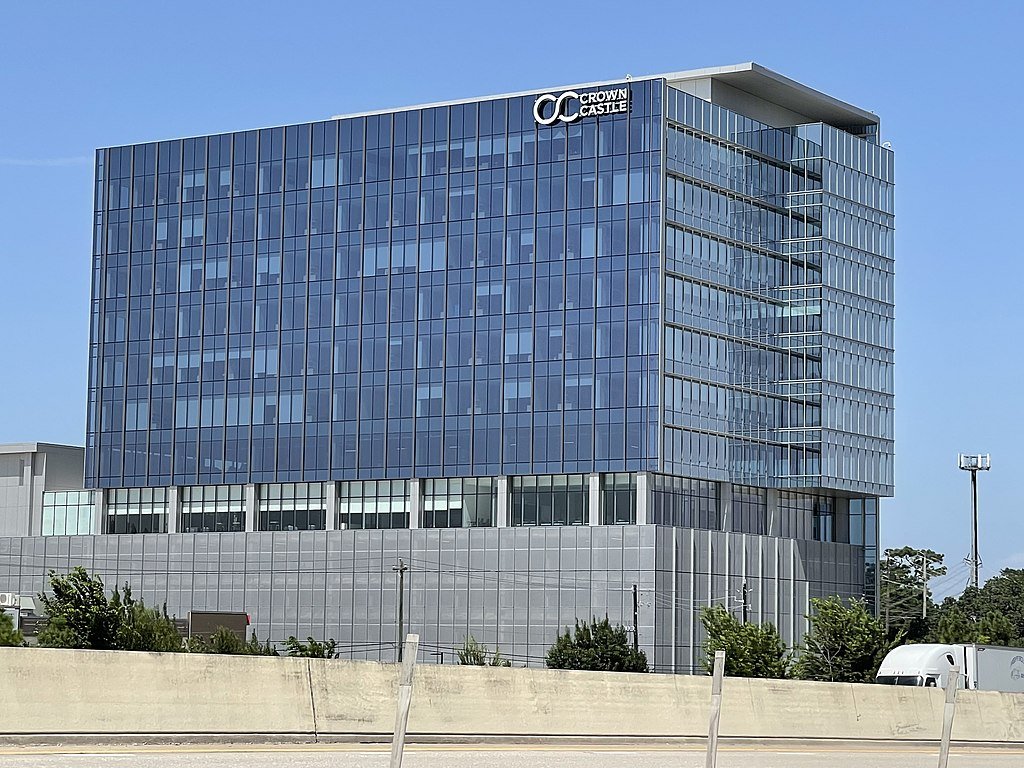
Crown Castle reported a decline in site rental revenues for the first quarter as the company vowed to continue pursuing Dish Wireless for tower payments.
The tower operator reported site rental revenues of $961 million for Q1, down five percent Year-on-Year (YoY).

Crown Castle noted that while organic contribution to site rental billings during the first quarter was $30m, or 3.1 percent organic growth, the company was hit by the Dish terminations.
According to the company, that financial hit was worth $49m during Q1, while there was also a $5m impact from Sprint cancellations.
Crown Castle terminated its wireless infrastructure agreement with EchoStar subsidiary, Dish, in January because Dish defaulted on payments. Dish said it was pushing to exit its leasing agreement with Crown Castle, following EchoStar’s decision to sell $40 billion of spectrum to AT&T and SpaceX.
In late August, AT&T announced it would pay $23bn to EchoStar to acquire approximately 30 MHz of nationwide 3.45 GHz mid-band spectrum and roughly 20 MHz of nationwide 600 MHz low-band spectrum for around $23bn in an all-cash transaction.
Just two weeks later, Elon Musk’s SpaceX struck a $17bn deal to snap up EchoStar’s AWS-4 (Advanced Wireless Spectrum) and H-block spectrum licenses.
Dish alleges that it was forced to sell those assets amid pressure from the Federal Communications Commission (FCC). Because of this, Dish sent two notices to Crown Castle informing the tower company that the sale of spectrum means its Master Leasing Agreement (MLA) and Master Product Agreement (MPA) held with the company “constituted force majeure.”
But Crown Castle disputes this and has filed a lawsuit against Dish, stating in February that Dish is still obligated to pay the company $3.5bn following the termination of the contract.
Pay up
Crown Castle isn’t alone in pursuing Dish, with other tower companies American Tower and SBA Communications also taking legal action over non-payments.
The impact of EchoStar’s ongoing payment disputes was outlined in a report commissioned by the Wireless Infrastructure Association (WIA) last month, via the Brattle Study Group. The report estimated this could cost the tower industry an estimated $9bn.
In the case of Crown Castle, the impact has even hit its workforce, amid plans to cut 20 percent of its tower and corporate workforce. At the time, Crown Castle said the layoffs had been accelerated because of Dish Wireless’s contractual default over tower rental payments.
During the company’s earnings call yesterday (April 22), CEO Christian Hillabrant reiterated that Crown Castle will push hard to make Dish pay.
“We are working diligently to preserve the value captured in our original Dish agreement from 2020. Along with the Wireless Industry Association, we have taken an active role in engaging with the relevant government authorities to ensure that Dish honors its commitments. We have also taken appropriate legal action,” said Hillabrant.
“After Dish defaulted on its payment obligations in January, we exercised our right to terminate the agreement, and we are seeking to recover the remaining payments they owed for the terms of the contract.”
Hillabrant adds that Crown Castle will “vigorously pursue a legal remedy in the federal courts” against Dish, while it’s also pushing back against “EchoStar for their role in helping Dish evade its contractual commitments.”
Despite the Dish dispute, Hillabrant is bullish about the company’s 2026 guidance.
“We delivered a solid first quarter and remain on track to achieve our full-year 2026 guidance,” said Hillabrant. “We have largely completed the separation of our fiber and small cell businesses and expect the sale to close in the first half of 2026. As we transition to a pure‑play tower company, we are focused on execution by driving operating efficiency, modernizing our systems, and increasing land ownership under our towers.”
Hillabrant said the company’s planned sale of its fiber and small cells assets is on track to be completed this year, as Crown Castle transitions to a “pure-play” tower company.
“With a clear standalone tower strategy, a disciplined capital allocation framework, and an investment‑grade balance sheet, we are well positioned to deliver attractive and sustainable shareholder returns.”
Opportunities at the Edge
Crown Castle also touched on opportunities around Edge compute during its earnings call.
Last month, Network World reported that Crown Castle is working with Available Infrastructure on its own Edge AI network. The initiative dubbed “Project Qestral” will see the establishment of 1,000 AI Edge locations in 100 US cities by the end of the year. The deployments will be colocated at Crown Castle’s telecom sites.
Hillabrant provided a bit more clarity around this partnership, highlighting that it’s currently part of a trial phase.
“On Edge data centers, I would characterize this as a trial phase. We have signed an additional partnership to test the waters. At Mobile World Congress, we saw a lot of interesting Edge use cases developing,” said Hillabrant.
“Our key is to utilize existing assets to drive new revenue streams with very little capital required—renting real estate is what we do. Most of our sites do have fiber backhaul, so there is ample ability to scale; we have ample fiber, ample power, and space, making speed-to-market attractive.”
The company’s interest in pursuing opportunities around Edge data centers is a stark contrast to its view in 2023, when then-CEO Jay Brown ruled out investing in data centers as part of its infrastructure portfolio.
But the emergence of Edge computing has gathered momentum in recent months, notably at last month’s Mobile World Congress (MWC), as telcos anticipate inferencing at the Edge for AI workloads.
Hillabrant added that Edge data centers are also less likely to irritate communities with the “NIMBY” attitude towards larger data center deployments.
“One advantage of Edge is the much smaller installations, so you typically do not see the same community pushback. You also get redundancy by distributing Edge compute across multiple locations, in addition to the low-latency benefits,” he said.
More in Investment / M&A / Financing




Read the orginal article: https://www.datacenterdynamics.com/en/news/crown-castle-counts-the-cost-of-dish-payment-dispute-but-identifies-opportunities-at-the-edge/