While you’ll often hear that the modern world won’t run without data centers, it’s just as true that the world won’t function without the fiber routes connecting people and their devices to those data centers.
And dotted along the world’s terrestrial fiber routes are thousands of tiny data centers that go unnoticed by the world and largely unmentioned even in the industry.
In-line amplifier sites, the shelters that host repeaters that strengthen signals along long-haul fiber routes, have remained largely unchanged since they were first deployed in the 1970s. In the age of AI, however, this largely forgotten part of the network may need an update.
What are In-Line Amplifiers and what do they do?
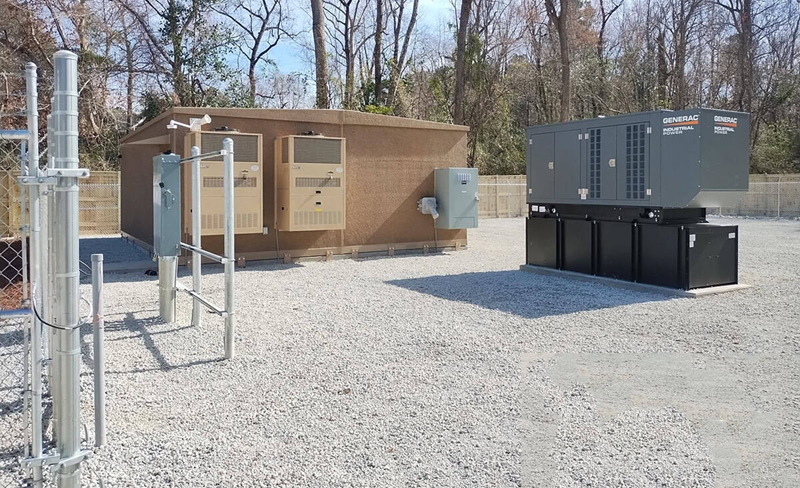
In short, an ILA site is a small network POP located along a long-haul fiber route. Its primary purpose is to provide space, power, and cooling infrastructure to support Inline amplifier hardware used within DWDM systems.

DCD Magazine #61 – Life and death on a tower
The cell tower climbers risking it all to help us stay connected
These ILA sites are located every 80–100km to compensate for signal attenuation and ensure network performance and reliability. They keep optical signals strong enough to travel hundreds of kilometers without needing to be converted back into electrical signals, allowing fiber networks to carry more data over longer distances.
The amplifiers inside these sheds, also known as repeater shelters, typically comprise small modules with coils of fiber infused with erbium isotopes, and are what give the huts their names. Lasers irradiate the isotopes, which release energy that re-powers the signal.
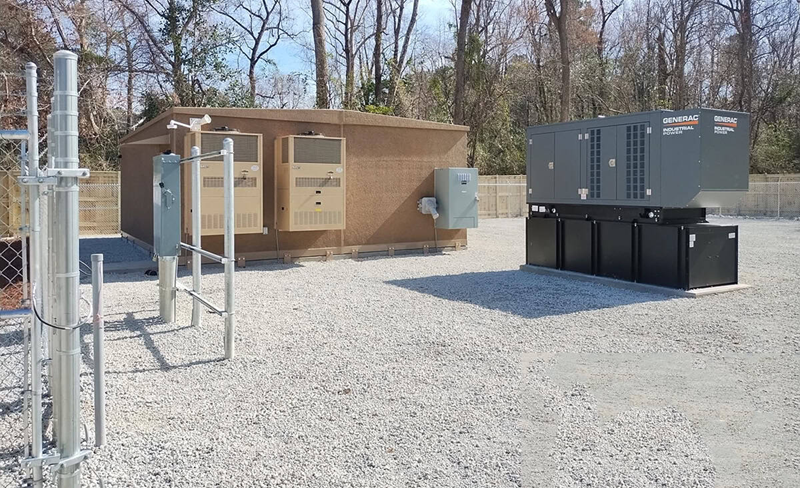
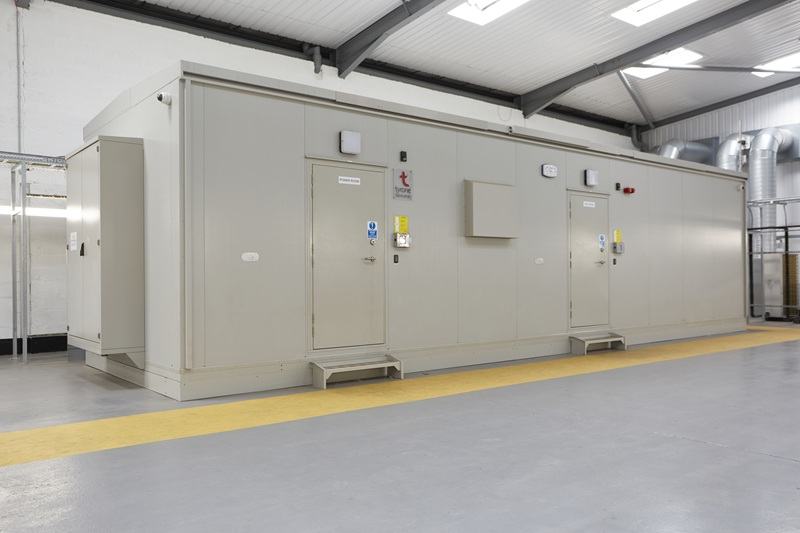
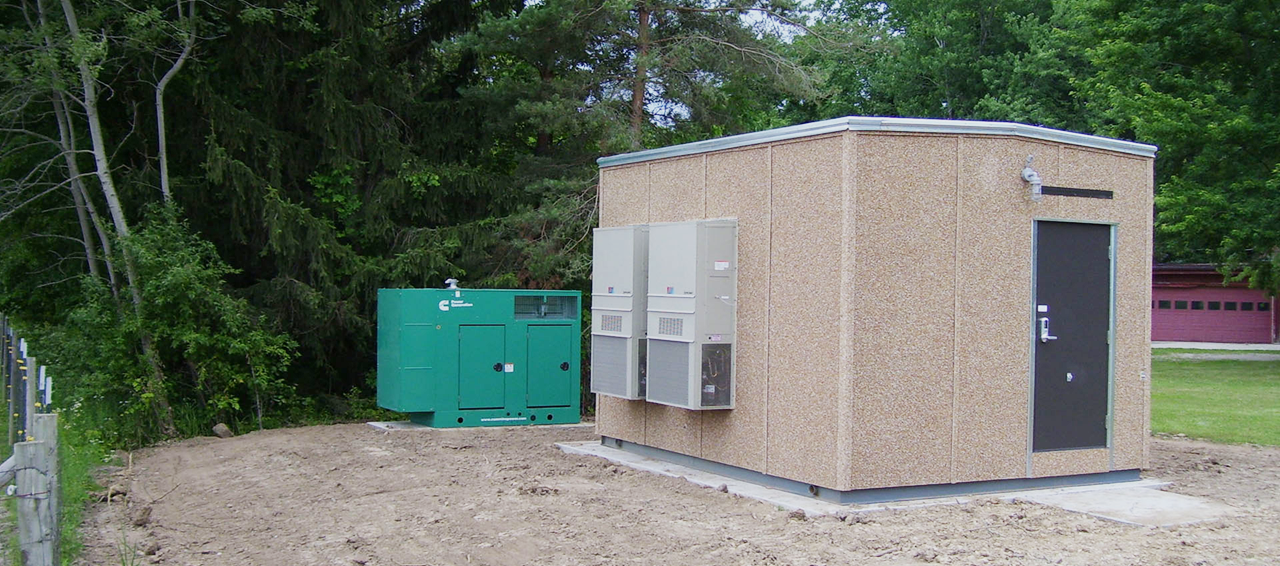
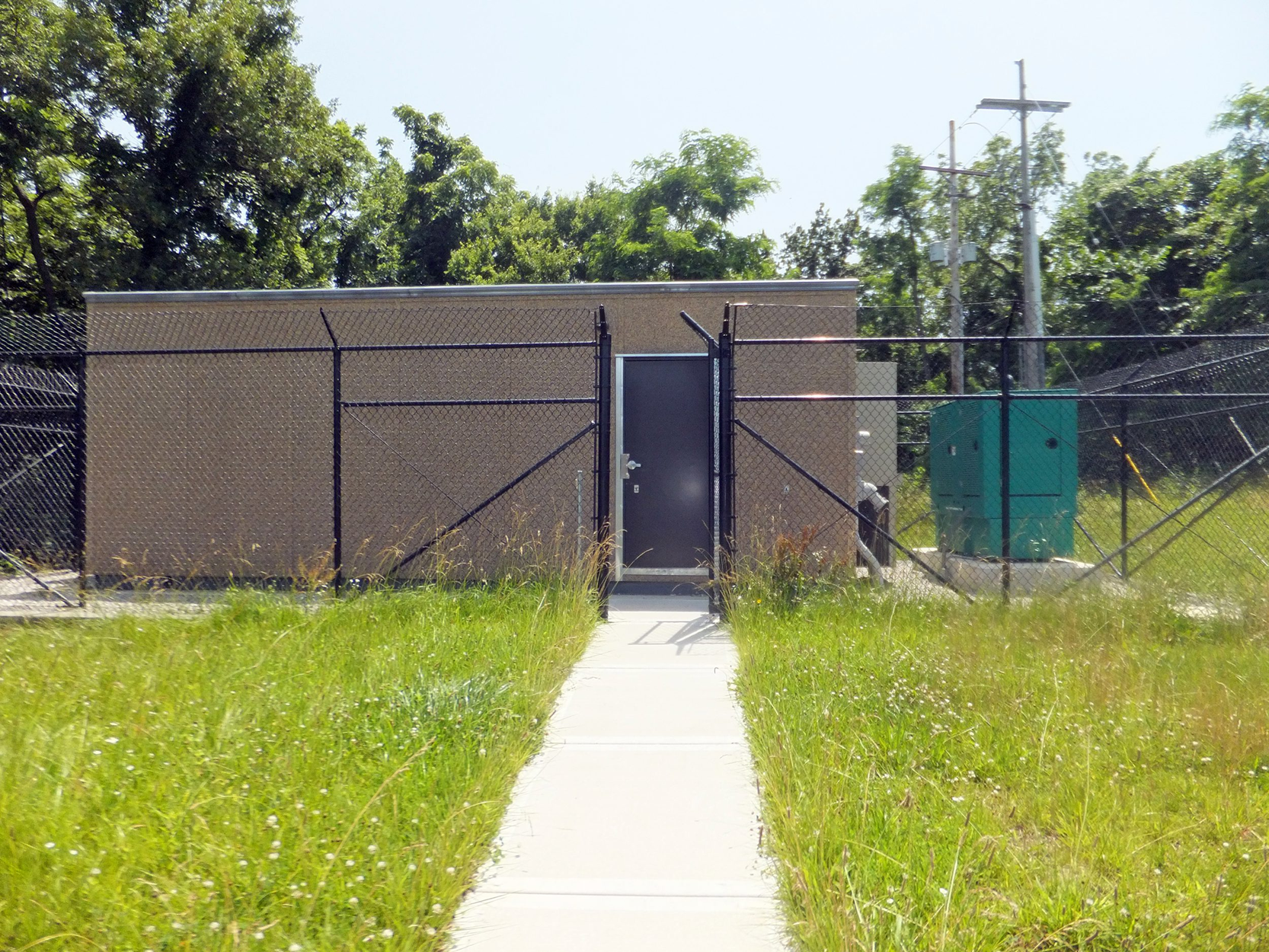
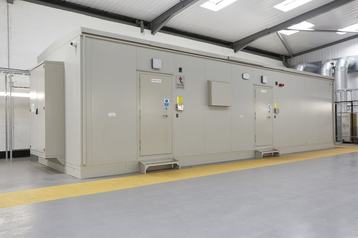
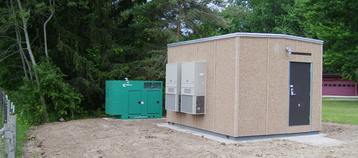
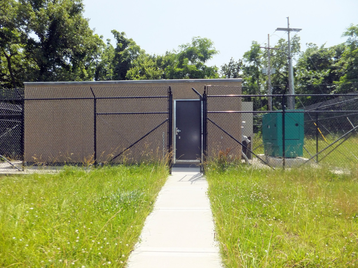
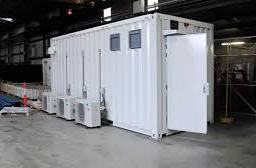
These ILA sites are a far cry from modern data centers. Most are simple nondescript fiber huts – a mix of containers, pre-cast concrete, or other pre-fabricated huts – yet they are critical to the world’s fiber networks.
Like their larger data center cousins, ILAs house racks of networking gear, and are equipped with redundant air-cooled units, UPS systems, backup generators, and security monitoring systems. Uptime is essential for these sites, as without them, the fiber networks will fail, and long-haul inter-city connectivity between data centers will go down.
“They are crucial,” says Patrik Gylesjö, head of tech and delivery at Nordic fiber firm GlobalConnect. “They have everything that a big data center has, but in a smaller format. They have that A and B power. They have uninterruptible power supplies. They have diesel generators.”
Power requirements for ILAs are low. Early designs supported around 600–800W per rack, with today’s typically drawing around 2–4kW per rack. Future designs are expected to reach 5–6kW, and up to 12kW per cabinet for high‑density hyperscaler deployments.
ILAs generally total around 24 racks (though six and 12-rack designs are available), so less than 100kW might be needed to power all the networking gear in a single shelter.
While ILAs can be provided by traditional containerized/prefab data center providers, there are also specialist telecoms-focused firms, including Thermo Bond, Unified Building Group, Decomm Systems, Sabre Industries, Network Connex, CellSite, Module X Solutions, Shelter One, BHC, Northstar Enterprise, and others, that make the units.
Growing fiber, growing ILAs
Each long-haul fiber network operator operates its own portfolio of ILAs, meaning there are thousands of them across the US and globally.
US fiber firm Zayo has more than 1,300 ILA sites across its 148,000-mile network. According to Zayo’s SVP of engineering, Aaron Werley, the company deployed more ILAs in 2025 than in any other year, largely driven by AI needs.
He expects growth to be “on par or above” 2025’s numbers for the next few years. Lumen, amid a major fiber build-out program, had building works underway at around 176 ILA sites in 2025.
Kye Prigg, EVP, chief commercial operations officer at the US operator, tells DCD the company was previously building maybe ten per year before the current AI boom. Prigg notes the company is seeing “AI corridors” pop up, sometimes along preexisting fiber routes that can be upgraded, and sometimes in newer areas that will need new connectivity routes deployed.
In Europe, UK fiber provider CityFibre has deployed more than 100 of its FEX fiber exchanges, while GlobalConnect has more than 100 ILAs across the Nordics and Northern Europe.
GlobalConnect’s Gylesjö says the rapid growth of data centers in Northern Europe in recent years has seen a “huge increase in pace” in terms of the number of fiber pairs and the capacity of its fibers across the network.
“All the data centers need multiple diverse routes in and out, so there’s a lot of new routes and new ILA sites, but also expansion of existing routes with more capacity and more rack space,” he says.
Exa Infrastructure, a pan-European fiber firm, operates more than 300 ILA sites across its 96,300-mile network.
Jose Armada, project manager at Exa, notes that the majority are located outside, but some might be located inside buildings, for example, inside basements. Armada notes that the company is expanding its footprint into new markets across Europe, which means negotiating a range of regulatory regimes and grappling with different environmental conditions. “We are deploying about 2,000km of new fiber every year, often at the edges of the network,” he says. “That means we are going into more remote countries, and we have to consider the difficulties of every country and evolve the design of the ILAs.”
Evolution of the ILA
ILA sites date back to the 1970s and the deployment of the first fiber routes. Their designs were generally modeled on Bell Telephone central offices, creating a shrunken-down version that has changed little in the interim years.
For years, this was acceptable, as vendors like Nokia and Ciena focused on pushing more and more capacity through existing fibers. These gains meant existing ILA designs had little need to evolve. Fast forward to today’s AI boom, however, and things have changed.
“There has been rapid development,” says GlobalConnect’s Gylesjö. “Just a few years back, there was a rack for maybe every one or two fiber pairs. Today, you can host up to 15 fiber pairs in one rack, and not consume too much power either.”
Exa’s Armada says what the firm can do in a single ILA now is “probably three or four times what we were doing a few years ago in terms of capacity.”
He adds: “That affects the cooling, and the number of batteries.”
This dual issue means that ILA sites are also growing in size.
“ILAs have gotten larger and supporting infrastructure grew proportionately, all to allow quicker growth and delivery of capacity,” adds Zayo’s Werley. “Modern ILAs are built out with additional power and cooling to support future needs. The lots that house the ILAs have grown as well.”
He adds: “The fiber demands we are seeing can require more space and power than a single ILA can support without a notable improvement in efficiency in amplifiers. We are designing new ILAs to allow for easier expansion and partnering with hardware manufacturers on improving amplifier technology.”
For Rob Shore, head of optical networks solution marketing at Nokia, “density is the name of the game.”
Shore says: “The amount of information that needs to be transmitted between data centers is growing at such a rapid pace, but the amount of information that can be put on a single fiber is not growing that much.
“We’ve pretty much reached the limit on the amount of information you can put on a single fiber. Operators are having to deploy more fibers to support the amount of traffic required between locations, and we’re going from deployments that used to be in the maybe 100 to 200 range to maybe as many as 7,000 fiber pairs.”
Previously, there had been “very little” innovation in this area because it “hadn’t been a driver,” according to Shore. Most of the focus had been on driving fiber capacity rather than overall fiber numbers. But now fiber capacities are nearing the Shannon limit – the theoretical maximum amount of data that can be transmitted over a communication medium – meaning there will soon be no more gains to be had from simply improving fiber capacity efficiencies.
This will, eventually, further drive up the number of fibers needed on a route. This will require “a shift in innovation,” Shore says.
“We’re going from focusing on as few fibers as possible with as much information per fiber, to lots of fibers,” he explains.
Nokia and other OEMs are trying to meet the challenge of densifying network racks and amplifying more signals in the same amount of space.
Currently, the company can repeat four fiber pairs in an eight rack-unit system, but recently announced a new solution that can amplify four fiber pairs in a single rack unit, for a total of 160 fiber pairs per full rack.
Shore notes that with that comes a greater focus on energy efficiency to keep ILA power needs manageable – its latest offering requires around 93 watts per rail (or fiber pair) compared to 175 watts per rail in the previous generations, and down from 800 watts per rail in years prior.
A rack of 160 fiber pairs at 93 watts per pair suggests total rack densities of just under 15kW.
Shore notes that that is still not super power hungry, but most huts weren’t designed to host cooling equipment for that level of rack densities, and so will require some reconfiguration at a minimum to allow for better air circulation. He notes there often “wasn’t a lot of strategy and thought” put into optimizing the cooling of ILA huts in previous years.
Lumen’s Prigg says the problem has “always been there but never been apparent” until today’s rapid high-capacity build-outs: “Previously you would add maybe a couple of fibers here and there and light them up, and it would be a very progressive deployment of capacity,” he says. “Now, we’re doubling the size of our network.”
For now, many operators are simply managing the growth in fiber by placing more ILA modules at existing sites.
The relatively low power requirements mean adding modules isn’t as taxing on the grid as a new full-blown data center might be. But if fiber counts continue to grow at a rapid clip, dropping increasing numbers of modules at sites starts to become difficult.
GlobalConnect’s Gylesjö says that his company often secures land blocks large enough to support multiple ILA modules being deployed in the future. He says his company is taking a “build as you grow” model for growth.
“This [growth] can be managed within the existing ILA building portfolio to an extent, but as space is consumed additional buildings will be deployed,” says James Flitton, VP network development and optimisation, Colt Technology Services. “We plan for additional buildings to offer higher density per rack with solutions available through the supply chain.”
Jeff Mundt, senior director for optical transport planning at Verizon, spoke on this issue at the OCF event in March, saying: “A practical question that we’re facing is, if I’m looking at a new fiber build right now, how much land do I buy at all of these ILA sites? Am I building and or buying an acre… because I plan on putting two shelters and two generators there, or am I going to have to have ten shelters there for all of these ILAs?”
A new design?
Nokia’s Shore expects fiber densities in ILAs could still be improved further in the coming years, suggesting another doubling of density is possible in the next five years.
Even with efficiency gains on the energy side, that could still see rack power densities increase significantly. This could well necessitate a significant change in ILA designs for new or significantly upgraded fiber routes – though this would likely be a minority of locations in the grand scheme of things.
Meta, however, is keen to get ahead of the game and change things. In 2025, the social media firm outlined its plans to update how these legacy fiber shed sites are built and deployed in the modern age.
ILA sites “have received little attention” compared to other areas of network innovation, the company said in a blog. “Over the past year, Meta has been on a journey to reimagine fiber optic in-line amplifier (ILA) sites. We plan to create and broadly share blueprints, bills of material, and analyses that show our path and help seed operators’ own research, engineering, and technical real estate product development.”
The company hopes to reduce the effort needed to install ILAs – including removing the need for a crane – and improve the energy efficiency of these sites.
The PUE of ILAs is often still around the 2.5 mark, compared to 1.1 for the most efficient data center facilities being deployed. On the build side, Meta is looking towards lightweight designs that can be flat-packed and unloaded quickly. They would include buildings composed of fiberglass-reinforced polymer (aka glass-reinforced polymer) wall and roof panels that are light enough for two people to handle.
For the foundations, Meta is looking to utilize low- or no-concrete options, enabled by lighter designs. Inside, the social media firm is looking to develop a pre-assembled six-rack system that can be rolled into the ILA buildings. The company suggests each building could consist of 24 racks.
Meta is also looking to improve the PUE of these sites through the deployment of a loop thermosyphon system coupled with a compressor, as well as deploying liquid cooling. To replace the backup diesel generators, the company is exploring H2 fuel cells, capacitors, and other solutions.
The company didn’t reply to our request for an interview.
“These shelters do not scale,” says Lumen’s Prigg. “The approach right now is to simply add more and more shelters, which is a very costly and timeconsuming endeavor. We need to get these things to be much more dense, and we are actively working on how many fibers can be lit per rack, per shell.”
While denser ILA equipment will reduce the number of buildings per site, the knock-on effect is that the racks in the updated ILA shelters become denser, which has impacts on the design and build of the huts themselves.
“If you can get the equipment manufacturers to produce equipment that is a lot denser than today in terms of the fibers it can handle per rack,” says Prigg, “you then have the problem of how much power per rack is needed and how do you take away all of the heat that is generated out of the space?”
“There are a number of designs being looked at at the moment. We’re looking at everything: the materials used to build the ILA, whether we actually build facilities rather than prefabricating and trucking in a large building, and then how we cool and power it.”
Change is afoot in the ILA space. But most won’t even notice, if they even know they’re there at all. Fiber firms are more than happy for their larger data center cousins to attract all the attention, even if they are just as important to our modern digital world.



Read the orginal article: https://www.datacenterdynamics.com/en/analysis/are-in-line-amplifiers-ready-for-the-age-of-ai/