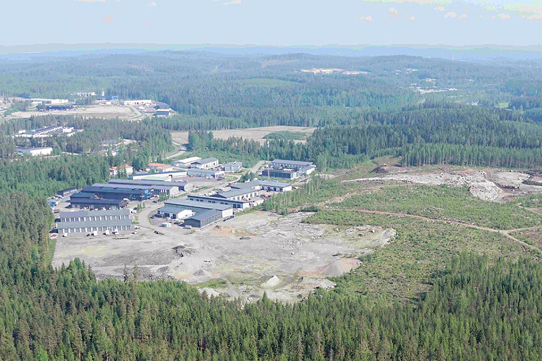
The data center industry has long loved talking about the Nordics. But the focus in many of those conversations has generally been on Norway and Sweden. The two countries boast gigawatts of live and planned capacity, while Finland has, until recently, had barely one AI campus’ worth of capacity live or in development.
But times are changing. As the Finns say, Hiljaa hyvä tulee – the good comes slowly – and the country’s data center market is now quickly growing. After years of hosting a small colocation market around the capital city, Helsinki, a slew of new large-scale data center projects are being planned across the country. Gigawatts of new capacity could be coming to the country in the next five years.
Has the demand for land and power amid an AI boom finally staved off fears over neighboring Russia?

Building the chips to power quantum computers
Tervetuloa to Finland
Though the numbers vary depending on your source material, Finland’s data center market has long been smaller than that of neighboring Norway and Sweden, with a heavy focus on retail colocation in the Helsinki region.
A 2025 study commissioned by the Confederation of Finnish Industries and the Finnish Data Center Association (FDCA) suggests Finland’s data center market currently totals around 285MW, but could surpass 1.5GW by 2030, with total announced projects surpassing 3.4GW. The report suggests 50 percent market growth until 2027 (to 662MW) before levelling off to 21 percent by 2030. Established colocation operators, including the likes of Verne, Equinix, Digita, Borealis, and atNorth, have a presence in Finland.
A 2025 report from the Digital Economic Security Lab, a joint research group between Finland’s Aalto University and the UK’s Oxford University, found 40 operational data center sites in Finland. Though total capacity would likely favor hyperscale, the vast majority of live data centers (34) were for colocation, with half in the city region (Helsinki, Espoo, and Vantaa) and around the same percentage operated by local players.
The lab’s census suggests a total peak lead capacity of around 1GW. DC Byte research suggests the country added more than 1.4GW of total IT load (live, under construction, and committed and early stage supply) in 2023 and 2024, placing it third behind the Nordics’ two data center powerhouses, Norway and Sweden. That figure was below 500MW prior to 2022.
“Finland’s data center market currently sits at around 400MW live supply, but its pipeline dwarfs this considerably, standing between 10x and 15x this number currently,” DC Byte senior analyst Charlie Enright tells DCD. “The market is set for astronomical growth if this supply comes to fruition, albeit many years from now. In the nearer term, several large schemes are currently under construction, adding hundreds of megawatts of capacity in the coming years.”
Why Finland, why now
The FDCA said if known investments are realized, the country could see some €12 billion ($14.1bn) invested, driven by a beneficial climate, abundant land, and cheap green energy. But why now?
Finland has long had the same cold climate alongside an abundance of cheap, available, and renewable power.
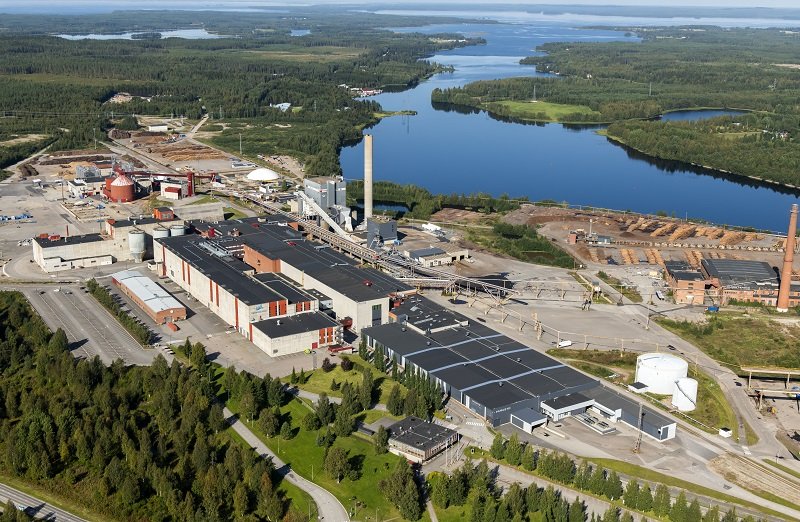
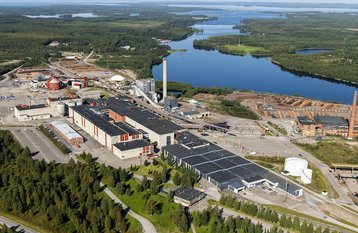
A declining paper mill industry means there are ample brownfield industrial sites with transmission infrastructure for redevelopment – and also welcoming communities keen for new industry.
Aleksi Taipale, co-founder and CEO of Finnish developer Hyperco, acknowledges that Sweden and Norway have historically attracted more investment. This, he says, is likely driven by the fact they have traditionally been the major Nordic connectivity hubs, and then fuelled by the sector’s clustering effects. But the AI boom, and region-wide capacity crunch, has changed the local geography.
“It is getting harder and harder to meet AI demand in other places, driving it to places where you can have capacity, and Finland has popped up as a place where you can have large-scale sites with fairly quick timelines,” he says. “And power prices are still very attractive.”
David Sandars, regional director EMEA at market intelligence firm DatacenterHawk, suggests that there may have been more of a cultural and language barrier than compared to neighboring countries, along with the fact that Norway and Sweden had made more of an effort to attract external investment. Fears over neighbouring Russia may have also played a part.

“From a relatively low starting point, there’s an awful lot of interest now,” he says. “Finland could potentially become a much, much larger, much more important market, not just in the Nordic region, but the whole European theater as well.”
A new nuclear power station, nationwide fiber upgrades, and a number of brownfield industrial sites with existing energy infrastructure, make Finland an appealing prospect, and one that can offer near-term capacity at a time when AI is causing a supply crunch. Local officials, keen to replace a declining paper industry, have also spotted an opportunity to lure new investment.
“We’ve had feedback from data center operators who are looking to develop in Finland that the local authorities there are very supportive and want to work with the data into companies to attract their business into their region,” Sandars says.
Hyperscalers and neoclouds look to the Fins
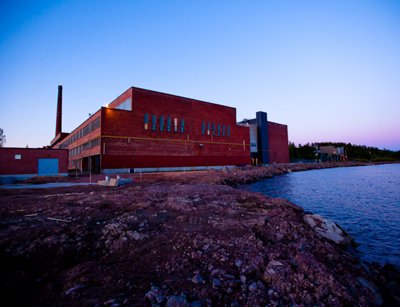
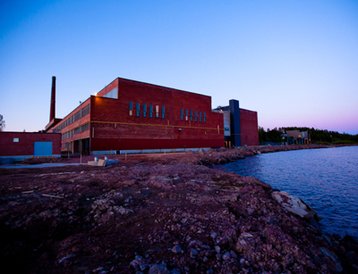
Google is currently the only US hyperscaler that has built in Finland. The company has a campus in Hamina cooled by seawater after the search giant bought a former paper mill back in 2009.
The site has been upgraded several times over the last 16 years, and in 2022 Google purchased 50 acres of land next to the data center to accommodate a possible expansion. The site’s waste heat is utilized in Hamina city in a district heating system operated by energy company Haminan Energia.
Google has also acquired large swathes of land in Kajaani and Muhos for further development, though nothing has been announced yet.
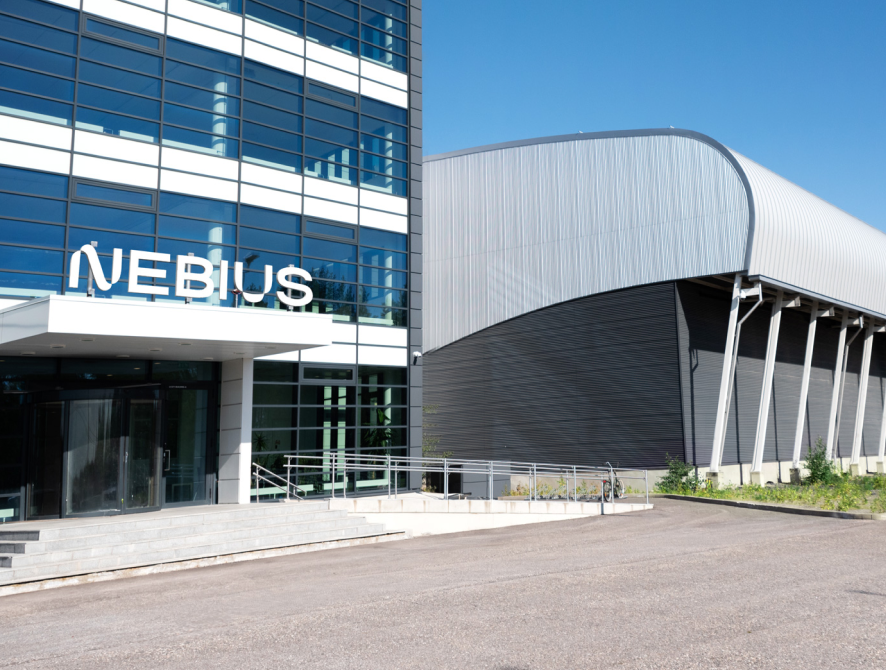
Microsoft is also developing in Finland around Helsinki. Nebius, a European cloud player spun out from Russian tech firm Yandex, operates a facility outside Helsinki in Mäntsälä.
As with most growth markets in Europe and beyond, the vast majority of new capacity coming online is going to hyperscalers and neoclouds, rather than colocation or enterprise.
“Finland is seeing enormous interest from the hyperscalers wanting to build their own facilities,” says DatacenterHawk’s Sandars. Much of this growth in the short term will be led by Microsoft, which is developing near Helsinki, along with TikTok’s planned development in Kouvola. But there have been announcements from local players – both nascent and established – as well as international developers for projects across the country.
CBRE’s associate director, Keith Breed, also adds that many neoclouds will be driving a lot of near-term capacity as they comes online, as many will be less cautious than their hyperscale peers about who they partner with and where they build.
New local operators such as Polarnode, FCDC, Arcem, and Hyperco are planning multiple developments across the country. International operators, including QTS, Pure, Prime, and DayOne, are also looking to develop in Finland. Meta is reportedly exploring a potential campus in the west of the country.
Projects have been announced in all corners of Finland – known as the land of a thousand lakes – including Kontiolahti, Keminmaa, Kouvola, Mikkeli, Hämeenlinna, Järvenpää, Vaasa, Isojoki, Kitee, Akka, Oulu, Espoo, Forssa, Keuruu, Rautalampi, Rovaniemi, Pori, and more.
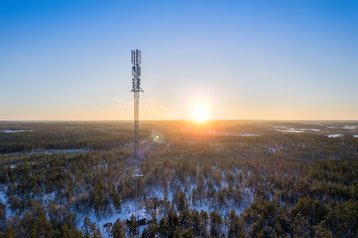
Algorithmic trading firm XTX Markets is developing its own campus in Finland in Kajaani. The first data center will span 15,000 sqm (161,460 sq ft) and offer 22.5MW of IT capacity, serving the company’s machine learning technology that it uses for trades. A second facility is also in development on the same site.
Founded in the US and traditionally centered around California, Prime DC has expanded into Europe with plans for projects in Spain and Denmark in recent years, and is now targeting Finland.
“We’ve been looking for a while at a number of projects within the Nordics, and in Finland, we have been following a few projects,” says Michael Wall, EVP of product delivery at Prime DC. Prior to Prime, Wall worked with Meta in Sweden and Denmark, so he has experience in the Nordics. Though US-based, Prime’s CEO Nicholas Laag is Swedish, giving the company some extra Nordic chops.
Wall says the company is “very ambitious” in the region. “We’ve had signals from our customers that the Nordics is where they want to go for machine learning and training.”
Finland “has its own unique selling points,” he adds, noting the robust power infrastructure and cheap green energy. Prime is known to be targeting a 12-hectare site some 40km north of Helsinki in Järvenpää. Full details haven’t been shared yet, but the company could invest some €1.8 billion ($2bn) in the greenfield project. Wall tells DCD that the project could total 130MW IT capacity and construction could start as soon as Prime gets environmental approval. Wall says the company doesn’t know for sure who the end-user will be for the site yet, but is “assuming it’s going to be an AI user.”
Tehoa, tehoa, tehoa
In 2024, Finnish data centers consumed around 1.6TWh of electricity, just under 2 percent of national consumption. By 2030, this is expected to rise to 5–6TWh, closer to 3–4 percent of national consumption.
DC Byte’s Enright suggests Finland’s rise is all about power (tehoa in Finnish), specifically its abundance within the country and scarcity further afield.
“Finland’s offering of cheap, clean and abundant power, deliverable in quicker timeframes than across much of Europe, has emerged in stark contrast to developments across Europe,” he says.
“Fingrid has been doing a very good job of keeping the grid stable, and Finland is one of the few places in Europe where there is actually a possibility to get large-scale power connections with quick timelines,” adds Hyperco’s Taipale.
The country boasts a large amount of renewable power as well as nuclear capacity. Though some 13 years overdue, power company Teollisuuden Voima (TVO) brought the third unit online at the Olkiluoto Nuclear Power Plant in 2023, adding 1.6GW of capacity and almost doubling the site’s total output.

While the grid is reliable, transmission remains an issue in some parts of the country.
Local grid operator Fingrid has already imposed temporary restrictions on new connections for large electricity users (>10MW) in areas around Helsinki, Turku, and Tampere until 2027 (and 2029 for energy storage projects). Fingrid aims to invest some €7.2 billion ($8.4bn) between now and 2035 in transmission infrastructure.
Energy has long been cheap. But while Finland has excess capacity in the wake of paper mills closing and the new nuclear plant coming online, the national government is working to prevent the rest of the country paying for the growth of the data center market.
In March 2025, Finland’s finance minister, Riikka Purra, announced that the government would consider changing the electricity tax category for data centers as part of a broader proposal for the government’s 2026 budget.
The change amends the Act on Excise Duty on Electricity and Certain Fuels, forcing operators to pay 40 times more on electricity taxes, pushing the rate up from €0.0006 ($0.0007) per kWh to the standard rate of €0.0225 ($0.0226) per kWh. New data center-centric rates are due to be introduced soon, but what those qualifying conditions might be is still unknown.
Efficiency metrics such as PUE and the ability to offer waste heat may well be included.
Google was known to be against the changes, going so far as to quietly pause a planned expansion of its footprint in the country. Google declined to be interviewed for this piece.
XTX said its “longer-term investment roadmap remains under review due to the proposed changes in electricity taxation” ahead of the change. Up to five buildings had been planned on XTX’s site.
“Currently, the government is preparing another kind of support scheme where the data centers could still get some part of the electricity tax back in the form of a tax return,” says Antti Poikola, managing director at the Finnish Data Center Association. “The details of these tax-return mechanisms are not yet published, but the aim is to get them out so that it applies from July onwards.”
If more generation capacity does need to be brought online quickly, DatacenterHawk’s Sandars notes it remains to be seen what the Finnish attitude will be towards gas power plants, and whether they will be granted permits by officials.

Russia question trumped by AI
One potential reason for Finland’s historically modest data center growth was the looming shadow of its neighbor, Russia. The two countries share a 1,340-kilometre (830-mile) border, and many international operators may well have previously been cautious about investing large sums into the country for fear of what Moscow might do.
After being held by Sweden for hundreds of years, Finland was surrendered to Russia by the Swedes in 1809. Russian emperor Alexander I, however, granted Finland statehood that same year. Russia continued to have a strong influence over the then-Grand Duchy until it declared its independence in 1917. Finland has maintained its sovereignty since, but the threat of Russia continues to loom, especially in the wake of the invasion of Ukraine.
Many of the people DCD spoke to for this piece agree that demand for capacity, driven by the AI boom, seems to have largely overtaken any underlying fears of Russian invasion.
Hyperco’s Taipale says investment announcements from hyperscalers such as Google and Microsoft have “validated” that Finland is a “safe place to invest” and helped drive demand from the rest of the market.
“As long as we have the customer, and the customer is happy with regards to what they need to do as a product there, then I don’t see there being a problem,” adds Prime DC’s Wall.
Finland’s joining of NATO in 2023, spurred on by Russia’s ongoing invasion of Ukraine, has also helped allay fears.
DC Byte’s Enright suggests Finland joining NATO “quelled” some site selection concerns from US companies concerned about its proximity to Russia, which was historically a “significant hindrance.”
FDCA’s Poikola, however, suggests that while it was a “common question,” Finland’s proximity to Russia is “not really seen as a barrier at all.”
How big could the Finnish data center market grow?
Just how large the Finnish data center market could grow in the long term remains an open question. It will definitely be much larger than it is now, but Norway and Sweden will also continue to grow, their larger existing capacity bases likely keeping Finland as the third-largest of the Nordic markets. It’s unlikely to realistically challenge the main FLAP markets of Europe, but could become one of the major second-tier markets in the region.
Wall notes that amid a boom and demand for large amounts of reliable power, Finland’s data center market will grow in line with as much power it can produce and is prepared to give to data centers.
“It has to be a political decision, and if there’s political appetite to focus on these investments, then I can see it being a big player within the region.”
CBRE’s Breed thinks local developers will be the winners in the short term, but in the long run, the well-financed international players will come good.
Local and regional players, he notes, “tend to be quite strong” in the Nordics as they have previous experience of developing in the region and have an understanding of zoning and permitting, and that allows them to establish themselves quite quickly. Local players are often more “ambitious” than international developers, who may be more cautious and only commit to a project once a pre-lease agreement is in place.
“The regional players will probably take up a lot of capacity in the short term, and then at some point, perhaps they might be bought out by some of the larger American providers who will then look to enter the market that way,” he says.
There may well be a discrepancy between the data center capacity being announced and what will ultimately be delivered. DatacenterHawk’s Sandars notes that “very little” of the announced capacity in Finland is pre-leased, and that it’s unlikely that all of that can be built without further upgrades to Finland’s generation and transmission capacity.
Hyperco’s Taipale says he is “skeptical” that all the projects that have been announced will reach maturity. Some, he notes, will not have a full understanding of the local market and what it takes to deliver a project in Finland and may suffer for it.
“People announced things quite early,” he says. “There’s a lot of land, and it’s easy to get your hands on a site. But it takes years to get all the permits in place.”
Too much of a good thing could also be a risk. Amid a nation- and region-wide boom, there is also a danger of oversaturation, even in this period of capacity crunch.
“There was one company we were talking to looking at a huge plot of land in Helsinki, about 300MW, but they pulled out because they decided that there was no differentiation there,” says CBRE’s Breed. “You’re talking about oversupply before a lot of this capacity is even close to coming online.”
More optimistically, DC Byte’s Enright suggests Finland could overtake the likes of Norway and Sweden if the market continues its current growth trajectory, and rival some of Europe’s largest markets.
“Lots of this capacity is in earlystage currently, though, so there is no guarantee it comes to bear,” he notes.
It might have been slow, but even if only a fraction of all these gigawatts come online, the good will have finally come to Finland.
More in Construction & Site Selection



Read the orginal article: https://www.datacenterdynamics.com/en/analysis/hiljaa-hyv%C3%A4-tulee-finlands-data-center-boom/