Like many states in the US, Pennsylvania is having its moment in the sun when it comes to data centers.
Long passed over for the likes of Virginia, New York and even Ohio, the current demand for near-term data center capacity has seen PA’s ample supply of natural gas and available power infrastructure come to the fore.
DCD recently took a look at the growing data center market in Pennsylvania in issue 60 of DCD>Magazine. Here, we drive deeper, following up with a number of companies developing in the Rust Belt State to understand the appeal.
Amazon eyes PA
Amazon is perhaps the biggest name that has set its data center sights on PA. The cloud giant has pledged to invest $20 billion in data centers in the state, and is known to be developing around Salem Township, Falls Township, and Kline Townships – with further reported interest in Banks Township.
“A lot of the opportunity in Pennsylvania really rooted in things that have made the Commonwealth a leader in the industrial revolution and other periods in history. They’ve got access to water, access to energy, they’ve got a great workforce that’s well trained, and a governor that gets it,” Merle Madrid, principal for public policy at Amazon Web Services, tells DCD.
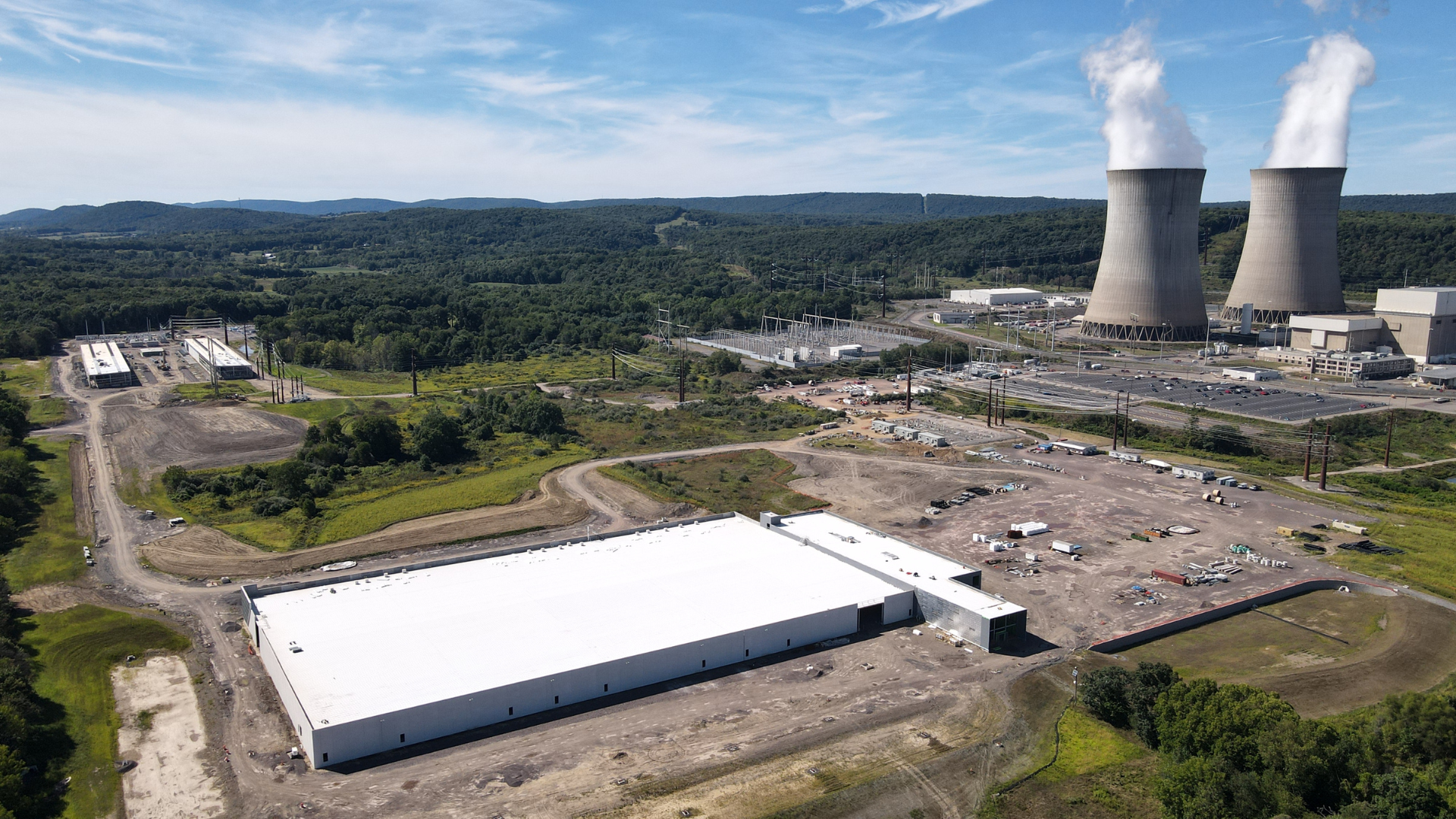
AWS has been looking to develop in Salem Township since early 2024. The company acquired an existing data center from Talen Energy and around 1,200 acres of land.
The site is adjacent to Talen’s Susquehanna nuclear power station. Amazon successfully rezoned 1,600 acres in the area to “Special Data Center Overlay District” in May 2024, with plans to develop 15 data center buildings on the site over the course of the next decade totaling around 960MW.
In Falls Township, the company is set to occupy the 1,800-acre Keystone Trade Center being redeveloped by NorthPoint Development.
According to Merle, the Salem and Falls sites were chosen because they were “ready to go in communities that were really excited about them.”
“Both sites were already conditioned for industrial use, both have access to reliable power and a grid connection to be able to turn on quickly, as well as access to trade workforce and communities that were really excited to welcome the significant investment,” he says.
Some of the first buildings are reportedly vertical and nearing operation in Salem and Falls townships, but the company hasn’t provided more details. When asked if these projects are tailored for its traditional commercial cloud or more focused on AI workloads, Madrid says like all its current projects, they will be designed to meet both needs as required.
The 346-acre Kline site could see ten data center buildings built with a total of 2.5 million sq ft (232,255 sqm). The company has also developed an Amazon re:Cycle Reverse Logistics facility in a repurposed industrial building in Greencastle in Franklin County to refurbish IT hardware.
The AI cloud comes to the Keystone State
Amid the AI boom, Pennsylvania has seen success in attracting traditional hyperscalers and upstart AI cloud providers to the state. Amazon, CoreWeave, and TensorWave are all known to be involved with large projects in the area.
TecFusions, a data center firm founded in 2023 and led by former QTS CTO Simon Tusha, is staking a claim to be one of the major players in PA. The company is developing a multi-gigawatt natural-gas-powered campus outside Pittsburgh, known as Keystone Connect.
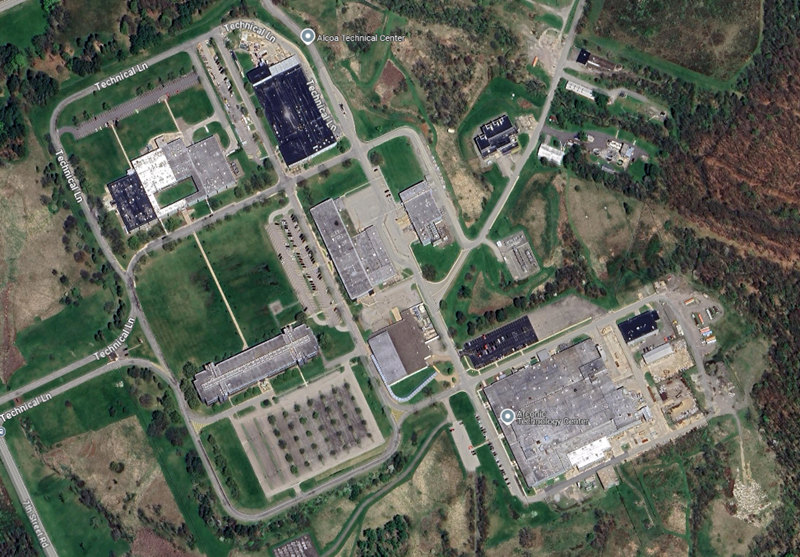
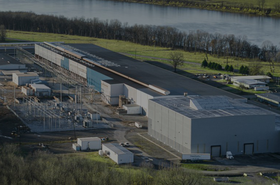
The company acquired the site, previously occupied by metal manufacturer Arconic (previously Alcoa Corp) in late 2024. Dating back to 1964 and previously known as the Arconic Technology Center, the 1,350-acre campus could total 500,000 sq ft (46,450 sqm) and offer 3GW of capacity at full build-out. AMD-based AI cloud provider TensorWave is set to occupy the first 10MW at the site, but is likely to lease significantly more in future.
“We refer to our site as a unicorn,” says Melissa Farney, TECfusions director of marketing, “because it truly has everything you could want for an AI data center there.”
The site has 13 buildings, one of which was a former data center. That will be the first building built out for Tensorwave, with TecFusions planning to refurbish and reuse the dozen other buildings before eventually breaking ground on new facilities.
“It has facilities there we can use on a short timeline, It has a ton of land to eventually scale-out, and the site has a natural gas power plant already so we can generate our own power on site,” she adds. The campus includes an existing on-site substation and a natural gas power plant: while it will have a grid connection, the “bulk” of the site will be powered via behind-the-meter natural gas.
Tensorwave has said it aims to expand to 1GW at the campus, with Farney saying the site will initially be used as a training cluster before moving to inference.
Farney says the company’s infusion of jobs to a site that dates back to the 1960s but peaked in the early 2000s has apparently been warmly welcomed by locals.
“When Alcoa shut down, a ton of people lost their jobs immediately,” Farney says. “They’ve seen what life without jobs here is like, and local officials are really excited that they’re going to see new life breathed into the economy.”
While it has a long way to go on building out its Pittsburgh site to 3GW, TecFusion’s Farney says the company would be “happy” to continue its expansion in Pennsylvania.
“We would consider further expanding out from that site as our central hub,” she says.
Crypto pivots in PA
Founded in 2017, Keel Infrastructure is a cryptomine data center provider pivoting to AI and HPC with a footprint in Pennsylvania. As well as facilities in Washington and Quebec in Canada, Keel has three data center sites in PA.
“Pennsylvania is now about 90 percent of our portfolio, so it’s quickly become the biggest area of our business, and in a rather short period of time,” says Ben Gagnon, CEO of Bitfarms at the time of our discussion (the company has since rebranded to Keel Infrastructure). “Appalachia is one of the most economically depressed parts of the United States, but with a fantastic location in close proximity to everything that’s happening on the East Coast, and it’s got all that great infrastructure, all those great energy resources.”

The firm is developing the Panther Creek campus in Nesquehoning, Carbon County, in eastern PA. The site, formerly a waste coal-fired power plant, could total 1GW at full build-out. Partnering with T5 on the development, Gagnon tells DCD the site has a firm contract for 350MW of power by 2028, with potential to scale further, possibly 500MW or above.
Built in 1992, Keel took over the site, along with the Scrubgrass plant in western PA, after acquiring Stronghold Digital Mining in 2025. Stronghold had acquired the sites in 2021, using them to mine cryptocurrency.
In the western side of PA are Sharon and Scrubgrass. Sharon is a former industrial site with potential to reach 110MW, while Panther Creek and Scrubgrass are old coal plants traditionally focused on burning low-quality coal. Permitting for Panther Creek and the Sharon site is expected to happen over the summer.
Scrubgrass is by far the company’s largest project. Described by Gagon as the company’s “crown jewel,” the company is targeting a 750MW grid connection alongside 550MW of natural gas capacity, for a total of around 1.3GW.
The site is close to the Tennessee Gas Pipeline (TGP), which runs from the Texas and Louisiana coast north as far as New England. Keel is working with pipeline owner Kinder Morgan about building out a pipeline to connect the TGP to Scrubgrass for the 550MW of natural gas capacity.
“It’s pretty hard and rare to find sites that have gigawatt capacity outside of Texas,” says Gagon. “You generally have to look really, really far out in time and it’s almost entirely bring your own generation. This is a combination of two, and this is more of a 2028/2029 timeframe and a very sizable location for that part of the United States.”
While Bitfarm’s focus is currently on execution of its current projects over new sites, Gagnon says he sees a “tremendous amount of growth potential in Pennsylvania” in the future.
Colocation and enterprise still an opportunity
Argo-owned TierPoint has been present in PA since 2014 and today operates five facilities in the state. The 137-acre TekPark, in the Allentown/Breinigsville area, is the company’s largest. Previously leased, TierPoint recently acquired the park and plans to expand to the site to 100MW.
“For us it’s been a good area to operate, because we’ve been close to a lot of our enterprise clients over the years as we’ve been able to drive a lot of business into those data centers,” says Don Schuett, SVP business development, TierPoint. “We have a long history of enterprise demand in the area that is continuing to grow. It’s not just the GPU AI workloads that are driving demand.”

Built in 1987, the site was originally a Bell Laboratory site owned by AT&T. The nine-building, 508,000 sq ft (47,194 sqm) TekPark was later owned by real estate firm MRA Group.
TierPoint’s current data center footprint within the park totals 122,000 sq ft (11,334 sqm) and around 16MW. TierPoint took over the TekPark data center after acquiring Xand in 2014, which itself had taken over the facility in 2011 via the acquisition of DBSi. DBSi first announced plans for the data center back in 2008.
“TechPark is really our flagship location,” says Schuett. “That’s going to be the one where we focus the majority of our strategic growth because of the size of the campus and our ability to expand.”
“Our plans with TechPark really are to focus that site on larger colo opportunities than we normally would be able to go after in Pennsylvania. It’s the one location in the region where we can really go after some multi-megawatt opportunities.”
The company tells DCD the decision to expand in the area was “in direct response to the exceedingly strong demand” from clients and prospects for data center capacity in the area. TierPoint is reportedly engaged in multiple conversations with potential clients that have interest in contracting some or all of the expanded TekPark, including several large, technology service providers.
“Generally, we have found Pennsylvania and the communities in which we operate there to be open to and accommodating of data centers,” TierPoint tells DCD in a company statement. In part, the appeal of Pennsylvania is a result of the presence of major metro areas in the state; its proximity to other major metro areas on the Eastern seaboard, including New York; a business-friendly environment; collaborative local utility power providers, including PPL, and favorable power costs compared to nearby states.”
TierPoint says it would be “open to the possibility” of further expansion in the state based on its “favorable experiences” to date.
Community pushback
Across the US there’s a growing groundswell of local opposition to data center projects across the US. And PA is no exception: opposition groups and petitions against projects are becoming the norm. Public meetings discussing data center proposals are packed and often acrimonious.
Not all projects proposed in PA are making it through planning. Numerous townships and counties are introducing local moratoria to prevent data center development – at least temporarily while local officials seek to understand their impact and get comfortable with these types of projects. Online petitions against projects are increasingly common, some gaining thousands of signatures. Some local planning and council meetings are lasting hours as people seek to have their views heard.
A recent poll by Emerson College saw 42 percent of Pennsylvanians say they do not want one built in or near their community, with 35 percent not wanting them in the state at all. Similar percentages were afraid AI would have a negative impact on jobs and the economy. Environmental impact, power needs, water use, and impact to energy bills were cited as common concerns.
Amazon’s Merle says the company has found local officials have really wanted to “get educated” on data centers and are “hearing concerns” from people, and the company has been bringing in its experts to try and teach data centers and allay fears and concerns.
“There are valid questions and legitimate issues that need to be addressed. But the misconceptions are crowding out the actual conversations and the real issues,” he says. “The folks who are the local government officials are recognize that the benefits far outweigh any of the risks, and Amazon is committed to mitigating those risks and working with the community to ensure that this is beneficial for all parties.”
As with many new data center developments, the likes of Amazon are funding local workforce and education programs to help ensure there’s enough talent in the area to build, operate, and maintain these facilities. Whether that will be enough to assuage fearful residents is still an open question.
“There’s a lot of misinformation being spread across Pennsylvania right now by groups that have historically opposed any type of development,” argues Anzur of the PA Chamber, with the group launching a foundation to try and ‘educate the public about data centers and what that means for local communities. As well as publishing online resources, the foundation is running TV and radio ads in an attempt to “separate fact from fiction,” especially on energy prices and water use.
“There’s a need to really show people what these projects are, what they are not, and demystify what this means for the state.”
Anzur of the PA Chamber argues that amid decades of population decline across large swathes of the state, the opportunity to inject huge amounts of cash into the community via tax should be painted in a positive light.”
“This is an opportunity for areas that have seen their tax bases shrink as population has left to really right their ships and generate the revenue that they need to support public safety, schools, hospitals, etc.”
Embrace community
Pennsylvania, like many growing markets, is seeing a huge influx of new data centers, many proposed in places where traditionally they have never been built, often at a massive scale that dwarfs previous local industries. Many communities have balked at the rate and scale of change, with many officials bringing in local moratoriums to block developments.
Keel CEO Gagnon acknowledges that a data center company is never going to make everyone happy, but claims to have broad support, from grassroots on the ground all the way up through the governor.
“One of the most common comments we got was, I’m so glad that there’s going to be opportunities for my kids to stay here,” he says. “These towns kind of over generations, they just kind of shrink down as people need to go and seek employment elsewhere.”
He says it is key to engage with the community, understand their challenges and concerns, and then work to pre-emptively address them. He says becoming a strong pillar in the community erases most of those fears.
“You could go kind of under the radar. You could make all your plans without really engaging with the community and everything else. And I think it’s those projects which are largely the ones that are having the most political opposition and backlash,” Gagnon says. “If you’re proactive in how you go about this, you aren’t kind of sneaking behind anyone’s back; I think that reduces 80-90 percent of the opposition that you might otherwise get.
“People are always going to be concerned about change, but I think if you engage with them in the right way, people are really receptive. There is always going to be concerns. That’s certainly true in Pennsylvania, just like it’s true everywhere else. But when you start going into these communities, they understand this is a really unique opportunity for them to really restore and revitalize places.”
Smith of the Allegheny Conference says his organization has been pitching data centers as a piece of the larger energy and power generation opportunity in Pennsylvania, leaning into the state’s existing industrial heritage.
“Southwestern Pennsylvania has been a leader globally in energy and power generation for the last 100 years, and this is just the next chapter of that story,” he argues.
The wind may be blowing against data centers, however. In February, Pennsylvania Senator Katie Muth said she would be looking to introduce legislation that would bring in a three-year statewide moratorium on hyperscale data center development. She introduced that bill in June.
A similar bill, House Bill 2496, passed the House in June. It gives municipalities the option to enact a 180-day pause on considering applications for data center developments under the existing land use ordinance.
Ratepaying
Among many new issues the rise of AI has brought up, one of the most hot-button topics amongst local residents is the issue of energy rates: who is paying for all the new power generation and transmission assets needed to power the new wave of AI data centers?
Ratepaying has become a major topic of conversation, with utilities and regulators looking to bring in specific rates for data centers and other large-load customers to keep bills for retail customers lower. DCD has explored the topic in-depth in its latest issue of DCD>Magazine.
Governor Josh Shapiro’s HB 2650 passed the House in June. The bill would codify Governor Josh Shapiro’s Responsible Infrastructure Development (GRID) Standards in law, meaning data center developers would need to pay for their own power. A companion bill is working its way through the state Senate.
“We are absolutely committed to ensuring that Amazon and the industry continue to pay their share for the energy we’re going to use,” says Merle, adding that it allows the company to move more quickly to meet customer demand and ensures the company is being a “good neighbor” in the community.
Behind-the-meter deployments may also help remove some of the issues around rate paying. TecFusions’ Farney says the fact that her company’s site will be predominantly powered via an on-site natural gas plant has removed a lot of “trepidation” about residential power rates going up in the local community.
Keel’s Gagnon says that 100 percent of the transmission lines being built at the company’s Panther Creek site is being financed by the company.
“Not one single dollar is going to be financed by the local community and the local retail ratepayers,” he says. “We’re supportive of those policies. We think they make sense, and we think they do a great benefit for the retail ratepayers.”
He notes that in the grand scheme of a large-scale campus, development, the tens of millions of dollars a company might have to pay for transmission infrastructure is not a very material expense compared to the multiple billions of dollars going into the core data center project.
“There’s no reason why we should be paying for the infrastructure when we plan to use it 99.99 percent of the time. I think that’s pretty reasonable.”




Read the orginal article: https://www.datacenterdynamics.com/en/analysis/pennsylvanias-appalachian-appeal/