Though some might disagree, Pennsylvania claims to be the birthplace of artificial intelligence. AI research at Carnegie Mellon University dates back to the mid-1960s and what some say was the foundation of the world’s first AI research hub.
Despite the hotly disputed accolade, however, the Appalachian state has long lagged behind in actually hosting the infrastructure that makes modern AI possible, with a relatively small data center market compared to its neighbors.
PA also declares itself to be the birthplace of the US oil industry. And with ample power driven largely from natural gas, a large portfolio of brownfield industrial sites in need of repurposing, and a business-friendly government, Pennsylvania is quickly luring a wave of new data center development.
Rust Belt no more
Pennsylvania has often been spurned by data center developers in favor of its mid-Atlantic neighbors. On one side, it has the New York/New Jersey and Northern Virginia hubs, the historical hearts of the industry in the US and globally. On the other side, Ohio has grown to become a major market of its own, with developments centered around Columbus and now spreading further afield.

Building the chips to power quantum computers
Though it has traditionally fared better than neighboring Maryland and West Virginia, data center projects within Pennsylvania have been few and far between. Most developments were concentrated around its largest cities, Pittsburgh and Philadelphia, with the majority of these being smaller interconnection and/or retail colocation-focused facilities. PA is home to some notable national players, including H5, Iron Mountain, DataBank, Flexential, Netrality, and Expedient, but hasn’t boasted the same kind of hyperscale market that Ohio or Virginia has secured.
“There have been some connectivity-based assets in your major metros like Pittsburgh and Philadelphia,” says Montana Myer, senior analyst at DatacenterHawk. “But there haven’t been any of these 100MW, gigawatt-scale campuses until the last two years.”
Change, however, is afoot. A report published by analyst firm DC Byte in September 2025 suggested Pennsylvania’s data center market is growing exponentially, jumping from 231MW of total IT load in 2021 to a hefty 7.8GW of planned load in 2025.
Hyperscalers have previously shunned Pennsylvania because “policy and planning efforts prioritized enterprise and retail colocation,” argues Surafel Tadesse, research analyst at DC Byte. “Local zoning, utility planning, and incentive structures were not optimized for hyperscalers.”
But market conditions in the state “have shifted materially, driven by increased investment in energy infrastructure that is expanding available power capacity,” he continues. “Recent legislation has accelerated data center development timelines, while new tax incentives have reduced overall development costs.”
At the same time, AI-driven capacity constraints in primary markets such as Northern Virginia have pushed developers to seek new locations, with “Pennsylvania positioned to capture this spillover demand,” Tadesse adds.
Pennsylvania’s rise has been fueled by new projects from both established names and new players. PowerHouse is planning a 1.35GW site in Carlisle. AI cloud firm CoreWeave is planning a 300MW development in Lancaster. Aligned is targeting a campus at a former coal plant in Shippingport. TierPoint, long present in the state, is expanding its Pennsylvania campus to 100MW. QTS is targeting a 1,700-acre campus in Salem Township. TecFusions is developing a multi-gigawatt natural-gas powered campus outside Pittsburgh, with AI cloud firm Tensorwave as a major tenant. Cryptominer-turned HPC data center firm Bitfarms (rebranding to Keel) is targeting multiple sites that could reach hundreds of megawatts.
“We’ve operated in the state for a number of years, and I’ve always been a little surprised it hasn’t been more of a data center hub up until recently, just with proximity to New York,” says Don Schuett, SVP business development at TierPoint. “It’s fairly rural outside of Philadelphia, so there’s open space and abundant power, and a relatively cooperative utility provider. Pennsylvania is not that far away from Northern Virginia, so it’s a pretty logical location for there to be a spillover effect.”
Of the new entrants to the state, the most notable is probably Amazon, which has pledged to invest some $20 billion in Pennsylvania across multiple campuses.
The hyperscaler’s announcement brought a lot of attention to the state, says Myer, and its validation of PA as potentially fertile ground seems to have spurred investment from others. He notes that AI cares less about geographical centers than the traditional cloud might, opening up more opportunities for hyperscalers and neoclouds to develop, away from the established hubs.
“There have been several very large projects, and I think that we’ll continue to see large-scale projects announced,” he says. “When hyperscalers come to a market, the third-party operators who are building sites to serve hyperscalers and enterprise typically follow.”
For Melissa Farney, TecFusions’ director of marketing, Pennsylvania offers a “unique combination” of factors that make it attractive to developers. She says: “It has the available power, it’s a really strategic geography if you look at the fiber routes, and then there’s a lot of industrial real estate that could be reused. A lot of eyes are on it. Pennsylvania was always at least a secondary market, because it is a major thoroughfare. But the immediate primary ones are completely at capacity.”
While many of these new proposals are still in the Pittsburgh and Philadelphia areas, projects are being planned across the state, with new hub clusters appearing. Archbald, a borough in Lackawanna County in northeast Pennsylvania, has seen five projects proposed that could total around 4.7 million sq ft (439,400 sqm) across 29 buildings at full build-out. More projects have been proposed across the rest of the county.
“We see the data center boom as Pennsylvania’s golden ticket to lead the country again, economically,” says Jon Anzur, SVP of public affairs at the PA Chamber, a business advocacy association in Pennsylvania that is working with data center companies including Amazon, Google, and Meta. “There is such an opportunity to really drive investment into predominantly rural communities in the state that have been left behind as industries have gone away and jobs have left.”
Energy the key to the Keystone State
Pennsylvania’s legacy, both positive and negative, is key to its current rebirth in the age of AI.
The state was long associated with steel manufacturing, but suffered heavy decline in the 1970s and 1980s. Manufacturing also withered away amid decades of outsourcing to cheaper regions, resulting in the loss of many textile, automotive, and printing jobs.
Philadelphia was once called the “Workshop of the World,” while Pittsburgh still clings to its “Steel City” heritage via its NFL team, the Steelers. Amid ongoing deindustrialization and stagnation, however, the region went from being known as the Steel Belt or Factory Belt in its heyday to the Rust Belt by the 1980s.
“Pennsylvania has a rich industrial history,” says the PA Chamber’s Anzur, but he also acknowledges that PA “lies in the heart” of the Rust Belt.
“We’ve seen the decline in industry, both steel and coal, and with it, manufacturing across the state,” he says. “We’ve really been working to create a new industrial revolution through technology, and a lot of it really relies on our ability to generate energy.”
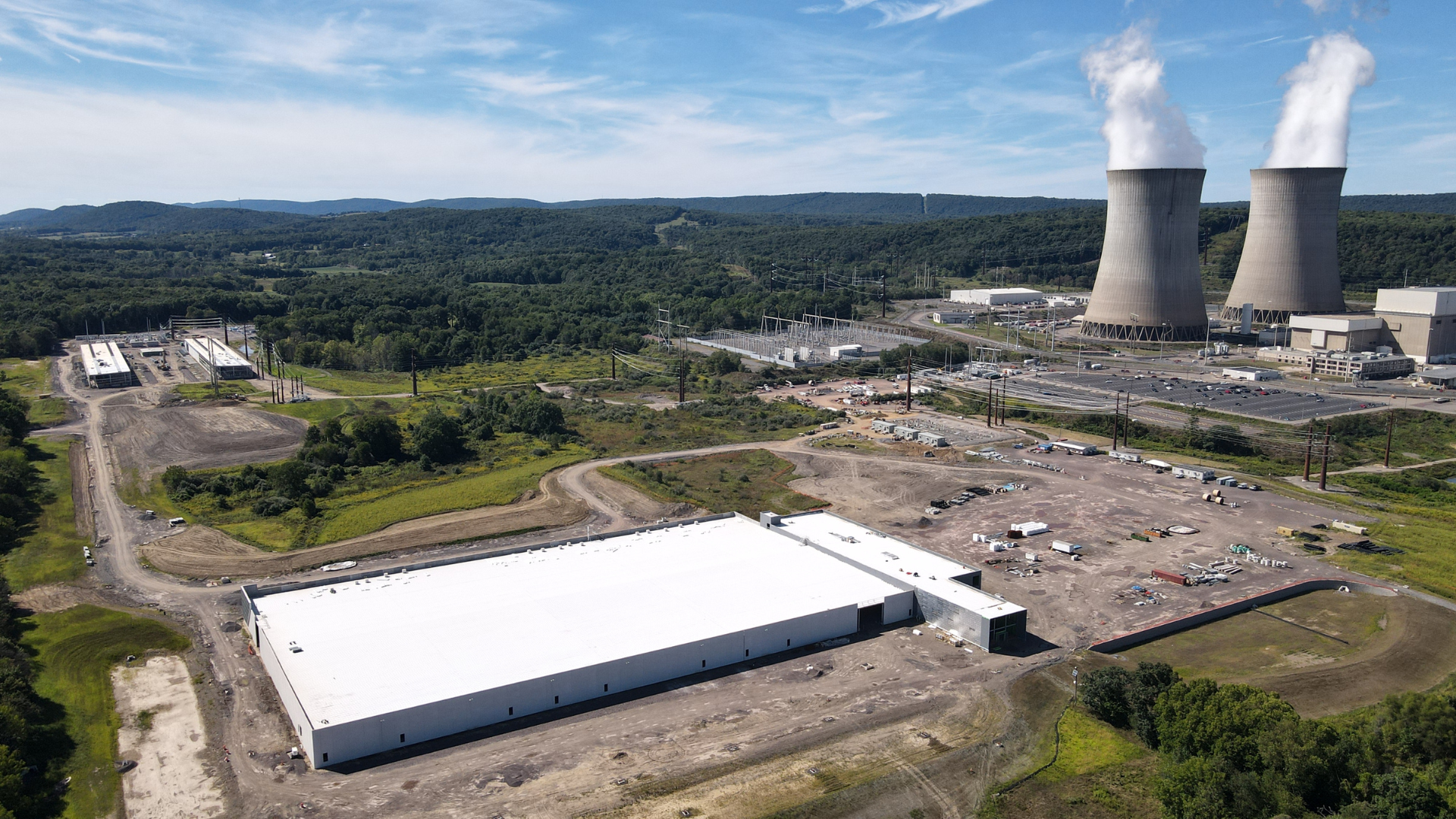
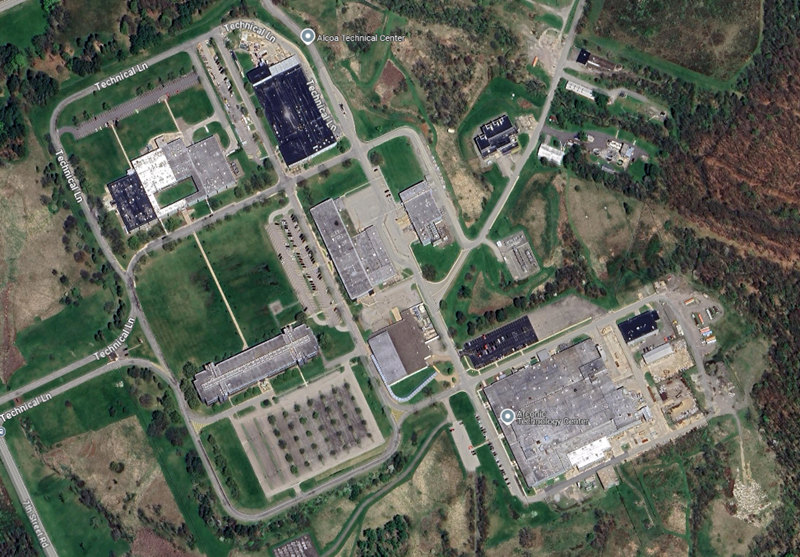
But, as a result of that decline, the state has a host of brownfield industrial sites that can be revived for data center use. These often have ready-made transmission infrastructure with available power, alongside water infrastructure for cooling. Multiple projects are looking to redevelop numerous sites around the state, including coal plants, steel mills, manufacturing plants, printing presses, junkyards, golf courses, and even a former psychiatric hospital.

“It is really because of our energy that we’ve been able to attract investment, and it’s become a lifeline for communities across the state that have seen decline in population as a result of decline in steel and coal and other industries,” Anzur notes.
TecFusions’ Farney adds that PA’s brownfield sites are great for companies looking to get capacity online quickly. Her company is redeveloping a former metals manufacturing site outside Pittsburgh, and will be reusing many of the site’s existing buildings.
“Oftentimes, they have available power already. It’s not being utilized, and they can be converted into an AI-ready data center within just a few months, which is not only good for us, but also for our AI tenants who are trying to deploy the latest GPUs and technology.”
As well as AI, Pennsylvania has a claim to being the birthplace of commercial oil roduction. Colonel Edwin L. Drake was the first American to successfully drill for oil, sinking the first well specifically intended to produce oil in Titusville in 1859. Around the same time, Pittsburgh became home to the first plant to refine crude oil into kerosene for use in lighting. The state still produces hundreds of thousands of barrels of crude oil a month and is one of the major producers of natural gas in the US.
As a result, Pennsylvania’s status as an energy state remains strong. It is one of the largest exporters of electricity in the US. The majority of power in the state– around 59 percent – comes from natural gas, with nuclear making up some 30 percent of the mix. Renewable energy comes in at just four percent, according to the EIA, slightly behind coal.
“As the market has moved towards the need for more energy and power, that has made Pennsylvania a much more relevant and attractive market for this investment,” says Matt Smith, chief growth officer of the Allegheny Conference on Community Development, an economic and community development organization focused on Pittsburgh and its surrounding counties. “The data center sector has moved in the direction of the need for power and energy, and that has put the focus on states like Pennsylvania, where there are abundant resources of power generation and energy, particularly natural gas.”
“It’s a state that, under this governor and previous governors, has maintained an all-of-the-above energy strategy,” adds Merle Madrid, principal for public policy at Amazon Web Services. “That diverse generation is a benefit for Pennsylvania.”
Away from the grid, operators including Aligned, TecFusions, and Bitfarms are looking to power at least part of their respective campuses via on-site natural gas generators.
Ben Gagnon, CEO of Bitfarms (currently rebranding to Keel Infrastructure), says he expects PA’s grid capacity to “increase dramatically,” with the grid mix continuing to shift in favor of natural gas. He notes that, in the longer-term, new nuclear capacity could find a home in the state.
Enter Shapiro
It’s easy to question why PA’s large selection of brownfield real estate and ample power weren’t seen as an opportunity in previous years. Even in a boom period, it is only in very recent memory that the state has become a hotspot for development.
Anzur of the PA Chamber says the shift is largely down to a change in policies, spearheaded by state Governor Josh Shapiro. Two of the main roadblocks, previously, he says, were tax and permitting.
“Pennsylvania has just been a nightmare when it comes to our permitting processes, really at all levels of government,” he says. In 2022, Arkansas Governor Asa Hutchinson joked that a new US Steel plant in his state would be up and running before the company would have even gotten its first construction permit in PA.
Times have changed, however. AWS’ Madrid calls Shapiro’s support a “unique differentiator” and says he has been a “leading voice” in attracting new business to the state through his efforts to remove business barriers.
During Shapiro’s time in office, Pennsylvania has stood up the Office of Transformation and Opportunity (OTO). Created by executive order in 2024, OTO aims to bring together different state departments and agencies involved in permitting and development into one central point of contact for businesses to speed up processes.
He also introduced the Streamlining Permits for Economic Expansion and Development (SPEED) Act to enable expedited permitting processes for qualifying businesses. These include permits for air quality, earth disturbance, water, and dam safety. In practice, this means businesses can find their own “qualified professionals” to offer preliminary judgments on their applications, rather than waiting for the Pennsylvania Department of Environmental Protection (DEP) to make a ruling. These experts then report back to the DEP so it can rubber-stamp applications. Alongside this, the Chapter 105 Pilot Program also aims to improve the review process for water obstruction and encroachment permits. The DEP has said it expects these two programs to shorten the typical review timeline by nearly two months.
The SPEED Act now also has ‘deemed approval’ on some permits, meaning if the state doesn’t take action within a set timeframe, that request is authorized automatically.
“That kind of combined leadership has really been a breath of fresh air,” says Madrid. “Governor Shapiro told us he was going to run through the wall with state government to make sure that permitting delays and other regulatory things aren’t unnecessarily burdensome. And we can say he’s done that.”
Smith of the Allegheny Conference also notes that PA has traditionally suffered from a lack of site readiness, with many brownfield sites having potential but requiring work to be made pad-ready. Gov. Shapiro created the PA SITES program to remediate this, offering grants to make various properties around the state ready for development. More than $146 million has been invested across 37 sites to date through the program.
“Five years ago, I would have said permitting reform and site investment were the two biggest impediments,” says Smith. “They have largely been removed as impediments. What’s changed over the last couple of years has been the recognition that we need to compete for business investment: the message to the market is that Pennsylvania is now serious about operating at the speed of business.”
On the tax side, the state has reduced its corporate net income tax rate from 9.99 percent – one of the highest in the country – to 7.49 percent, with the rate set to fall to 4.99 percent by 2031. “We’ve taken care of what used to be a giant red stop sign to companies looking for places to invest and put down roots,” says Anzur.

“Overall, the state is becoming increasingly welcoming to data center development,” DC Byte’s Tadesse adds. “Pennsylvania offers competitive tax incentives for data center developers, including a full sales and use tax exemption for qualifying large-scale projects. Permitting remains largely local, but recent policy changes signal a more supportive and streamlined approach.”
There are other grants and programs that incentivise development, and TecFusions’ Farney tells DCD the state has a “great incentive package compared to others.”
The company’s redevelopment of a former metals manufacturing campus outside Pittsburgh has received an RACP grant, a grant program for redevelopment projects in the state. Iron Mountain is also a recipient of RACP funding.
Despite all the promise and potential of Pennsylvania, it’s not a free-for-all for developers. Governor Shapiro might be pro-data center, but despite all the new business-friendly legislation, he has stated he won’t let new developments impact the energy prices of residents.
During his 2026-2027 budget address, Shapiro said that while PA should play a leading role in the development of AI and data centers, Pennsylvanians have “real concerns about these data centers and the impact they could have on our communities, our utility bills, and our environment.”
He has put forward proposals, including a requirement that operators bring their own power for new projects, or fully fund new generation capacity. As part of the Governor’s Responsible Infrastructure Development (GRID) standards, he intends to introduce “strict” water conservation protections, commitments to hire local labour, and engage with local communities.
Opposition from residents in many communities – and data center moratoria from local officials in others – suggests not every corner of the state is as welcoming, and may indicate stumbling blocks ahead for developers and operators. And more roadblocks could be coming.
In February, Pennsylvania Senator Katie Muth said she would be looking to introduce legislation that would bring in a three-year moratorium on hyperscale data center development.
The move, she said, would “protect local communities from corporate exploitation,” but it’s unclear if such a bill would pass. Among her concerns, Muth pointed to the impact of new developments on residential energy bills, as well as the environmental impact of new diesel generators and gas plants.
Boom or bust?
Bitfarms’ CEO Gagnon thinks Pennsylvania could be a key player in the AI realm going forward.
“Pennsylvania has a lot of the same dynamics as Texas, being a huge energy state with massive energy resources,” he says. “And you have the benefit of being in a much cooler climate, and that proximity to the East Coast major metropolitan areas.”
He notes that during the recent AI boom, power “has been given priority” over location, but that isn’t a trend that we should expect to play out in perpetuity.
“For the vast majority of demand in the future, which is going to be inference, location matters a tremendous amount,” Gagnon says. “I think Texas is going to be really just for training, and areas like Pennsylvania are really going to be focused on inference.”
TierPoint’s Schuett says the company’s footprint in Pennsylvania means it is well-placed for enterprise AI growth in the coming years, despite its traditional focus on enterprise colocation.
“Our ability to be an Edge market and serve kind of that mid-scale range – from the hundreds of kilowatts to 20MW at the most – is going to be where the demand is coming from,” he says.
But, just as with the wider AI boom playing out across the US and globally, there are fears of a bubble and concerns that some of the projects will never get built.
“Project delivery in Pennsylvania is tenant-driven, with most large-scale developments moving forward only after securing anchor leases,” warns DC Byte’s Tadesse. “This suggests that only a subset of announced projects will reach fruition, primarily backed by
hyperscalers and AI training-focused neocloud operators.”
DatacenterHawk’s Myer notes some of the companies that have filed for, or announced projects in PA, are not traditionally involved in data centers, and will need to build experienced teams and/or find development partners to get capacity online. He also believes there will likely be projects that won’t ever be completed.
Myer’s view is that Pennsylvania will never rival Virginia or Texas, but will still be a “sizeable market with a chunk of capacity,” and continue to grow as the corridors between major markets such as Virginia and Columbus fill out.
“We have all of the ingredients that make data center investments successful,” concludes Smith of the Allegheny Conference. “We have energy assets. We have industrial sites that are already connected to that energy infrastructure. And we have a welcoming political and policy structure in this state and region for this kind of investment. And we welcome it.”
The birthplace of AI and the US oil industry seems ready to shake off its Rust Belt title and play a starring role in the race to develop AI infrastructure.
More in Construction & Site Selection




Read the orginal article: https://www.datacenterdynamics.com/en/analysis/shaking-off-the-rust-pennsylvanias-data-center-rise/