

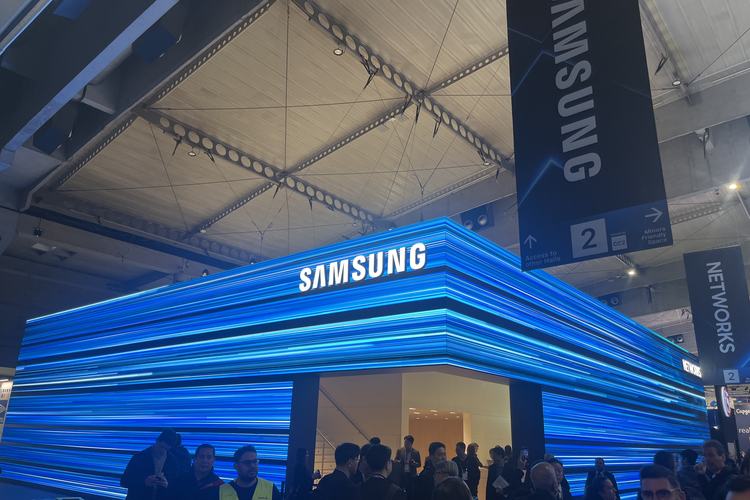
Samsung Networks has secured a contract to provide its Open RAN 5G radios to Japanese telco Rakuten Mobile.
The announcement was one of many made by the Korean vendor during this week’s Mobile World Congress (MWC) event in Barcelona, Spain, as the company also announced separate virtualized RAN (vRAN) collaborations with Nvidia and Vodafone.

Rakuten Open RAN
Samsung’s deal with Rakuten will see the company support the carrier’s nationwide mobile network rollout across Japan.
The company’s 5G kit will enable Rakuten Mobile’s expansion of its fully virtualized, cloud-native Open RAN network, delivering enhanced mobile connectivity.
A firm date for commercial deployment hasn’t been confirmed, though Samsung expects to begin this later in the year following extensive testing and validation of the technology.
Samsung noted that its Open RAN radios will be seamlessly integrated in Rakuten Mobile’s network. The company will provide a full suite of its Open RAN compliant radios, including low-band (700MHz) and mid-band (1.7GHz) solutions, plus Massive MIMO radios supporting the 3.8GHz band.
According to Samsung, the lightweight radios can be easily mounted on buildings and poles, enabling seamless installation and capacity enhancements in dense urban environments.
“This underscores Samsung’s successful entry into a new customer partnership and further solidifies our Open RAN leadership. We expect to bolster our joint efforts with Rakuten Mobile to make greater strides on the global stage by embracing AI and openness,” said Angelo Jeongho Park, EVP and head of global sales & marketing, networks business at Samsung Electronics.
Both companies have been strong advocates of Open RAN, a technology that promotes more open, interoperable networks and diverse supply chains.
Samsung, Vodafone test out latest vRAN chipset
Sticking with the theme of Open RAN, Samsung also announced today (March 3) that it has worked with Vodafone to test out its latest vRAN chipset.
The vendor carried out a phone call using the vendor’s vRAN solution and Intel Xeon 6 SoC (system-on-chip). Samsung claims the call is an industry first in Europe.
According to Samsung, the test call was made on the Intel Xeon 6 SoC optimized for vRAN software capable of supporting intensive workloads, AI applications, and services across 2G, 4G, and 5G networks on a single high-performance server.
The benefit of this, Samsung notes, is for a more streamlined configuration for carriers such as Vodafone, meaning there are fewer systems and hardware to manage, thus enabling cost and energy savings.
The duo also worked with Dell Technologies (server) and Wind River, which provided its cloud platform. Samsung said the chipset will be commercially deployed this year.
Samsung has supported Vodafone’s Open RAN deployment across Europe, including the deployment of its first Open RAN test site in Germany last year.
“Vodafone is focused on delivering the best possible customer experience by building a future-ready network,” said Marco Zangani, director of network strategy and architecture, Vodafone.
“The test conducted with Samsung, alongside our implementation of open network architecture, supports this strategy, enabling us to introduce new 5G-Advanced services while enhancing energy efficiency and streamlining operations through automation and AI from the cell site to the Edge of the network and in the core.”
Samsung states that its vRAN offering allows mobile carriers to efficiently manage network resources and apply unused computing capacity to host and run AI and Edge applications directly on their existing telco infrastructure, closer to where the data is generated and used.
“This breakthrough with Vodafone shows how a software, cloud-native approach empowers networks to become more efficient, more adaptable, and ready for what’s next,” added Everth Flores, vice president and head of Samsung Networks Europe.
“By advancing toward more flexible networks, we are not only facilitating immediate AI adoption but also laying the essential groundwork for an AI-native, 6G-ready infrastructure. We are proud to continue our momentum with Vodafone, as we expand and modernize connectivity in markets across Europe.”
Also this week at MWC:
It’s been a busy MWC so far for Samsung, which also announced the successful completion of a multi-cell test at its R&D center with Nvidia.
The test combined Samsung’s virtualized RAN (vRAN) software with Nvidia’s accelerated computing platform. Samsung said the test “validates the performance of this integrated solution in a realistic network environment, marking a key step toward commercial deployment.”
Samsung and Nvidia are also working on ways to enable high-speed connections between the CPU and GPU, by leveraging Samsung’s vRAN and Nvidia’s unified processor that embeds CPU and GPU into a single chipset.






Read the orginal article: https://www.datacenterdynamics.com/en/news/nvidia-pairs-with-several-telcos-to/


