


The town of Harwood, North Dakota, does not often hit the headlines. With a population of 845, it is barely even a town.
But last week, it achieved notoriety as the only place in the US to reject anti-data center legislation put forward alongside the 2026 midterm elections.
As a blue wave swept across America, ushering in Democratic nominees promising to curb digital infrastructure projects in their communities, many townships and counties were also voting on specific legislation to stop data centers in their tracks.
More than 40 anti-data center bills were put forward, and Harwood was the only place to reject one. The new rules for the town would’ve required independent reviews and public hearings to be held on data centers and other large industrial projects, but 75.6 percent of those who voted rejected the change. Admittedly, the 75.6 percent amounted to just 325 people, but the message was clear: we don’t have a problem with data centers.
How Applied Digital wooed the people of Harwood
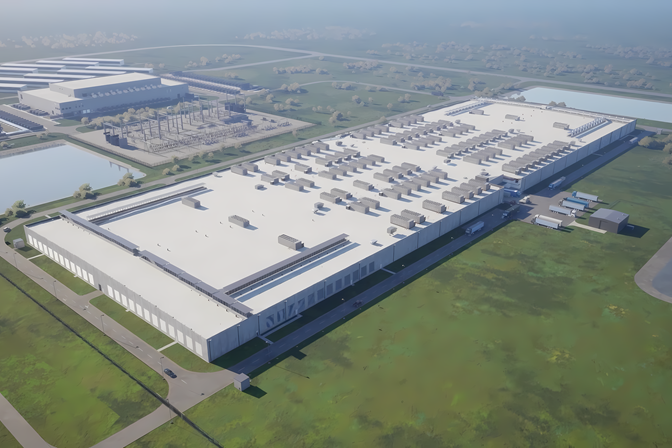
As the only data center company in town, Applied Digital would be forgiven for feeling pretty smug about this outcome. The company is building its Polaris Forge 2 data center campus outside Harwood, one of several sites it is working on in North Dakota. With eventual capacity expected to reach 1GW, last year it revealed it had signed a 15-year deal to provide 200MW to an unnamed investment-grade hyperscaler. The agreement will be worth $5 billion, and the same customer could take the other 800MW available at the campus when it comes online.
In other words, it is precisely the kind of campus that has provoked much ire elsewhere in the US. But speaking to DCD ahead of the elections, Applied Digital CEO Wes Cummins said the company has worked hard to “earn the right” to build in Harwood and other parts of North Dakota.
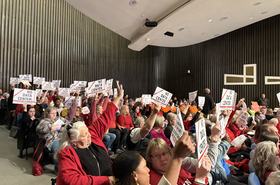
A taxonomy of American data center opposition: The neighbors
Data centers have become a key issue in the US midterm elections
“Real estate is a very localized issue,” Cummins says. “We focus a lot our time on the communities we operate in and trying to be responsive to any problems that arise. The other huge benefit for us is that we’re the only data center company building in North Dakota, and the state has remained supportive. It’s a unique situation to be in because we’re not one of 400 or 500 companies trying to build something in a place like Texas.”
Cummins says this means the company has been able to let its reputation speak for itself, and has largely been able to go about its business in the Peace Garden State in peace.
“What we do in these communities earns us the right to do it in again another community,” he says. “So if we do a great job, we’re going to be welcomed into a new place. If you work with the community the correct way, if you’re transparent, and if you’re attentive to the small things that people often overlook, you’re going to do a good job, and you’re going to create a great reputation for yourself.”
A statement from the company, emailed to DCD following the vote, pointed to the $100 million investment it has made in power grid upgrades in the area, as well as $965,000 in grants awarded to local organizations. While this is a drop in the ocean compared to the $5 billion Applied is set to receive from its hyperscale client, it remains a significant investment for a town the size of Harwood, and speaking to The Washington Post, town mayor Blake Hankey noted the data center would bring in $1.65 million in property tax revenue, six times the town’s total 2024 take.
Nonetheless, these are the kind of benefits that have not cut the mustard in other communities, and Cummins says he does not expect the prevailing anti-data center attitude to change anytime soon.
“It’s not going to go away,” he says. “There’s widespread agreement between members of both parties about the fact that they hate data centers, but I would say it’s a high-level talking point and data centers are being made a scapegoat for a lot of other things. That’s probably not going to change, and it’s not going to make life easier in some locations, but it does mean places like those we are in will continue to shine.”
Applied Digital’s Finland expansion
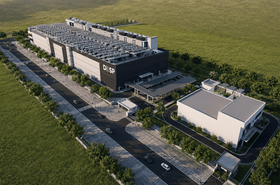
As well as North Dakota, Applied Digital has data centers in Alabama and Louisiana. Founded in 2021 as Applied Blockchain, it has pivoted to AI infrastructure and is now looking to Europe to expand its footprint. In October, the company announced a gigawatt-scale development at an unnamed site in Finland, with initial power availability expected in 2028.
Cummins says 100MW will be available in the first phase. “It’s paired with renewable energy, and is located in an area where a lot of other data centers are being built, so things like fiber are readily available,” he says. “This is the culmination of 18 months of looking at sites in Europe to find the right fit for us, and now we think we have found it.”
As for its reasons for targeting the European market, Cummins says it is part of his plan to “catch six Pokémon,” referring to investment-grade hyperscale customers with deep pockets. “We’ve already caught three of the Pokémon, and I expect us to catch the other three,” he says. “These customers, or potential customers, have asked more and more about what we have available in Europe, so we’ve put together a small European team, and we expect that to grow.”

Applied Digital has not disclosed the names of all the Pokémon already in its Pokédex, but AI cloud CoreWeave is a known customer in the US.
The company will be using the same design process it has rolled out at its sites across America for the Finland data center, and Cummins says this is to ensure maximum flexibility so it can cater for the evolving needs of the AI market.
“We have designed our facilities with very large data hall footprints versus the amount of power we’re using, because it’s high power density,” he says. “That might sound a little counterintuitive because you can look through the roadmaps of the chip companies and it just looks like power densities are going higher.
“But I do think that there’s a possibility that we could see power densities go lower at some point in the future. So we build a very large format to be able to handle that, and if power densities go back to 10kW a rack, we have floor space for it.”
The data center will offer 100 percent liquid cooling coverage, with 80 percent air cooling availability. “The idea is to provide maximum flexibility for the future,” Cummins says. “We’re hearing a lot of talk from our customers about needing more air cooling in the future for specific types of inference deployments, so I think we’ll be happy with the design choices we’ve made.”




Read the orginal article: https://www.datacenterdynamics.com/en/analysis/data-center-harwood-north-dakota-applied-digital-us-midterm-elections/


