

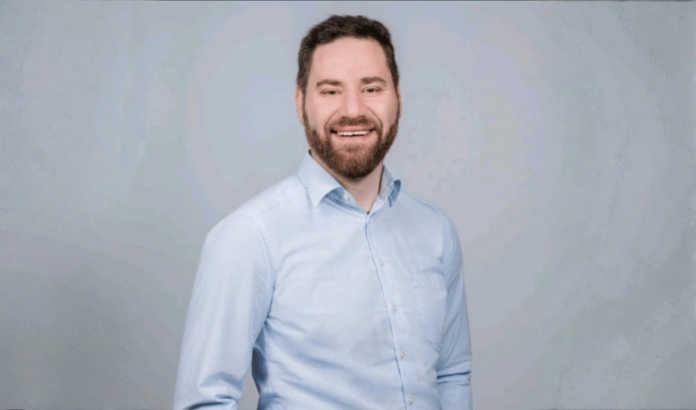
Munich-based AgriTech startup Greenda, founded in 2024, is building an AI-powered crop advisory platform aimed at helping small and medium-sized farms detect and manage pests faster, while giving cooperative technicians a clearer overview of what is happening across hundreds of plots.
For many farmers, the problem is not a lack of knowledge. It is timing, access, and coordination. Pest outbreaks can develop quickly between site visits, while local expertise is often spread across WhatsApp threads, paper notes, phone calls, and the memory of individual advisors.
Greenda aims to bring that scattered field intelligence into one structured system, combining AI-assisted photo analysis with human agronomist review.
In this interview, CEO Chadi Nemr explains why the company is focusing on the space between farmers and agronomists, how the platform works in practice, and why he believes the future of AI in agriculture depends on extending human expertise rather than replacing it.
What does Greenda AI do, and what problem are you solving for farmers?
“Greenda is a crop advisory platform focused on pest detection and management for small and medium farms, built for two users who are both underserved: the farmer in the field, and the agronomist or cooperative technician responsible for advising hundreds of them.
“The farmer’s problem is access. 99% of farms are small, under 5 hectares, yet agritech has been built almost exclusively for large operations. Small farmers are left relying on WhatsApp messages and paper notes, waiting days for an advisor to visit. By the time they get an answer, the window to act has often passed.
“The technician’s problem is scale. A cooperative technician can cover hundreds of farms but realistically visits each plot only every 10 days or so. Pests develop in between. Damage accumulates before anyone sees it. And when that technician eventually leaves, years of field knowledge walk out the door with them.
“Greenda addresses both: farmers can send a photo from the field and receive a validated diagnosis and treatment recommendation in minutes. And technicians get a live picture of what’s happening across all their plots, aggregated, mapped, actionable, without needing to physically be there.”
Farmers already have decades of experience, trusted local advisors, and established networks. What does Greenda offer that those relationships cannot?
“For farmers the issues are speed, availability, and independence. Their technician manages 300 other plots and may not respond in time. With Greenda, they send a photo immediately and get a qualified response, without waiting, and without advice shaped by what a distributor happens to sell. Our agronomists have no product affiliation. The recommendation is based on what’s right for the crop.
“For technicians, the value is different. It’s not about replacing their judgment, it’s about giving them eyes everywhere. One technician cannot physically visit 300 plots every few days. Greenda turns their farmers into a distributed detection network: farmers submit photos, and the technician sees aggregated pest pressure across their entire territory in real time. They can prioritise where to go, which plots need urgent attention, and where they can safely defer a visit. Our research, 26+ interviews across cooperatives, showed this as the #1 pain point: the inability to scale monitoring across all farmers and plots.
“And for both: the institutional memory problem. Today, field knowledge lives in people’s heads, WhatsApp threads, and paper notebooks. When a technician retires or moves on, years of data about which plots are vulnerable, what was treated, what worked, it’s gone. Greenda keeps every detection, photo, recommendation, and treatment in one shared record.”
Can you walk us through what the first experience looks like for a farmer using Greenda?
“For a farmer, it starts with the Greenda mobile app. They open it, take a photo of an affected plant, add a short note, and within seconds receive an AI-generated diagnosis. One of our in-house agronomists then reviews the case and follows up with a clear, actionable treatment recommendation. The goal is for the first interaction to feel like getting real help, not going through a registration flow. And soon, farmers will be able to trigger the same flow directly from WhatsApp, without downloading anything.
“For a technician, the first meaningful moment is seeing their territory start to populate. As farmers under their cooperative begin submitting reports through the app, the technician gets a live picture of where problems are emerging, by zone, by crop, by severity. Instead of driving blind to their next visit, they can look at the dashboard and immediately know which plots to prioritise. That shift, from reactive to proactive field management, is where the real value clicks for them.”
Many people have started using AI tools such as Gemini or Google Lens to identify plants or pests. How is Greenda’s solution different?
“Those tools will tell you what something might be. They won’t tell you whether to treat, what threshold you’re at, or what to actually apply. And they have no accountability for being right. Greenda’s output is an actionable, expert-validated recommendation, not a pattern match from a general model.
“The AI handles the first-pass diagnosis at speed; a qualified agronomist reviews it and signs off before the recommendation reaches the farmer. That accountability layer is what makes it trustworthy enough to act on.
“For technicians, the difference goes further. General AI tools give individual answers. Greenda gives systemic intelligence: pest pressure trends across zones, early biofix signals, and aggregated field data across hundreds of farms, something no general-purpose tool is designed to provide.”
You talk about combining AI with human agronomists. How does that actually work in practice?
“The AI runs first, it analyses the photo, matches known pest and disease patterns, and returns a diagnosis in seconds. This gives the farmer immediate signal. The agronomist then reviews: if the case is clear-cut and confidence is high, the review is fast. If it’s ambiguous, the agronomist invests more time before the recommendation goes out. From the farmer’s side, this is seamless.
“From the technician’s side, it’s a quality-controlled data stream they can actually trust, not just noise from farmers uploading blurry photos. Every case that comes through the system is validated, timestamped, and geolocated, which means the technician’s overview is built from reliable signal, not guesswork.
“As one of our Greenda agronomists put it during a field session: ‘AI helps identify early signs so farmers can quickly understand what’s going on, but every case is reviewed by a certified agronomist who makes the final decision.’”
Are farmers actually using Greenda on a regular basis, and what have you seen so far?
“We’re in an active scaling phase. Right now, our priority is building a pioneer farmer group – a core set of users who use Greenda consistently throughout the season – while simultaneously running pilots with cooperatives who deploy it across their technician teams.
“What’s clear from our research is that the technician use-case has stronger pull than we initially expected. In the many interviews we conducted across cooperatives, the inability to scale field monitoring was the single most cited pain – more than late detection, more than documentation burden. That tells us the technician is not just a gatekeeper to the farmer, they’re a primary user with their own high-value jobs to be done.”
What has been your biggest learning and biggest struggle since building Greenda?
“Biggest learning is that the technician is the real power user. Early on we thought about this primarily as a farmer product. What our field research showed is that the cooperative technician has the most to gain, they’re the ones stretched across hundreds of plots with no way to scale, and Greenda effectively gives them a distributed sensor network of all their farmers. When a technician sees their territory mapped in real time for the first time, that’s the moment the product clicks.
“Biggest struggle is the multi-stakeholder navigation. A message that lands well with a farmer can create friction with a technician who worries it implies they’re being replaced. We had an agronomist in one of our WhatsApp channels say they were concerned that “AI is going to learn from them and take their jobs.” That kind of tension is real and ongoing, and it means we have to build and communicate with every stakeholder in mind, not just the end user.
“Agriculture also remains one of the least AI-penetrated sectors, despite meaningful theoretical potential. That’s an opportunity, but it also means we’re doing education alongside everything else.”
What does the future look like for AI tools like Greenda and everyday farming practices?
“We’re still very early. Most farmers and technicians today interact with AI the same way people interacted with Google Search in 1999, sporadically and mostly for identification. What’s coming is context-aware, proactive intelligence that works at two levels simultaneously.
“For farmers it’s alerts and guidance before problems become visible, pest pressure forecasts built from temperature accumulation, historical field data, and biofix signals that tell you when to act, not just what you’re looking at.
“For technicians it’s territory-level intelligence that makes it possible to manage 400 plots with the same quality of attention you’d give 40. Zone-level pest maps, early outbreak signals, automated documentation, the kind of systemic visibility that today requires either a lot of staff or a lot of luck.
“The farms that adopt this early will have a meaningful advantage. And Greenda’s ambition is to be the platform that defines what good looks like in that world.”
For someone thinking about starting their own company, especially in a space as complex as AgriTech, what is the most honest thing you would tell them?
“The most honest thing is to be extremely precise about who your user actually is, because in AgriTech the buyer and the user are almost never the same person. The cooperative buys. The technician uses. The farmer benefits. If you optimise for the buyer, you’ll build something that gets purchased and never opened. Go spend time with the person whose daily work you’re changing, not the person signing the contract.
“Second is that complexity is the enemy of adoption. The farmer and the technician you want to reach are pragmatic people managing real risk with thin margins. If your product requires a 20-minute setup or a manual nobody reads, it won’t survive contact with a busy field season. Start with the one problem that has the highest urgency, solve it in the fewest possible steps, and earn the right to add more.”
Read the orginal article: https://www.eu-startups.com/2026/06/from-field-notes-to-field-intelligence-greendas-ai-bet-on-everyday-farming-sponsored/


