

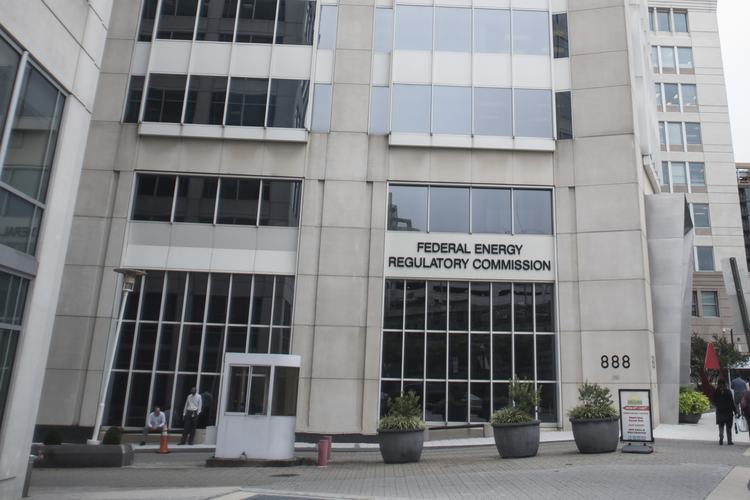
The Federal Energy Regulatory Commission (FERC) has issued orders to all six Regional Transmission Organizations (RTO), directing them to justify or reform the rules governing how data centers and other large energy users connect to the electric grid.

The what and why behind FERC’s rejection of AWS and Talen’s behind-the-meter agreement
The orders were issued under section 206 of the Federal Power Act and apply to PJM Interconnection, the Midcontinent Independent System Operator (MISO), the Southwest Power Pool (SPP), the California Independent System Operator (CAISO), ISO New England, and the New York Independent System Operator (NYISO).
The RTOs will now have 60 days to either justify why their existing tariffs are just and reasonable without provisions tailored to large loads or file tariff changes that address the issues FERC identified.
The orders laid out by FERC cover five categories of reform, including transmission service application and study processes, including alternative transmission technologies; preventing cost shifting and ensuring transparency into transmission costs; accommodating co-location agreements and behind-the-meter generation; new transmission services for flexible large loads; and a process for studying generating facilities that serve co-located large loads.
In addition, grid operators and transmission owners have been directed to submit an informational report within 30 days describing how they intend to ensure adequate generation is available to serve existing and new large loads.
According to FERC, it opted for grid operator-specific orders rather than a single national rule because it better reflects differences in market design, stakeholder composition, geography, and progress already made on large load issues across the six regions.
“We are setting the stage for a resilient, reliable, and forward-thinking grid that empowers communities and safeguards consumers by transforming the way large energy users access the grid,” said FERC Chairman Laura Swett.
“It also is critical that FERC provide certainty for investors by directing the markets to protect existing deals and unlock opportunities for technological advancement and economic expansion.”
The US Department of Energy backed the move, with deputy secretary James Danly stating: “FERC’s announcement today demonstrates Chairman Swett’s commitment to addressing Secretary Wright’s directive and delivering on President Trump’s goal of American energy dominance while maintaining affordability, reliability, and flexibility. Today’s action is an important step toward improving interconnection processes, supporting flexible load and generation arrangements, and accelerating the addition of new generation.
“By increasing transparency and preventing unjust cost shifts onto existing customers, these reforms advance President Trump’s Ratepayer Protection Pledge while ensuring Americans continue to have access to affordable, reliable, and secure electricity.”
The news was also welcomed by environmental groups. Sierra Club senior advisor Jessi Eidbo said: “As large loads like data centers reshape electricity demand, we’re encouraged that FERC took public concerns seriously.
“More than 4,000 Sierra Club members urged FERC to protect households from higher electricity bills and safeguard the health of communities and the environment, and FERC took notice.
“While the details of compliance with these orders will yet require significant fine-tuning, we are energized that there is a clear path forward to adopt responsible large load interconnection policies that safeguard reliability, improve transparency, and embed affordability and ratepayer protections for American households.”


Read the orginal article: https://www.datacenterdynamics.com/en/news/ferc-orders-us-grid-operators-to-justify-or-reform-how-data-centers-connect-to-the-grid/


