The European Union (EU) may be getting closer to removing high-risk vendors from Europe, while the bloc also moved the needle on its high-performance computing (HPC) ambitions in the name of AI sovereignty.
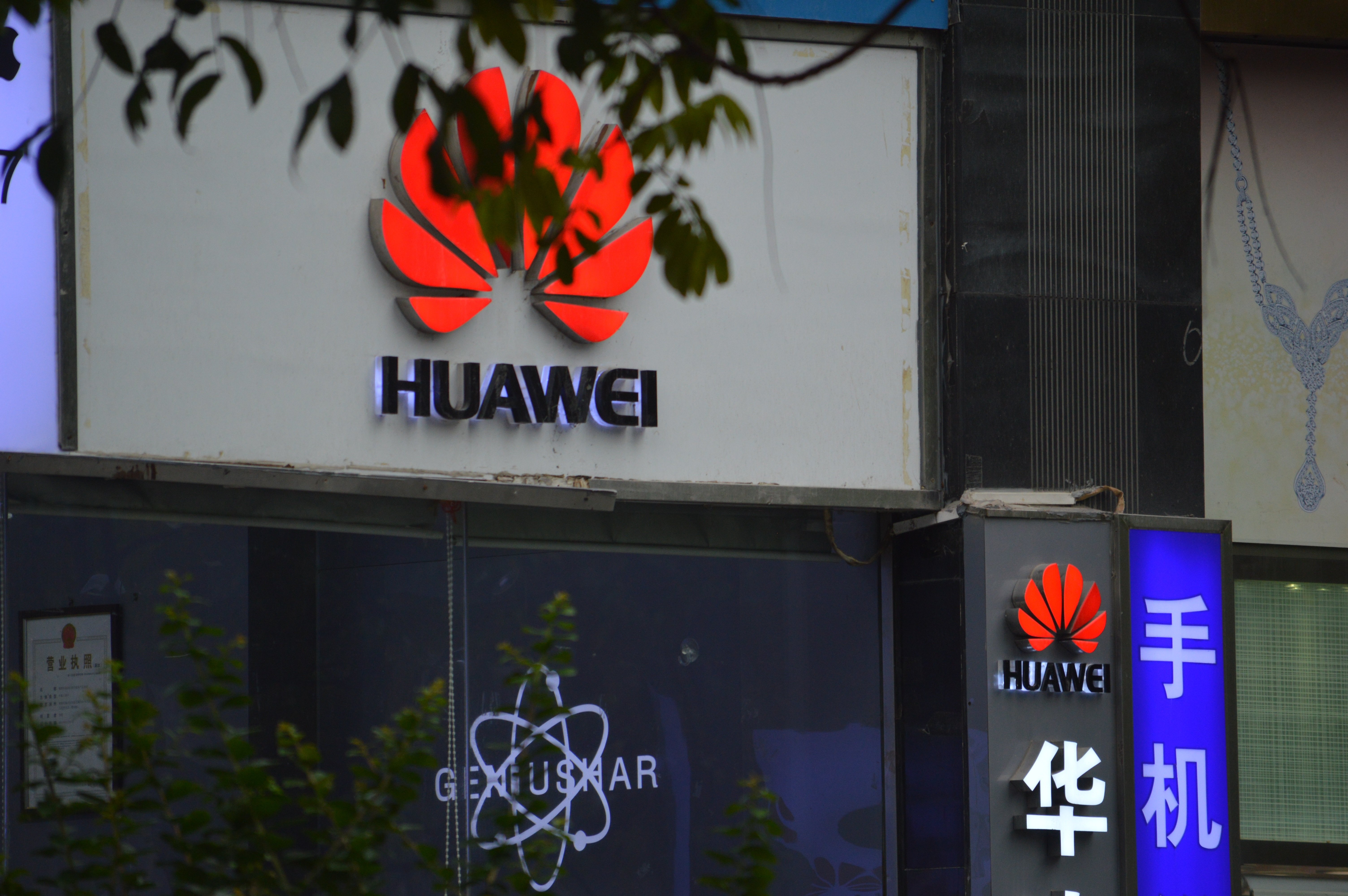
According to leaked revisions of the union’s Cybersecurity Act, the bloc is following in the footsteps of the US and other nations in removing ZTE and Huawei equipment from telecom networks across Europe, alongside security scanners and solar energy systems.
Expected to be presented on Tuesday (January 20), the revisions aim to build on the EU’s 5G Cybersecurity Toolbox, a standard released in 2020 which aimed to reduce the continent’s reliance on Chinese vendors within its infrastructure.
That initiative, labeled a soft touch by some in recent years, was referred to in the draft proposals with the acknowledgement that “fragmented national solutions have proven insufficient to achieve market-wide trust and co-ordination.”
Analyst John Strand recently told SDxCentral that only half of EU nations have fully or partially implemented the 5G Toolbox, with major European telecom players such as Deutsche Telekom (DT) and Vodafone still heavily reliant on Huawei kit.
The researcher elaborated that T-Mobile’s networks are largely Huawei-based, with 100 percent penetration in Austria, Greece, and the Czech Republic, 70 percent in Poland, 58 percent penetration in Germany, and 50 percent in Croatia. In addition, the firm’s T-Systems cloud arm resells Huawei cloud solutions to European clients.
Rumors of the vendor ban have accumulated since November, with European Commission (EC) VP Henna Virkkunen believed to be backing the Toolbox’s enforcement by placing financial sanctions on nations that don’t rip out the offending gear.
Finland and Germany were also recently rumored to be galvanizing efforts to brick out Huawei from their national infrastructures, with the latter looking at DT and other telecom operators to replace the vendor’s existing equipment.
The Finnish Transport and Communications Agency (TRAFICOM), meanwhile, was said to be building on a ban from January 2021 on equipment from the core network deemed high-risk by the EC.
That news followed calls last year from Finnish giant Nokia criticizing Chinese penetration in Europe’s markets, while European vendors are all but barred from Chinese participation. The firm would go on to buy out Chinese joint venture Nokia Shanghai Bell (NSB), giving it a wholly Western-owned stake in the country’s telecom market by year’s end.

China and Nokia remain uneasy bedfellows around the Bell of the ball
What now for the European vendor’s Chinese ambitions?
Europe and HPC
Nokia further rattled the cage by casting doubt on Europe’s AI ambitions last week, with its European government relations lead claiming there was “a disconnect between the ambition and the ability to deliver” in Europe’s plan to become a leading AI continent.
However, the European giant may find further relief on top of the rumored vendor axe with EC support of an AI-driven expansion remit to the European High-Performance Computing Joint Undertaking (EuroHPC JU).
The venture will also focus on the creation of AI gigafactories in Europe, as well as including a dedicated quantum technologies pillar to its remit. Following the Council’s approval, the regulation will enter into force this week, following recent support from the European Investment Bank Group.
The move makes up one part of the Union’s AI Continent Action Plan, revealed last year, which aims to strengthen AI and supercomputing across Europe via a network of AI factories, currently 19 strong, and the creation of AI gigafactories. The latter are projected to house around 100,000 next-generation AI chips, with an estimated €3 to €5 billion ($3.49-$5.81 billion) per gigafactory.
In its public consultation, the EuroHPC JU said its chip provisions were based on Nvidia’s H100 GPUs or equivalent, adding the potential to provide AI compute services based on a combination of different types of AI processors, to cover large AI model training, finetuning, inference, and deployment.
As part of the Quantum Europe Strategy, the EuroHPC JU’s dedicated quantum pillar has also seen ratification, which aims to introduce a national quantum Competence Centre for the continent, offering access to quantum technologies, tools, services, and frameworks.
Nicodemos Damianou, Cyprus deputy minister of research, innovation, and digital policy, said on the EU ratification: “Today, we’ve taken a bold and swift step towards proceeding with establishing AI gigafactories in Europe. AI is one of the most critical technologies of our time, defining our digital future, and investing in the needed infrastructure capacity for AI is essential for boosting Europe’s resilience, competitiveness, and sovereignty. This move demonstrates our commitment to ensuring that Europe leads in this transformative field.”



Read the orginal article: https://www.datacenterdynamics.com/en/news/europe-steps-up-sovereignty-with-ai-ramping-and-rumored-vendor-axing/