

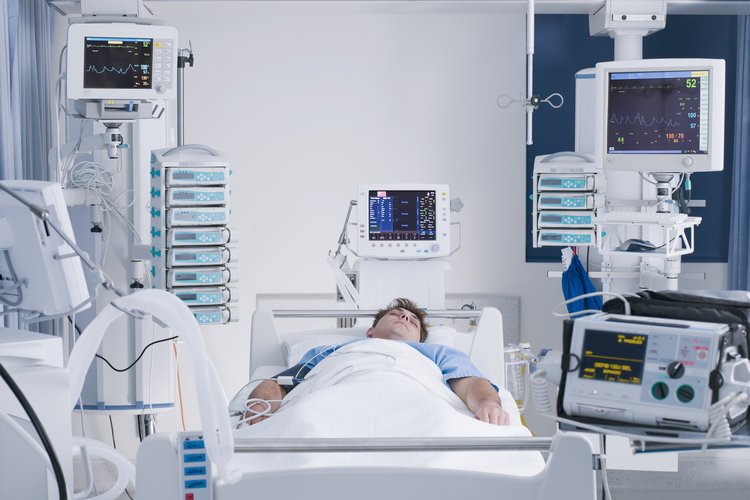
As Ryan Baumann, vice president of sales and power solutions for the Americas at Rehlko, sits at his desk in North America, he reflects on the growing global uncertainty driven by an increase in grid outages affecting the mission-critical operations of data centers.
This challenge is not limited to North America; across Europe – in Ireland, Spain, Portugal, and beyond – the data center industry has experienced severe disruptions, resulting in downtime and compromised security. As a result, the sector increasingly depends on power systems providers like Rehlko to ensure continuous power for servers, cooling systems, and network equipment essential to today’s digital landscape.
In this context, Rehlko reaffirms its commitment to powering the future of data centers with a comprehensive suite of energy solutions, exploring what resilient energy means for the company and its clients amid global uncertainty.
Kohler to Rehlko
Having been part of the Kohler family of businesses for over a century, the transition to Rehlko in late 2024 was far from a simple name change – it was a deeply introspective process. Rebranding from Kohler to Rehlko marked a significant evolution, reaffirming the company’s commitment to advancing resilient energy solutions.
“It really forced us to look inward – an introspection of who we are as a power business and as part of a broader family of businesses,” says Baumann.
“We had to affirm how resilience and innovation connect across different energy solutions via power systems. When we reflect on it, we ask: What did that change do for Kohler Energy? How did we grow into Rehlko? We recognized the need to modernize and become a forward-looking, sustainable company focused on reliable, resilient power. The process helped sharpen our focus and re-center our mission.”
While rebranding a century-old company during the peak of the AI boom might seem less than ideal to some, Rehlko took it in its stride. The surge in AI adoption brought new challenges to the data center industry, particularly with the growing demand for colocation, cloud, and hyperscale compute facilities – all requiring faster and more robust power support, further straining utility grids. For Baumann, it presented another moment for reflection:
“When we looked at that growth and how it changed our trajectory, we knew it directly impacted our KD family of generator sets. We had to ask ourselves how these generators perform under these new, intensified demands?”
Million-dollar downtime
We are more connected to data than at any other point in history, constantly generating and relying on it. In fact, 90 percent of the world’s data was created in the past two years. As the volume of data increases, so too does the financial risk and burden of maintaining it.
Companies we regularly interact with, like global e-commerce leaders and social media giants, face severe financial consequences in the event of an outage. As Baumann puts it:
“What does that look like in environments where even a brief outage can cost millions of dollars? It’s not just the financial hit – it’s also the disruption to how we live and connect. We’ve built our lives around being social, being online. When a platform goes down, people immediately ask: What happened? Why is this offline? Where does the energy come from – and why don’t I have access to my Twitter, or my X feed, right now?”
Powering AI’s next move
AI data centers differ from traditional ones in how they consume power. They place unique, rapidly fluctuating demands on power infrastructure, in turn placing greater strain on the traditional diesel backup generator systems we rely on when things go awry. These systems must be more sophisticated to handle variable or “micro” loading patterns inherent to AI operations.
Baumann stresses the importance of this shift, pointing to the projected growth of AI data centers and the corresponding rise in demand for high-performance, adaptable generators. He describes the in-depth research and development (R&D) efforts at Rehlko that go into designing next-generation power solutions:
“We place a high value on incorporating the voice of the customer early in the design process, assigning dedicated engineering teams focused on new design development, separate from those maintaining existing systems,” says Baumann, adding:
“We aim to design with the future in mind, but ensure that what we build today is also highly serviceable, so our products can be maintained quickly and efficiently when needed.”
What’s in Rehlko’s crystal ball?
As convincing as some may sound when discussing future-proofing, the reality is, no one truly knows what tomorrow holds. So, how do you design a product robust enough to meet the unknown demands ahead?
“Our generators are the last line of defense – they must perform when everything else fails, no matter the duration or the weather conditions,” Baumann explains.
To meet this challenge, Rehlko is focused on building power solutions engineered for resilience. This includes developing generator systems with enclosures specifically designed to withstand harsh and unpredictable environments.
Baumann also reflects on the long-term vision, sharing a personal perspective that shapes the company’s direction:
“Do we want future generations – like my kids – still designing only traditional diesel generators 20 years from now? That’s why we’re investing in more sustainable alternatives like hydrotreated vegetable oil (HVO) and fuel cells today. The future energy landscape is sure to include various power sources, including small modular reactors (SMRs), and who knows – maybe our children will bring forth the means to harness nuclear fusion for consumer use.”
It seems what’s in Rehlko’s future is a move away from a reliance on diesel in backup power systems, as cleaner technologies become more viable and HVO supply chains strengthen.
Come together for conscious care
To support Rehlko’s sustainability mission, Baumann introduces the company’s “Conscious Care” program – a maintenance approach designed to promote more environmentally responsible practices for backup power systems.
Traditionally, generators are loaded and tested monthly, contributing to fuel consumption, emissions, and noise. Conscious Care rethinks that model. With the support of advanced software, the program takes into account modern system design to extend intervals between load tests, allowing for more frequent no-load testing instead.
“Say I’m using a legacy diesel generator, converting it to run on HVO, and pairing it with Conscious Care,” Baumann explains. “That’s when we start to build a powerful sustainability story – not just for one customer, but for the industry as a whole.”
This approach to sustainability ties together a spectrum of backup power technologies – HVO as a renewable fuel, fuel cells designed for varying power requirements, and the Conscious Care program itself.
“Another key offering is our E-frame enclosure package. It brings the entire system together on-site – not just the generator, but also its protective housing, fuel delivery system, and potentially even its controls,” says Baumann, adding:
“The ability to bring all of this together – design, manufacturing, and integration – makes Rehlko a complete power solution provider. Our unique capabilities extend beyond engineering and production to include comprehensive in-house testing. This allows us to validate a first-of-its-kind system, incorporating the full solution: generator, enclosure, circuit breakers, fuel tanks, and emissions aftertreatment, ensuring performance to customer specifications and delivering confidence in our solutions.”
While diesel generators continue to play a vital role in supporting large-scale operations, Rehlko is committed to delivering complete, ready-to-install backup power solutions with a global reach – from North America to Europe and Asia.

Power to the people
It’s one thing to promote a suite of advanced power solutions, but what customers really want to understand is how these investments translate into tangible benefits for their operations. Upgrading infrastructure isn’t a small decision, so it’s important to know how this helps customers reach their goals, rather than meeting Rehlko’s financial targets for the year.
“We’re building products for the future – not just focused on profit, though that’s important – but on making a real impact,” says Baumann. “It’s crucial to connect who we are with the people ultimately relying on the equipment we support – not just the generator users, but everyone counting on what those generators keep running.”
With data centers increasingly evaluated on their environmental performance, through metrics like carbon accounting, facilities have a growing need for equipment that aligns with sustainability targets, eco-conscious design, and traceable supply chains.
To support this, Rehlko has developed tools like “PEP ecopassport,” offering transparency across the product lifecycle. Baumann elaborates:
“We’ve introduced one of the first Environmental Product Declarations (EPDs), known as the PEP ecopassport, to track sustainability throughout our supply chain – from how our vendors source materials like steel and copper, to our design, packaging, and the entire generator lifecycle. Notably, 95 percent of our generators are recyclable at end of life.”
Ultimately, this approach not only benefits the environment – it also provides customers with reliable, regulatory-compliant systems that help reduce their overall carbon footprint.
Baumann also offers a look inside Rehlko’s data center generator lineup. These systems are built for durability and typically require minimal runtime, except in the event of a major outage. Their construction, similar to engines used in locomotives or heavy equipment, means they can often be relocated, repurposed, or resold with plenty of useful life remaining.
Keeping up with the connoisseurs
Beyond the challenge of power outages, the data center industry is also grappling with a declining workforce in skilled trades and technical roles, making it more important than ever to attract and retain expert talent. Addressing this issue starts early, with parents, educators, and industry leaders playing a key role in encouraging young people to explore both college and trade-specific career paths.
Baumann, drawing from personal experience as a father, emphasizes how trades can offer meaningful and impactful careers:
“I don’t have to be a doctor to make a real difference – I can be an expert in design or in the manufacturing of generator systems that power hospitals or data centers, ensuring critical operations never stop. We all can make an impact when we lead with passion and conviction in our roles, no matter our position.”
Rehlko actively partners with schools and universities through its community engagement, promoting skilled trades as viable, rewarding careers. At the same time, the company is evolving with modern workforce expectations – embracing remote work, flexible hours, and digital collaboration tools to reach top talent across time zones.
“I think Covid-19 taught us a lot about the potential of a remote workforce. It showed us how to operate effectively across time zones. That flexibility has made a real difference; I can have someone based in Atlanta or Detroit seamlessly supporting our operations here in Wisconsin. Though I cannot stress enough how important face-to-face work is. The strength built in all of our Rehlko offices around the globe comes from our associates engaging with one another in real time and in person.”
Removing invisible boundaries
According to Baumann, Rehlko’s success in maintaining a healthy workforce stems from its people-first culture – one that values not just systems, but the people behind them.
“Through our community engagement, we bring together people from all walks of life, meeting them where they are and tapping into what really sparks a fire in them. When people feel seen, valued, and comfortable being their authentic selves, that’s when they’re able to contribute their best.”
Rehlko also emphasizes structured development planning to help extend employee tenure, with Baumann describing a typical three-year growth framework, as he calls it: a year to learn, a year to earn, and a third year to explore where you want to go next.
Reflecting on his own 30-year journey at Rehlko, beginning in engineering and shifting to sales thanks to a mentor who recognized untapped potential, Baumann expresses that this experience shaped a core belief: a person’s degree doesn’t define their destiny.
“If you have the desire to learn and grow, you have a natural propensity to challenge yourself. It doesn’t matter what your schooling was – we have to help drive one another to our fullest potential.”
So much more to come
Looking ahead, Baumann shares what’s on the horizon for Rehlko in the coming year – starting with the launch of its next-generation generator sets, marking a major step forward in power node resiliency with models increasing from 2MW to 4MW. At the same time, the company is scaling its fuel cell offerings, moving from 100kW systems toward the megawatt range – an important opportunity for sustainable growth for both Rehlko and its customers.
“For our diesel systems, we’re focused on increasing efficiency and making them more future-ready and environmentally responsible,” says Baumann. “There’s a lot of press – both good and bad – but often the negative comes from a lack of understanding about how these systems function and support critical infrastructure.”
He concludes with a sentiment that underscores Rehlko’s values: “At the end of the day, it’s about individuals working independently, but coming together as a community, and that community makes a real difference. The real question is: how do we help communities see these developments as opportunities and engage with them in a meaningful way?”
For more information, please visit rehlko.com.
More from Rehlko
Sponsored
Driving energy resilience: Rehlko’s commitment to sustainable power solutions for data centers
As global data center demand surges, Rehlko is leading the way in innovative backup power solutions that prioritize reliability, resiliency, and environmental responsibility

Sponsored
Bridging the gap: The role of EPDs in advancing data center sustainability
How environmental product declarations (EPDs) are transforming data centers’ sustainability efforts by bringing transparency and accountability to Scope 3 emissions
Sponsored
WBPS’s partner in power, Kohler Energy, announces rebrand
Kohler Energy announces its rebrand to Rehlko, serving to highlight an exciting new chapter for the company
Read the orginal article: https://www.datacenterdynamics.com/en/marketwatch/scrolling-to-survival-the-power-behind-modern-life/


