

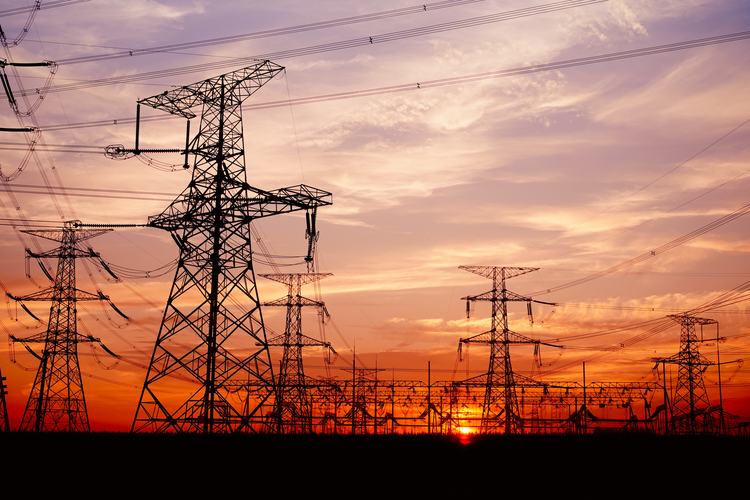
Everybody trusts the grid. You go home, you flip the light switch, and the lights come on. But behind the infrastructure that’s taken for granted, maintenance and capacity conversations are taking place to ensure everyone stays connected in an overwhelmingly digital world.
In a recent DCD>Broadcast, DCD’s Stephen Worn spoke with Dave Bosco, SVP, commercial and strategy at PROPWR and Jose Farrona, senior solutions engineer EMEA at Prime Data Centers, about why facilities are turning to full-on-site generation amid the influx of data centers switching over to AI compute.
“We’ve missed a large industrial complex that’s creating new opportunities through AI and digital infrastructure,” Bosco says. “It would have been great if we’d used that time to overhaul the infrastructure – instead we trusted that utilities had it covered.”
Taking control
The COVID-19 pandemic accelerated timelines for remote working, AI, and the Internet of Things (IoT), forcing the world to operate differently. Data centers worked at the center of this new digital demand, leading the way for a new type of future.
“We essentially fast-forwarded seven years because we had to stay connected,” Bosco explains. “Now, the predicament is there is no clear solution for fixing the grid today.”
As we go even more digital, we have entered an unbelievable era – where demand continues to grow and technology continues to evolve. But is there a limit? Will growth hit a cap? Farrona believes we may be close to that point.
“We can’t plan based on the grid alone, we need solutions that let us stay ahead of the curve,” he says. “That’s what we’re trying to do each day: find ways to be in control and make sure our customers keep growing.”
This means the market requires an ecosystem of relationships to advance mission-critical progress. As a power-as-a-service company, PROPWR provides gas generation, plus systems like battery energy storage and purpose-built solutions for facilities such as Prime Data Centers.
First launched in 2017, Prime Data Centers has grown significantly in under a decade, currently committed to securing 7GW of power under development in the next five years.
“These solutions can serve as a bridge and can also provide long-term, permanent behind-the-meter (BTM) power,” Bosco notes. “We’re passionate about power, and there are a lot of interesting dynamics setting the stage.”
With great power, comes a great need for power
There are many moving parts and major players working across the data center ecosystem. Data centers have learned to control everything within their fence, but if they can also find a partner who can help with the highest-risk part of the critical path – that’s valuable.
“Partners need to find others who align with them and have the right mindset to solve these problems,” Bosco says.
For those on the broadcast, owning power assets also means accepting risk. Prime Data Centers for instance deals with lots of customers at once so, in addition to what’s inside the fence, it seeks to understand all the elements involved to manage these risks.
“We want to cooperate, but we also need to talk about the challenges we face when bringing these solutions to customers,” Farrona explains. “We may need to redefine what a data center is, or at least define it better.”
For Farrona, this means installing BTM solutions. Given the many permitting and legal requirements to consider, BTM power may help control what comes next – whether that’s gas, diesel, or fuel cells, for example.
“Once you install BTM, you’re not only in control of your power; you’re also in control of your power plant, which becomes your grid,” he adds. “Companies like PROPWR can help with that. It’s a financial market. We need to understand how money moves in order to scale projects and figure out how to fund them and make sure they are viable.”
Keeping the lights on
Time to power means speed to business, time to operation, and getting the best use from a data center as quickly as possible. Yet, quality also matters, as facilities must also meet a range of regulations.
To keep the lights on, operators can consider a range of power solutions, including battery energy storage systems (BESS), which Farrona says is a “must” even for a substation. He also advocates for understanding scalability and the products available in the market.
“A data center is no longer a closet with a couple of racks and cooling that may or may not work,” he adds. “The whole landscape is changing and we need to understand how different systems fit together, focusing more on AI hyperscaler facilities.”
Indeed, the game is changing. Power generation continues to move from low voltage to medium voltage, with ongoing discussions about bringing it to high voltage too. “Every day is a school day,” says Farrona. “We’re working with different partners to understand the best commercial models. The important thing is the IT, and the power solution needs to turn on the IT at the right price for our customers.”
Data centers are impacted significantly waiting for grid connections, particularly when it comes to cost and technical commitments. This disconnect has led to significant supply chain issues and limited capacity to deliver to customers. Bosco advises sitting down with partners and finding out their challenges and goals.
“We need to show you the balance and ask what matters most,” he explains.
With his partners, Bosco tends to opt for a hybrid model at PROPWR, combining battery and internal-combustion engines so less range anxiety and better peak efficiency are achieved.
“Details matter when designing these systems,” he says. “Customers will always aim higher. So we need to be extremely conservative – under-promise, and over-deliver.”
At Prime Data Centers, a good design doesn’t always guarantee power. Particularly after the massive blackout impacting Spain and Portugal in 2025, Farrona cites the importance of having power plants to stabilize the grid by controlling frequency and voltage – in addition to cooperating with a variety of people, not just those with the facility perspective.
“Those plants didn’t kick in, and it became a nightmare,” he says. “We need everything to work smoothly so operations can continue safely and nothing fails. If there is a minor failure, it needs to be fixed quickly.”
Keeping pace with market changes
Customers approach PROPWR with a preconceived notion that there is one solution for them – turbines for example. These knee-jerk reactions sometimes need to be challenged by supported data, which is why PROPWR looks at a range of BTM solutions.
“Customers shouldn’t care how electricity is generated – they should care that it’s generated reliably, resiliently, efficiently, and with emissions in mind,” Bosco explains. “Instead of sending a collection of equipment to a site, we understand what needs to be there.”
It’s fair to describe the conversation as shifting from power consumer to power provider, particularly as the market becomes more complicated and concerned by efficiency.
“In Europe, every time you develop a project, there’s an environmental impact assessment, looking at how much damage the project may cause to the environment,” Farrona says. “That includes measuring the heat output when an entire data center is running under a critical emissions scenario, with all the generators on.”
Against this backdrop, regulation also becomes a significant consideration. Currently, water usage is the subject of much conversation across Europe, with the European Commission recently proposing rules requiring data centres to disclose how efficiently they use energy and water.
For Bosco, however, regulations present a market opportunity rather than a problem.
“You can lean into technology and spend money to get the cleanest emissions from your equipment,” he explains. “Many people build for the conditions of today and use as little emissions treatment as possible to stay under a threshold. But that caps future growth.”
He adds: “If we know the grid isn’t coming and look at projected power prices over the next three years, I’d bet that in the long term, BTM power can beat the grid. But that will require us to build the leanest, most efficient, greenest solution and think ahead to where the market is going.”
Building transparency and trust
Ultimately, operators need to rethink how to accelerate their business, speed to power, speed to business, and speed to value. What’s clear however is that procuring power is becoming more challenging and so the need to understand sustainable solutions for customers is key.
For PROPWR and Prime Data Centers, that involves looking at how they can support market growth.
“Things need to change. We need to think about the definition of a data center and what mission-critical means, before looking at how everything fits together,” Farrona explains. “Power is no longer about just connecting to a utility. It’s power generation, cooling, and efficiency. If cooling becomes more efficient, you may consume less power, which can reduce your overall impact.”
Customers should be driving the conversation to push the limits of the market to deliver solutions that can reduce electricity bills and open up more opportunities for growth. To achieve this, the industry would benefit from being more open-minded, improving communication, and finding new ways to confront challenges, the experts add.
“People need to set realistic expectations,” Bosco says. “If a project timeline doesn’t pass the sniff test, that’s okay. I don’t want to sign up for something that sets the wrong expectations for either of us. We need to be honest and transparent, and willing to acknowledge that not everything will line up perfectly.”
Speed matters, but taking the time to plan properly is essential. Bosco notes that, with the right partner, a company can build the infrastructure needed to give the customer greater control over their power density, rather than leaving them “at the mercy” of the grid. That’s the real growth opportunity.
Rather than taking the grid for granted in the present, it looks as though taking back control in more ways than one is the solution for the future.
Check out the full DCD>Broadcast here.
For more information on how PROPWR is rethinking the grid, visit propwr.com
More from PROPWR
Sponsored
Is BTM the answer to future AI factories?
Thinking beyond the grid takes time, partnership, and commitment
Sponsored
How rethinking the grid could start with natural gas power solutions
Why natural gas could be a strong solution for data center power generation, and how AI will keep evolving industry expectations

DCD Talks: Powering US data center growth beyond the traditional grid with Dave Bosco, PROPWR
Dave Bosco, SVP Commercial and Strategy at PROPWR talks to DCD’s Zoe Turner about how US data centers are turning to behind-the-meter power as grid constraints intensify
Read the orginal article: https://www.datacenterdynamics.com/en/marketwatch/i-dont-see-the-grid-in-your-future/


