

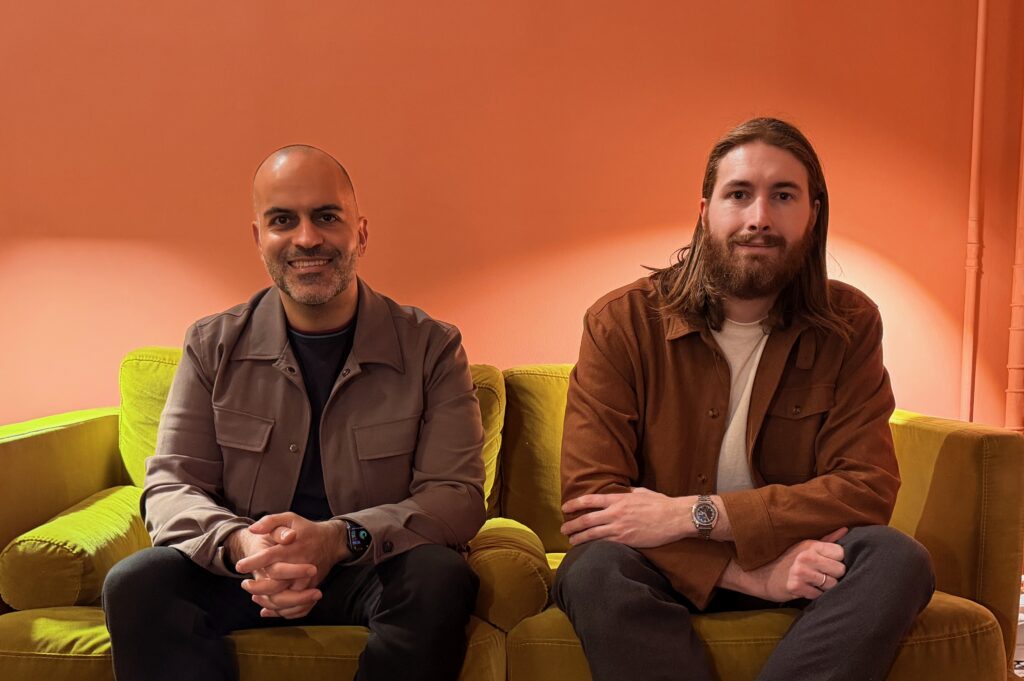
Copenhagen-based energy tech startup os.energy has launched its consumer energy brand Osmund after a year in stealth, backed by a €1 million pre-seed investment from Danish early-stage investor PSV Tech. The company operates as a licensed electricity retailer and uses AI to automate energy market, billing and customer service processes. Osmund offers electricity at cost price without a margin on consumption, alongside a subscription-based product and an optional energy app that provides customers with information about their electricity use and bills. The funding will support the development of the company’s energy platform and new services focused on managing household electricity consumption, including smart control of EV charging, heat pumps and home batteries.
os.energy is an energy technology company founded by Niklas Allamand Dib, former founder of Bodil.energy, and Maziar Zamani, former founding CTO of Rokoko. The company operates Osmund, a licensed Danish electricity retailer that combines energy retail with an AI-driven software platform. Its technology covers areas including electricity market data, settlement, billing, customer service and analysis of household energy consumption. Osmund offers electricity plans based on cost-price and subscription models, as well as an app that provides customers with information about electricity prices, bills and usage. The company is also developing services for managing flexible household consumption, including smart control of electric vehicle charging, heat pumps and home batteries.
“Most consumers have no idea what their electricity actually costs — and nearly everyone pays too much. The power bill is one of the most opaque products people buy every single month, and that opacity can look a lot like a way of hiding the retailer’s margin. Osmund doesn’t just break with the opacity — we break with a business logic where energy extract value from the commodity service of reading energy meters and sending bills,” said Niklas Allamand Dib, co-founder and CEO.
Osmund launches with two products: flagship product Osmund Åben (“Open”), where customers pay exactly what their electricity costs Osmund to deliver to their address — power at cost price, with no margin — and Osmund Rolig (“Calm”), spot-price electricity with a single flat monthly subscription for households that want more predictability.
Across both, the experience is the differentiator: in Osmund’s energy app, customers ask questions in plain language — “why is my bill higher this month?” or “how has my standby consumption developed over the year?” — and get a real answer with a visual explanation, instead of the industry’s opaque PDFs and phone queues. The answers draw on a purpose-built widget library inspired by Apple Health — visual explainers designed specifically for energy, not generic charts.
“Energy retailers have spent years competing on looking cheap instead of being transparent and digitally engaging. We built Osmund so transparency isn’t a marketing buzzword — but the very core of the product. And because we have nothing to hide — no margin on our customers’ consumption — we can confidently let AI models loose in our app and have them explain exactly what’s happening in the power market and on the bill,” said Maziar Zamani, co-founder and CTO.
Power at cost price is Osmund’s promise to its customers — Osmund never adds a margin to consumption itself. The business lies instead in the energy app and the flat subscriptions: with Osmund Rolig, the app is included in the fixed monthly subscription; with Osmund Åben, the app is an optional add-on at DKK 13 per month.
“Our incentive is the opposite of the industry’s. A classic energy retailer earns more the more electricity its customers use. We don’t earn a single øre on consumption — we make a modest income on flat subscriptions and an app designed to help customers understand and reduce their usage. Our interests and our customers’ point in the same direction,” said Niklas Allamand Dib.
Over time, revenue is meant to grow from what the founders call New Energy services: smart control of EVs, heat pumps and home batteries that creates real savings for the customer and flexibility for the grid — so Osmund’s margin keeps coming from value created, instead of value extracted from consumption billed.
Underneath Osmund is os.energy, an AI-native energy platform that built the retailer’s entire operation — from market data and settlement to data science and customer service — as one coherent, automated system. That architecture is what allows an energy retailer to run at low cost and pass the savings on to customers.
“AI made it possible to build and run an energy company with a very small team. A typical electricity retailer doesn’t produce power — it produces bills. They are cost-adding middlemen on top of the market price, with large organizations and heavy staffing costs. We deliver the same service with a handful of people — and a far better digital experience,” said Maziar Zamani.
One reason the energy sector has seen so little innovation, according to the founders, is technical: the industry runs on outdated systems and legacy customer portals that make it hard to activate the enormous amounts of data the power market produces — both for better customer experiences and for the green energy transition.
“Denmark has some of the best energy data in the world — smart meters measuring consumption down to hourly and quarter-hourly resolution, quarter-hourly spot prices, weather data. But at most energy retailers, that data effectively lies dead in systems built to produce invoices, not insight. We built our platform from the ground up to activate it,” said Maziar Zamani.
That, the founders argue, is exactly what the green transition will hinge on. The grid’s most fundamental task is keeping production and consumption in balance. Historically, fossil plants could simply be dialed up and down to balance the grid. But solar and wind fluctuate with the weather — good news for the climate and the CO₂ budget, but fluctuation is not the same as flexibility, and inflexible production creates imbalance when consumption is fixed. If Denmark is to reach its climate targets and preserve the stable supply that homes, businesses and society depend on, the flexibility must come from the consumption side — and that requires rebuilding the technology energy retailers run on from the ground up.
Osmund is already experimenting with intelligent control of EV charging and other home energy appliances, that automatically shifts consumption to when power is cheapest — and greenest. The ambition is to make flexible consumption something every Danish household can take part in and profit from, and an upcoming product, Osmund Balance, is meant to make exactly that easy.
Before Maziar Zamani became an engineer specializing in robotics, automation and AI, he worked as an electrician. In his first post-graduate job, he built commercial robots from scratch, and as CTO of Danish motion capture company Rokoko he led the development of both hardware and software for animation in the gaming and film industries.
“With os.energy I’ve come home to where I started — not with a screwdriver in hand, but with responsibility for the codebase that will power the future of electricity. Without advanced hardware integrations, the grid will never achieve the flexible consumption the green transition requires. Having breathed, or coded life and ‘intelligence’ into robots, I’m excited to do the same to energy. AI, power and energy hardware have to work as one — I’ve created the world’s best job for myself,” said Maziar Zamani.
For Niklas Allamand Dib, the road to the power market ran through climate: from International Business and Politics at Copenhagen Business School and a specialization in the climate crisis at Oxford University, to green-transition work at McKinsey in London and later Danish consultancy ReD Associates.
“Again and again I saw customers opt out of green solutions when the products weren’t engaging and easy to choose. And preferably cheaper, too. At Bodil it was like building a video game: every home we converted away from oil and gas saved the climate enormous amounts of CO₂. Seeing our CO₂ savings map go up and up became an addiction. But the potential of heat pumps, solar and batteries is still limited by a power market where innovation moves too slowly. So Maziar and I went to the core of the problem — with os.energy,” said Niklas Allamand Dib.
He then founded the home decarbonization platform Bodil.energy, which helped thousands of homeowners replace oil and gas boilers with heat pumps — while deploying batteries and solar and building a native energy management system (EMS). Bodil became official energy renovation partner to some of Denmark’s largest banks and utilities, including Nordea, Jyske Bank and Norlys, as well as real estate chain EDC Group.
“As venture investors, we look for experienced teams with domain expertise and a mission to transform entire industries with AI. In Maziar, Niklas and os.energy we found all three. With their first product, Osmund, the team has proven they can add and serve electricity customers at a marginal operating cost of close to zero. That’s the kind of AI-native platform we believe can scale — and set an entirely new price standard in an otherwise locked market,” said Sebastian von Wildenrath Wegmann, Principal Investor at PSV Tech and board member of os.energy.
Read the orginal article: https://arcticstartup.com/os-energy-raises-e1m-for-osmund/


