

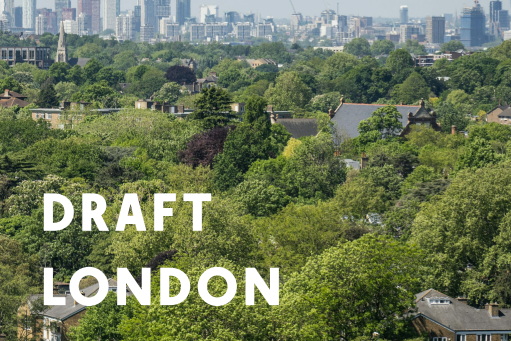
The Greater London Authority says it will focus on courting “clean, green and efficient” data centers whilst considering whether to allow developers to build on the city’s grey belt, according to the latest iteration of the city’s draft development plan.
The London Plan, released every five years, sets out development plans and priorities for the city, and the current plan has been open for consultation from July to October 2026. It will be examined in public next year and adopted in early 2028, according to the Mayor of London’s website.

Dubbed as an ‘industry of the future,’ the draft plan has a whole section on the data center industry and lists it as one of its key performance indicators.
The draft plan’s criteria for what constitutes a “suitable location” for a data center require consideration of a site’s electricity and water supply, whether it will be placed next to an existing cluster, its opportunities for heat recovery, whether the land could instead be used to meet housing, employment, and infrastructure requirements, and its air quality impacts.
But in cases where no suitable locations can be identified, the authorities are directed to identify locations “in the grey belt or on the edge of BLGs (Broad Locations of Growth) in the Green Belt.”
BLG stands for Broad Locations of Growth, a designation introduced in this iteration of the draft plan that refers to areas suitable for mixed-use or industrial developments.
If a site is deemed unsuitable, developers will need to justify their choice of location and demonstrate that they will mitigate the data center’s adverse impacts on electricity, traffic, and more.
In the UK, ‘Green Belt’ is a planning designation that prevents certain kinds of development. They were devised as a way of stopping urban sprawl, and are located around the country’s largest urban areas.
Grey Belt is a new planning designation introduced by the Labour government, which added the term to the National Planning Policy Framework in December 2024. The term refers to Green Belt land that has previously been built on – aka brownfield land – and land that does not “strongly contribute” to certain purposes of the Green Belt, which include checking urban sprawl, preventing towns from merging into one another, and preserving the character of historic towns.
The vagueness of this distinction means that the designation has been subject to criticism by those who see it as too permissive towards industrial development, which includes the construction of data centers.
In June 2026, a proposal to construct a 147MW data center in Slough was approved by the UK government. The proposal had been called in by the then-Secretary of State Steve Reed, who agreed with developer Tritax’s argument that the land – a part-greenfield and part-brownfield 74-acre parcel called Manor Farm – should be considered grey belt rather than Green Belt.
To ‘call in’ a proposal is to take decision-making power from the Planning Inspectorate – which is normally responsible for adjudicating planning appeals – and place it in the hands of the government.
The draft plan also lays out guidance related to cooling systems and the testing of backup generators, and states that the proportion of data center developments achieving a PUE of 1.1 could be listed as an indicator to measure its success.
“London is home to Europe’s largest data center cluster,” reads the draft plan. “They support the growth of important data-driven sectors and AI. But this growth will only deliver real benefits for London if the infrastructure that enables it is clean, efficient and aligned with the Mayor’s climate goals.”
Mayor of London Sadiq Khan has previously stated that his support for data centers in London is not unconditional.
“My ambition is clear, I want London to become the world’s leading city for environmentally friendly, low-emission, high-efficiency data center development, and AI infrastructure so that our capital remains a leading global hub for digital innovation,” said Khan in June as part of a pledge to deal with the impacts of data centers in London.
The full draft plan can be found here.
More in Construction & Site Selection



Read the orginal article: https://www.datacenterdynamics.com/en/news/greater-london-authority-to-prioritize-clean-green-and-efficient-data-centers-in-the-future-could-build-them-on-grey-belt-land/


