

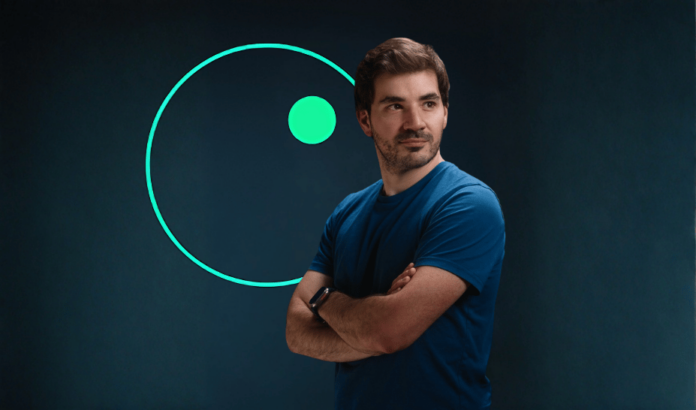
ManaMind, a British autonomous game testing company, has closed a €1.2 million ($1.5 million) pre-Seed round in order to continue their work in replacing repetitive manual Quality Assurance (QA) with autonomous AI agents.
The round was led by SVV (Sure Valley Ventures), with participation from EWOR, Ascension, Syndicate Room, and Heartfelt.
Emil Kostadinov, CEO and Co-Founder of ManaMind, says: “The future of game development should be about human creativity, not repetitive testing. We’re automating the manual, time-consuming parts so studios can focus on building amazing worlds.”
2026 has seen several funding rounds in sectors adjacent to ManaMind’s AI-enabled game QA and autonomous testing focus that help contextualise today’s announcement.
Spain’s Galtea raised €2.7 million to build an AI evaluation platform for testing AI agents, while Finland’s Test of Things secured €1.2 million to automate cybersecurity and compliance testing for connected products.
In the UK, Ralio raised €2.1 million to make payments safer and easier for AI agents, Overmind raised €2.3 million for security and supervision tools for autonomous agents, and Toyo secured €3.6 million to develop secure AI agents for non-technical founders. These UK-based companies are particularly relevant to ManaMind, as they point to domestic investor and founder activity around agentic AI infrastructure.
In gaming-adjacent markets, Germany’s Minit Games raised €1.7 million to advance an AI-driven short-form gaming feed, while UK-based BetHog closed an €8.5 million Series A to scale its AI live-dealer gaming platform. Belgium’s Nexus also raised €3.7 million to bring autonomous agents into core business operations.
Together, these rounds represent over €25 million of capital flowing through adjacent sectors to Manamind.
“We’ve developed our own proprietary visual model specifically for virtual environments because gaming demands that level of precision. Gaming is our launchpad, but our vision is to build the autonomous testing layer for all software and, ultimately, robotics,” adds Emil.
Founded in 2025, ManaMind’s AI agents perceive their environment through audio and video, just like humans do, allowing them to autonomously play and test video games. The company was founded by Emil Kostadinov, an Oxford MBA and EWOR Fellow who experienced the pain of manual QA firsthand as a game tester, and Sabtain Ahmad, who holds a PhD in Machine Learning.
By starting with gaming QA, ManaMind is optimising its proprietary model, HiveMind, and building the foundation for a future where intelligent agents can act autonomously across both digital and physical worlds.
While gaming is ManaMind’s entry market, the founding team’s long-term vision is to become an autonomous testing layer for longer-term applications beyond gaming.
According to the company, QA remains one of the most expensive and time-consuming aspects of modern game development, typically accounting for 10-15% of a game’s total budget.
Brian Kinane, Founding Partner at SVV, adds: “ManaMind is solving a critical pain point in game development at the intersection of AI-in-gaming and Intelligent Automation – two rapidly growing sectors. Emil and Sabtain combine deep technical expertise with firsthand understanding of the QA challenge. Their autonomous agents complete in six hours what takes manual QA teams days – and they catch bugs that human testers miss. That’s the kind of measurable improvement we back.“
As games become larger and more complex, the cost of ensuring a polished player experience is growing exponentially, making the traditional model unsustainable for game studios.
Modern AAA titles now ship with 1000+ hours of content across multiple platforms, yet release windows continue to compress. Live-service games demand weekly updates that must be regression-tested continuously. Meanwhile, social media has amplified the cost of buggy launches for studios – Cyberpunk 2077’s troubled release initially wiped $1 billion from CD Projekt’s market cap in days.
ManaMind’s autonomous AI agents play through games and identify bugs that human testers could miss. The system generates actionable reports, freeing teams to focus on fixing rather than documenting issues. The platform runs continuous testing 24/7 alongside development – not after it.
According to early deployments, full regression cycles are completed in 6 hours rather than days, with 86% of critical bugs caught before shipping.
ManaMind has secured design partnerships with Included Games, a mobile games studio; and Crazy Labs, a hypercasual developer – with plans to expand its technical team, accelerate proprietary model development, and scale across key geographies.
Read the orginal article: https://www.eu-startups.com/2026/04/ai-game-testing-startup-manamind-lands-e1-2-million-to-automate-quality-assurance/


