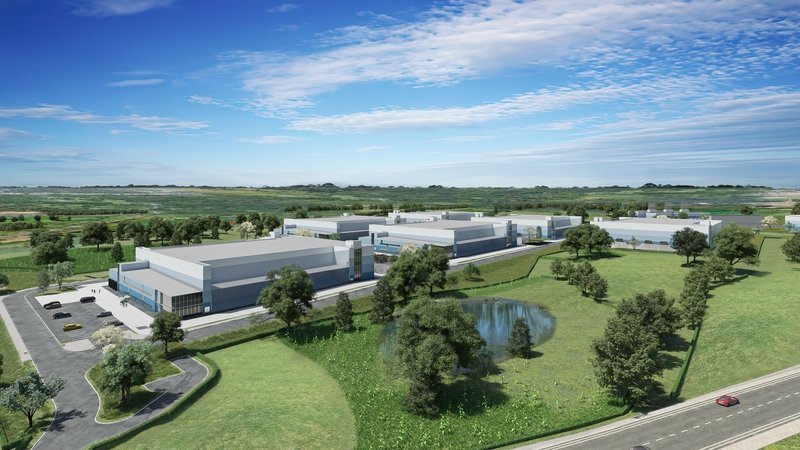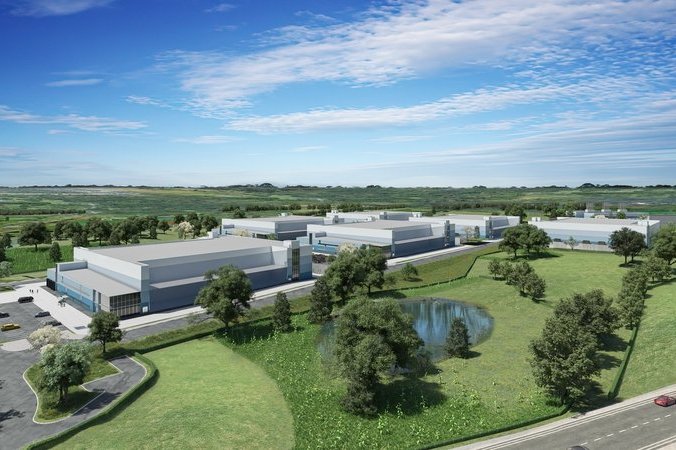
A proposal to build a €1.6 billion ($1.8bn) data center received the go-ahead on Friday, March 13, after surmounting permitting difficulties and legal challenges that dragged on for six years.
Data center developer Art Data Centres received planning permission for the project in 2022, won an appeal against it in 2024, and successfully argued against an application for judicial review in 2025.
The legal challenge was filed by anti-data center activist Colin Doyle, who has spearheaded legal challenges to other Irish data centers in the past. Environmentalist group Friends of the Irish Environment and other advocates were also involved.
It argued that Ireland’s planning appeals board, An Bord Pleanala, had failed to consider a series of legal obligations when evaluating the data center proposal.
The application argued its claim on the basis that there was a Leisler’s Bat species in the area; that An Bord Pleanala, Ireland’s planning appeals board, had failed “to apply and/or consider its mandatory obligation under section 15 of the Climate Action and Low Carbon Development Act 2015,” and that it had failed to take into account certain environmental factors when making its decision.
The applicants claimed that there were several other grounds for judicial review that were not addressed in this initial dismissal, and it was these claims that were dealt with by the Irish High Court on Friday.
Among the additional arguments dismissed was the assertion that Art needed to apply for a derogation licence before obtaining development consent.
A derogation licence is a permit that allows a developer to take actions in an area with bats that would otherwise be illegal.
This marks the end of a lengthy process that began in 2019 when County Clare rezoned a 145-acre land parcel to make it suitable for data center development.
Art’s proposal will see the construction of a 200MW campus with six data halls each offering 200,000 sq ft (18,580 sqm) of space, with an 83MVA off-grid power source and partnerships with wind, solar, and biogas providers. The first phases of development are due to go live by the end of 2028.
Tom McNamara and Vincent Fogarty, the founders of Art, said: “The judgement recognizes that there is a future for environmentally-sensitive data center developments like ours, where there is responsible use of renewable energy, grid-supporting generation technology & heat-recycling for both agri-food and local heating schemes. Such responsible developments, outside the Dublin metropolitan area, have the potential to secure our economic future, providing a future market for offshore wind developers and securing Ireland’s position as a world-renowned centre of excellence in the cloud computing economy.”
Ireland’s data center energy woes have been acute. The percentage of Ireland’s metered energy consumed by data centers currently hovers at around 20 percent, according to a report released by the country’s Central Statistics Office last June.
This has led to fierce backlash against data centers. In July 2025, Ireland’s National Trust appealed against planning permission granted to a data center in County Louth, and in May, bestselling author Sally Rooney and others contested Mayo County Council’s decision to grant permission to Avaio for a new data center.
Maurice Mortell, chairman of advocacy group Digital Infrastructure Ireland, said: “Digital Infrastructure Ireland welcomes the High Court decision today to clear Art Data Centres to proceed to build. Developments such as Art will be important for the national economy and for Ireland’s standing in the world as a center of excellence in cloud computing.”






Read the orginal article: https://www.datacenterdynamics.com/en/news/16bn-irish-data-center-proposed-in-2019-finally-gets-go-ahead/