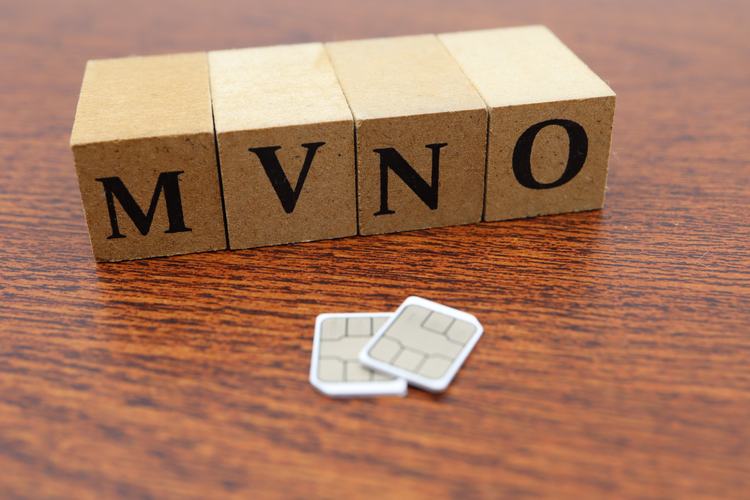
US President Donald Trump, fintech app Revolut, and English football club Millwall do not appear to have much in common, but the trio are among those to have made the leap into the telecoms industry by setting up their own mobile virtual network operators, or MVNOs.

The small nuclear revolution coming for data centers
They join the numerous organizations that have launched MVNOs in markets around the world in recent years, and the trend that looks set to disrupt the industry.
An MVNO doesn’t own or operate its own network infrastructure in the same way that a traditional mobile network operator (MNO) like Verizon or Vodafone does. These MVNOs instead piggyback off of these networks as wholesale providers, offering their own mobile plans.
“MVNOs are particularly good at finding a segment of customers, and that can be a very large segment of customers and building a proposition that kind of fits around those customers,” says telecoms industry analyst James Gray, managing director of Graystone Ltd.
MVNO origins
Though MVNOs were initially a Scandinavian concept, the first to launch was Richard Branson’s Virgin Mobile, which hit the UK market in 1999.
“The UK and [telecoms regulator] Ofcom were smart,” says Allan Rasmussen, chief executive officer at consultancy MVNO Services. “But it all began in Scandinavian countries. There was a company in Scandinavia that wanted to launch this MVNO, but it was a new idea, and the regulators were not keen on allowing it.
“Meanwhile, Ofcom was actually looking into what was happening, and they green-lit the MVNO, so Branson scooped in and launched before anyone else.
Fast-forward to 2025, and GSMA Intelligence estimates that the number of these networks sits at around 2,138 globally.
But the focus and strategy of these MVNOs have also shifted, according to Rasmussen, who has covered this market since the very beginning.
“We saw with the early days of MVNO 1.0 that the discount model coming in, being cheaper, but giving the same offers as mobile network operators were doing,” he says. “But you can’t do that for a long time, because it will kill you. So from here we saw a shift.”
Around 2010, the market transitioned into what Rasmussen describes as an MVNO with a purpose.
“They were targeting specific segments and lifestyles of people, and then upselling what they already had in their business,” he says. “From here, we started to see big brands and retailers coming in, and these guys are not interested in selling SIM cards and airtime.”
The wholesale opportunity
The trend of more MVNOs entering the market is no surprise, says Gray. He used to work for Vodafone, where he helped the telco to pursue MVNOs in the mid2000s. He also later helped launch iD Mobile Ireland, another MVNO.
“The barriers of entry have dropped significantly,” Gray says. “When I was at Vodafone, the capex requirements were quite significant. You’d probably have to spend at least a million pounds to get your MVNO. But a lot of that’s changed now.” Gray didn’t specify costs, but it’s reported that MVNEs (mobile virtual network enabler), which enable MVNOs, can launch for between $100,000–$400,000.
Gray explains that cloud-based billing systems, the broader shift to e-commerce versus traditional retail, have made it easier to become an MVNO.
“You can just do it all online,” he says. “So that’s dropped some of the barriers. I also think MNOs are more open to MVNOs, or have a strategy of bringing in virtual network aggregators, to have the ability to resell the network services.”
Celeb appeal
While the nature of the mobile carrier market is a bit more structured and traditional, in that the main carriers will offer specific plans or airtime, with MVNOs, it’s a bit different.
Earlier this year, President Trump launched Trump Mobile via MVNO Liberty Mobile Wireless (LMW). The service was launched as part of Trump’s plans to release a smartphone in September, but the T1 Mobile has still not been released.

Beyond Trump, YouTuber MrBeast is said to be considering his own MVNO. He will have noted the success of actor Ryan Reynolds, who took a 25 percent investment in MVNO Mint Mobile in 2019. The company was acquired by T-Mobile for $1.3 billion in 2024.
Gray says that it’s likely more big names could enter this market, tapping into their fanbases in the process: “Some of these celebrities have incredible reach, and hundreds of millions of viewers, in the case of MrBeast,” he says.
YouTubers could offer their content via a telecoms plan, Gray says, in the same way customers can get a Netflix subscription via their contract with the main mobile carriers.
Indeed, Rasmussen says that the latest wave of celeb interest in becoming MVNOs is nothing new, pointing out that numerous football clubs in Brazil have their own.
And not everyone is convinced that the celeb factor is a successful model to aspire to.
Peter Adderton is CEO and founder of US-based MobileX, an MVNO that uses AI to determine the adequate data plan for customers.
Adderton knows a thing or two about MVNOs. He created Boost Mobile in 2000, back in Australia, before expanding to New Zealand, Canada, and the US. Boost would eventually be acquired by Sprint (since acquired by T-Mobile).
He points out that Mint existed several years before Reynolds got involved, noting that the company had distribution and a base before the Deadpool star’s involvement.
“[Reynolds] paid money to buy in and then Mint used his personality pros to build its brand,” he argues. “If it had been Reynolds Mobile, or Ryan’s brand, or whatever, it would not have had the same success.”
“Every little helps”
Retailers have been big beneficiaries of the MVNO boom. Supermarket brands including the likes of Sainsbury’s Mobile, Asda Mobile, and Superdrug Mobile have all hit the UK market, but none have had the impact of Tesco Mobile. Launched in 2003, it has close to 6 million mobile customers, and according to Uswitch, is the fourth-largest mobile provider in the UK with a seven percent market share.
“Millions of people shop in Tesco every week, so it’s an easier upsell,” says Gray.
It’s this loyalty that Tesco Mobile is tapping into, notably through its loyalty points membership Clubcard.
“MVNOs offer customers more choice in a market where we are seeing consolidation of the MNOs. Tesco Mobile has a broad appeal, is competitive on price, and offers additional benefits through Clubcard,” explains Alex Franks, group director for telecoms, Tesco Mobile.
Franks says Tesco Mobile aims to utilize its vast footprint to grow its customer base, both in the UK and other markets such as the Republic of Ireland, Czechia, and Slovakia.
“I think there continues to be opportunities for MVNOs even though the market is becoming increasingly crowded, especially with the likes of Revolut and Monzo joining the party,” he says. “We think we have plenty of opportunity to go after, we have well over 20 million Clubcard holders who shop regularly at Tesco, that’s a huge amount of footfall coming to our over 500 phone shops.”

Carriers opportunity
For the MNOs themselves, MVNOs offer an opportunity to play to segments of the market that they don’t necessarily serve via their traditional means. Many are pushing their own low-cost sub-brands.
VodafoneThree, which merged in the UK earlier this year, confirmed it will continue to offer MVNO services as part of its plans to operate a multi-brand mobile strategy, with MVNOs Voxi, Smarty, and Talkmobile complementing its main networks.
Graystone’s Gray says MNOs try to be “all things to all people,” and running their own MVNOs can help with this. Operators are “recognizing that they need specific propositions and branding to target a specific type of customer,” he says. “The MVNOs have always been very good at that, and have also been very good at running a lightweight organization.”
Rasmussen argues that having several low-value brands could end up “watering down their own brand,” but the trend looks set to continue, with reports suggesting that BT’s EE is set to introduce a budget MVNO.
Tesco’s Franks says: “MNOs invest huge amounts of money in their networks and spectrum, so MVNOs are a great way for them to absorb some of these sunk costs and also a great way for MNOs to protect their more ‘premium’ tariffs by having slightly more affordable MVNOs on their networks.”
Crowded field
With as many as 300 MVNOs operating in the US alone, Adderton believes the market may be reaching saturation point.
“When I started Boost, it was around 49 percent market penetration, which means 51 percent of Americans didn’t have a line,” he says. “It was the same in Australia, where they didn’t have one. The opportunity to grow that business expanded really quickly because half of the country didn’t have any phone.”
With penetration is now at around 120 percent, he fears “everyone is running in for the gold rush, but the problem is there’s no gold left in the hills.”
As a result, “carriers are stealing off each other, and where they were quite happy for MVNOs to handle different segments such as the lower value audience, that’s all changed now,” he says.
Indeed, Adderton contends that, despite bullishness from some quarters, the MVNO market is “in the worst state it’s ever been in.” This is because MVNOs are only actually able to grow at the “whim of the carrier.”
He continues: “If the carrier doesn’t want you to grow or wants to slow you down, and your negotiating power is zero. They can raise your prices, they can lower theirs. There are different handles that they can pull to make sure that you stay in your box.”
Popping off
Adderton is pretty gloomy when it comes to the market’s future.
“I think you’re going to see a massive car wreck of MVNOs in the next five years, because carriers are now looking to grow there, where before they let us grab the coins out of the couch,” he says.
Ramussen strikes a more positive note for MVNOs, and says there could be an opportunity to develop specialist data networks for IoT and other B2B use cases. Gray, meanwhile, says he expects some fiber providers to launch their own networks.
At the consumer end of the market, analyst firm CCS Insight predicts a pop star will launch their own MVNO by 2027, with names like Beyoncé and Taylor Swift tipped to break into this segment. For existing MVNOs, hitting the right note in an increasingly crowded field is unlikely to get any easier.
Read the orginal article: https://www.datacenterdynamics.com/en/analysis/mvnos-a-niche-or-a-nuisance/