

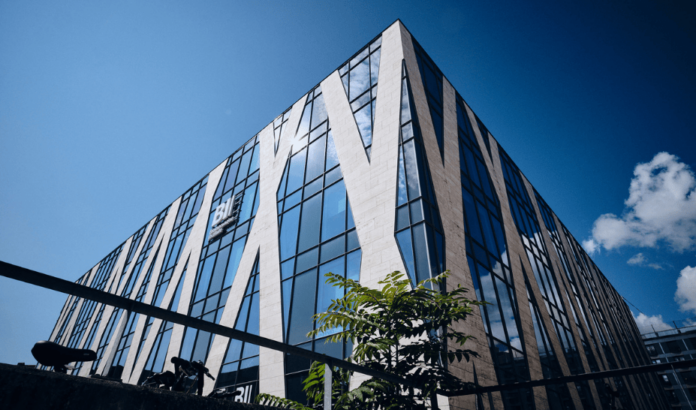
BioInnovation Institute (BII), a Novo Nordisk Foundation Initiative, has provided an additional €1.3 million in follow-on funding to five portfolio startups – Synuca Therapeutics, Gefjon Pharma, MicroMiner, DARERL and Diasense – bringing the total support for each company to €1.8 million.
These five startups are now entering BII’s ‘Venture House 8’ cohort. The funding is aimed at helping the startups accelerate product development, scale operations, and move closer to market deployment across sectors spanning HealthTech, AgriTech, ClimateTech and DeepTech.
This comes one month after BII announced it had secured €25 million in Novo Nordisk Foundation funding, as covered by EU-Startups.
“These five companies embody what BII stands for – turning strong science into solutions that make a real difference for people and society. Through our Venture House program, we look forward to supporting their next steps toward investment and bringing their technologies to market,” shared BII’s Chief Business Officer, Trine Bartholdy with EU-Startups.
Recent activity in 2025–2026 shows comparable albeit larger capital pools being mobilised across Europe that help contextualise today’s investment from BII.
Paris-based Ventech closed a €175 million sixth fund to back applied AI and energy transition startups, while Serena reached a €200 million first close for Fund IV with a similar applied AI and climate focus. London-based Evantic Capital launched a €341 million debut vehicle targeting B2B AI across Europe, the US and Israel. In Germany, Vanagon Ventures secured €20 million for pre-seed deep tech and AI investments, while earlier reports also referenced emerging managers such as May Ventures (Germany) and Masia (Spain) with funds exceeding €30 million and €20 million respectively.
Together, these VC fund announcements represent approximately €780 million in newly raised capital directed towards European technology sectors including AI, DeepTech and energy transition.
None of the cited vehicles are Denmark-based, underscoring BII’s role within their ecosystem to support innovation at earlier, research-translation stages.
Founded in 2018, BII offers life science researcher and entrepreneurs access to a life science community with 3500 square meter of advanced lab and office facilities, business acceleration programmes, commercial support, funding opportunities and access to mentoring and networks.
These five companies within BII’s portfolio had previously received €500k from BII and will now use the new capital injection to advance critical milestones, from lead optimisation in neurodegenerative disease research to scaling vaccine production and industrialising quantum diagnostics tools.
BII is providing the capital as part of its broader mission to translate cutting-edge research into commercially viable solutions with societal impact.
The five startups:
- Synuca Therapeutics, founded in 2025 in Aarhus, is the first company to be funded through BII’s €42 million (320 million DKK) innovation partnership with Lundbeckfonden / Lundbeck Foundation. The startup is developing a disease-modifying therapy for patients suffering from Parkinson’s Disease and associated brain disorders. Built on decades of research in P-type ATPases and neuroscience from Aarhus University, Synuca Therapeutics is targeting the SERCA calcium transporter with small molecules designed to repair neuronal calcium imbalances caused by pathological α-Synuclein brain species. With the new funding, the company plans to accelerate lead optimisation and deepen mechanistic understanding in preparation for further preclinical development.
- Gefjon Pharma, founded in Copenhagen in 2023, is focused on reducing antimicrobial use in livestock production. The company has developed a platform based on its hyper vesiculating outer membrane vesicle (OMV) technology, combined with a proprietary extraction method that enables high-yield, cost-effective production of bio-industrials and therapeutics. Its first product is a broad-protective bacterial E. coli vaccine targeting poultry production, with proof of concept demonstrated both for the vaccine and for an aerosol application method. As E. coli remains a leading cause of mortality and infection in poultry, the company aims to reduce global antimicrobial consumption, limit the development of antimicrobial resistance, and improve animal welfare. The additional funding will support market entry and scale-up of production.
- MicroMiner, founded in Copenhagen, is developing biotechnology solutions to improve the sustainability of electric vehicle batteries. The company focuses on extracting and recycling critical metals from EV battery materials through advanced bioprocessing techniques and partnerships across the battery value chain. Its BioMagnetics™ adsorbents enable customisable metal selectivity using biological mechanisms, while being designed for harsh industrial conditions and containing no live cells, which simplifies integration into existing processes. With the new capital, MicroMiner plans to transition further from laboratory science to deployable industrial technology.
- DARERL, founded in Copenhagen in 2024, provides a SaaS platform for early-stage testing and development of medical devices and wearables. The company generates virtual human models directly from medical images of real individuals, enabling devices to be simulated and tested in anatomically realistic digital environments. By offering detailed inspection inside the human body and access to population-level anatomical variability, DARERL aims to reduce reliance on animal studies, cadavers and extensive bench testing. The additional funding will help accelerate the shift towards simulation-driven development and expand the capabilities of its digital anatomy platform.
- Diasense, founded in Copenhagen in 2024, is industrialising a quantum diamond magnetic microscope designed to deliver real-time diagnostics and process insights for next-generation semiconductor fabrication. Its technology enables contactless chip failure analysis at microscopic resolution and high sensitivity, uncovering failure mechanisms that remain invisible to traditional techniques. The company’s immediate focus is on scaling the platform and preparing it for deployment in high-volume manufacturing environments.
The follow-on funding from BII underlines a continued commitment to nurturing research-driven startups at critical inflection points.
“Venture House provides not only capital, but a platform for disciplined execution and strategic development. The programme enables us to further mature our science, sharpen our development path, and continue building a team capable of translating first-in-class biology into a clinical-stage therapeutic opportunity,” said Synuca Therapeutics in a public statement.
By supporting companies working on neurological therapies, sustainable agriculture, battery recycling, digital medical simulation and semiconductor diagnostics, BII is reinforcing its role within Denmark in bridging the gap between academic discovery and industrial application across multiple high-impact sectors.
Read the orginal article: https://www.eu-startups.com/2026/03/five-danish-startups-enter-biis-venture-house-8-cohort-with-e1-3-million-follow-on-backing/


