

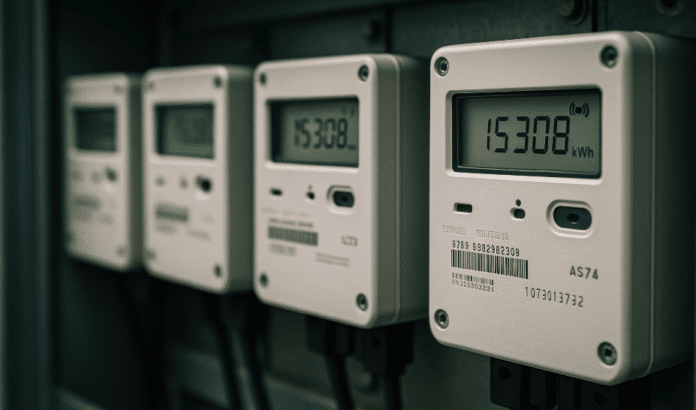
EnergyTech is reshaping global investment priorities because it delivers what capital ultimately seeks: predictable returns, cost advantages, and control over critical infrastructure.
The energy transition is no longer primarily about carbon. It is about price. Emissions reduction increasingly follows where energy becomes cheaper, more predictable, and economically superior. Rising energy prices, supply volatility, and grid constraints have turned energy from a background operating expense into a primary driver of margins, competitiveness, and asset value. What was once grouped under the broad ClimateTech umbrella has evolved into a distinctly economic investment category, driven by profitability rather than policy ambition.
Unlike ClimateTech, which often relied on long-term emissions narratives and regulatory tailwinds, EnergyTech attracts capital by generating tangible financial outcomes today. Investors are backing solutions that lower total cost of ownership, stabilise cash flows, increase asset utilisation, and create defensible infrastructure positions. Emissions reduction is no longer the investment thesis; it is the consequence of systems that are simply cheaper, more efficient, and economically superior.
Geopolitics has accelerated this shift, but it has not created it. The European Union’s plan to end dependence on Russian gas by 2027 underscores a broader realisation: energy independence is a financial imperative. Countries and companies that control their energy infrastructure reduce exposure to price shocks, improve planning certainty, and protect industrial competitiveness. In this environment, EnergyTech is no longer a sustainability play. It is a return-driven infrastructure investment class where capital flows because money is made.
The fundamental shift: From ClimateTech to EnergyTech
The shift from ClimateTech to EnergyTech marks a change not in ambition, but in capital discipline. For years, ClimateTech investments were largely justified by environmental impact and long-term emissions reduction, often with profitability and scalability deferred to the future. Today, capital is moving decisively towards solutions that generate returns, lower operating costs, and strengthen balance sheets. Sustainability is no longer the entry point for investment; financial performance is.
This reprioritisation is visible in market data. Global ClimateTech investment declined by 29% in 2024, falling from €73.5 billion to €52.1 billion, according to PwC (2025), signalling a broader shift away from narratives that rely primarily on environmental intent. EnergyTech, by contrast, attracts capital because its value proposition is economically verifiable. Control over energy infrastructure translates directly into reduced cost volatility, improved asset utilisation, and higher operational resilience.
Technologies such as AI-driven grid optimisation, demand-response platforms, and decentralised storage are backed not because they save emissions first, but because they save money, unlock flexibility revenues, and protect margins. Emissions reduction follows as a consequence of financially sound energy systems, not as their primary justification. This investor-led reframing has positioned EnergyTech as a core infrastructure allocation category, defined by cash flows, resilience, and long-term economic value.
Energy as infrastructure, not ideology
EnergyTech is inherently pragmatic. It provides the digital and operational infrastructure that makes renewable energy scalable and economically viable. Without advanced control systems, load management, and storage solutions, even large volumes of solar and wind generation can create bottlenecks in electricity distribution and strain existing networks. Modernising grid infrastructure, therefore, matters not just for sustainability, but for functional reliability.
According to the International Energy Agency, global investment in electricity grids will need to reach around €690 billion per year by 2030 to support increasing electrification and the integration of variable renewable energy sources, nearly double current expenditure levels and reflective of the scale of infrastructure required.
These investments are not abstract figures. They represent the real cost of deploying technologies that allow grids to balance supply and demand in real time, coordinate distributed generation, and integrate battery storage effectively. By enabling operators to better manage these flows, EnergyTech infrastructure allows communities and companies to generate, store, and manage energy locally, reducing dependence on centralised fossil fuel infrastructure. In this sense, EnergyTech reframes energy not as a commodity, but as a digitally managed infrastructure asset that delivers control, security, and operational resilience.
The sovereignty premium: Energy dependence as national vulnerability
Dependence on energy imports has proven to be a significant risk factor for economic stability and national security. Price volatility, geopolitical leverage, and sudden supply disruptions can destabilise entire economies. According to Eurostat, Germany relied on energy imports for 67% of its total energy consumption in 2024. Across the EU, the average import dependence was 57%, meaning the bloc sourced more than half of its energy from abroad.
Between member states, dependence varied widely. Fourteen countries besides Germany imported more than half of their energy, with Spain at 69% and Italy at 74%, while twelve member states had import shares below 50%.
Countries that maintain control over their grids, storage assets, and local generation benefit from a sovereignty premium: reduced exposure to external shocks, more predictable supply costs, and greater economic resilience. EnergyTech provides practical ways to realise this premium. Local microgrids and intelligent load management systems help balance supply and demand, integrate renewable energy more efficiently, and manage energy flows in real time. These operational improvements not only enhance supply reliability but also translate into tangible economic benefits for businesses and communities. As such, the sovereignty premium has become a central driver of strategic investment in EnergyTech.
Europe’s opportunity: Innovation capacity meets urgent action
Europe combines strong technical expertise, a deep industrial base, and significant innovation capacity. According to the 2025 GreenTech Monitor, Germany alone hosts around 3,000 active GreenTech startups, with approximately one quarter operating in the energy domain. This highlights a substantial domestic ecosystem focused on energy systems, grid intelligence, and renewable infrastructure.
At the same time, Europe faces acute political and economic pressure to reduce external energy dependencies while meeting ambitious climate targets. This combination of innovation capacity and urgency creates a unique strategic window. EnergyTech offers
AI as an accelerator of the EnergyTech revolution
AI is not just a technological tool. It is a strategic enabler in the shift towards energy sovereignty. AI applications, particularly in data centres, drive higher electricity demand, but they also allow for smarter, more efficient use of renewable energy by forecasting production, managing peak loads, and coordinating local microgrids in real time. Nearly 50% of European power came from renewables in 2024, and global renewable generation is expected to grow by 60% by 2030, providing the infrastructure for AI to maximise efficiency and reliability, according to CNBC and the International Energy Agency.
By enabling precise control over energy flows, AI strengthens the operational backbone of locally managed renewable systems. This enhances energy independence, reduces vulnerability to external shocks, and increases resilience for industries and communities alike. In this way, AI directly reinforces the core message of EnergyTech: controlling energy infrastructure is synonymous with controlling economic stability and strategic autonomy.
EnergyTech is no longer a niche trend or a purely “green” investment category. It represents the strategic core of a resilient, economically robust, and sovereign energy future. The shift from ClimateTech ideals to EnergyTech realities makes one thing clear: control over energy infrastructure is now synonymous with control over economic stability and geopolitical independence. Startups and companies developing digital, intelligent, and locally controlled energy systems are not only shaping tomorrow’s energy markets, but also securing long-term sovereignty, resilience, and competitiveness.
Read the orginal article: https://www.eu-startups.com/2026/02/the-energytech-takeover-why-capital-is-moving-where-energy-makes-money/


