

Editor’s Note: This post was created in collaboration with and with financial support from EIT Food.
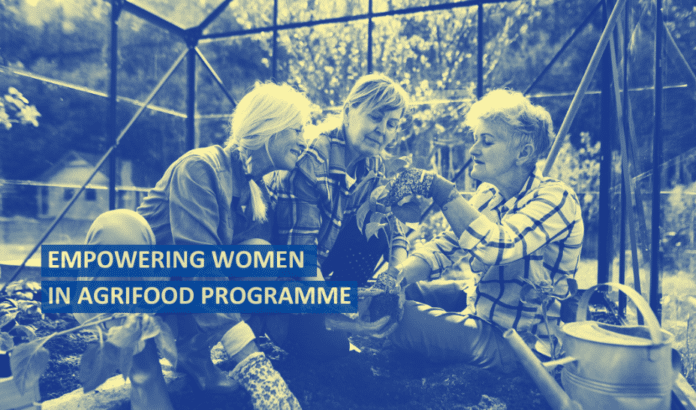
On 20 November 2025 concluded the six-month Empowering Women in Agrifood (EWA) programme concluded with Demo Day in North Macedonia. The event showcased the innovative ideas of women entrepreneurs who received support, training, mentorship, and financial backing to develop their agrifood innovations.
Now in its sixth edition, EWA 2025 is a six-month entrepreneurial programme designed to support aspiring and early-stage female entrepreneurs across 13 countries: Albania, Estonia, Greece, Italy, North Macedonia, Poland, Portugal, Romania, Serbia, Slovenia, Spain, Türkiye, and Ukraine.
Backed by EIT Food and the European Institute of Innovation and Technology (EIT), a body of the European Union, EWA helps participants build the skills, confidence and networks needed to develop and scale their ideas. Although women play a vital role in agriculture and rural innovation, their work often goes underrecognised. The programme helps address this gap by offering practical support, tailored training and access to a strong, long-lasting community.
Earlier in this interview series, we spoke with Anabel Millán Leiva, Co-founder of Cucare Diagnostics, whose science-based approach highlights the role of research and biotechnology in advancing sustainable agriculture. Today, we continue the series with yet another remarkable woman entrepreneur, whose work draws inspiration from natural processes to develop biodegradable alternatives to conventional plastics and materials.
Interview with Nadica Desanova, Co-founder of MIMIC TECH

Can you start by sharing the inspiration behind Mimic Tech and how your journey into developing biomaterials from kombucha-based bacterial cellulose began?
The inspiration behind Mimic Tech is very personal and very organic. We come from a family where kombucha is part of everyday life; it is something we have been brewing and drinking for years. One day, my co-founder Bisera Popovska’s grandmother took the SCOBY out of the jar and left it aside. As it dried, it transformed into something completely unexpected. It became leather-like in texture, flexible, dense, and strong.
That moment sparked our curiosity. What we were seeing was not just a by-product of fermentation, but bacterial cellulose with real material potential. From there, our journey shifted from the kitchen to the lab. We began experimenting, researching, and testing how this natural structure could be developed into a scalable, sustainable biomaterial.
What motivated you to focus on biodegradable alternatives to plastic and leather, and how do you see these materials contributing to a more sustainable and circular food and materials system?
Seeing the gap between sustainability claims and reality. Conventional plastics and animal leather both come with high environmental costs: plastic persists for centuries and releases microplastics, while leather relies on resource-intensive processes and toxic chemicals. At the same time, we realised that many of these materials are used for short-lived products, which makes their impact even harder to justify.
In a circular food and materials economy, waste becomes a resource. We see these biomaterials as a bridge between the food system and material production, closing loops, reducing waste, and enabling industries to move towards truly sustainable, circular solutions.
Mimic Tech develops both bioleather and bioplastic solutions using kombucha-grown bacterial cellulose. Can you walk us through this process and explain what makes your materials different from conventional plastics and other bio-based alternatives?
We grow our materials using kombucha fermentation. During this process, bacteria naturally produce cellulose, forming a strong, flexible sheet. We harvest this sheet and then process it in different ways depending on the final product.
For bioleather, we dry and treat the material to make it soft, durable, and leather-like, without using animals or harmful chemicals. For bioplastics, we process the cellulose into thin films or shapes that can be used for packaging and other everyday products.
What makes our materials different is that they are grown, not made from oil or heavily processed chemicals. Unlike conventional plastics, they are fully bio-based and biodegradable, and they do not leave microplastics behind. Compared to other “bioplastics”, which often still contain synthetic components, our materials come from a natural fermentation process
What were some of the biggest challenges you faced while developing Mimic Tech, particularly when moving from experimentation and research to real-world applications?
In the beginning, one of the main challenges was simply gaining access to a lab. Our work sits between food biotechnology and materials science, so it was not easy to find the right space and equipment to move beyond small experiments and start testing the material properly.
The second major challenge was funding. Turning research into a real product requires money for materials, testing, equipment, and time. At an early stage, we had to rely on small grants, competitions, and a lot of personal effort to keep moving forward.
These challenges forced us to be very resourceful, to experiment with what we had, apply to many programmes, and build step by step. While it slowed us down at times, it also helped us better understand our material and build a strong foundation for bringing Mimic Tech from research into real-world applications.
When did you first hear about the EWA programme, and what motivated you to apply and take part in it?
I first found the EWA programme on F6S and applied almost immediately. What motivated me was how well it matched what we were building, a science-based, sustainable solution in the agrifood and biomaterials space.
EWA stood out because it offered hands-on mentoring, business support, and access to an international network, which is exactly what we needed at that stage. As a woman founder working at the intersection of biotech and materials, it felt like a great opportunity to strengthen our business side and take Mimic Tech closer to real market applications.
How did the mentorship and training during the EWA programme influence the development of Mimic Tech? What would you identify as the three most valuable lessons you took from the programme?
It had a strong impact on the development of Mimic Tech. I was fortunate to work with a great mentor, Despina Popovska Stojanov, who helped me shift from thinking of Mimic Tech purely as a research idea to building it as a real and scalable business.
One of the most valuable lessons was learning how to focus and prioritise, and clearly define our first product and target market, instead of trying to do everything at once. Another key takeaway was the importance of validating our ideas through real customer needs, not assumptions. Finally, the programme helped me improve how we communicate our work, teaching me how to explain complex scientific concepts clearly and compellingly to investors, partners, and customers.
Sustainability is central to Mimic Tech’s mission. How do you ensure that your materials remain biodegradable, microplastic-free and suitable for real-world use across different industries?
Sustainability is built into our material from the very beginning. We work with bacterial cellulose grown through fermentation, which is a natural, pure polymer and not a blend with synthetic plastics. By keeping the material fully bio-based and fossil-free, we ensure it remains biodegradable and does not break down into microplastics.
Throughout development, we are very careful with any processing or finishing steps, choosing methods and additives that do not compromise biodegradability. At the same time, we test and adapt the material depending on its intended use, so it can meet real-world requirements like strength, flexibility, and durability for different industries.
How do you see biomaterials and nature-inspired manufacturing shaping the future of packaging, fashion and food-related industries over the next decade?
Companies like MycoWorks have been a big inspiration for us, showing that bio-grown materials can reach industrial quality, premium performance, and market acceptance. This proves that biomaterials are not just experimental and that they can compete with conventional materials at scale.
In packaging, this will mean truly biodegradable, microplastic-free alternatives replacing single-use plastics. In fashion, we will see a move towards animal-free, low-impact materials that do not rely on toxic processes. In food-related industries, biomaterials will increasingly come from fermentation and side streams, connecting food production with material manufacturing in a circular way.
To conclude, what advice would you offer to other women entrepreneurs who are interested in building science- or engineering-driven startups in the agrifood and sustainability space?
My biggest advice is to never try to do it alone. Support is incredibly important, whether it comes from mentors, programmes like EWA, peers, or your own community. Having people who believe in you, challenge you, and guide you makes a huge difference, especially in science- and engineering-driven startups, where the journey can be long and complex.
I would also say: do not give up. There will be moments when progress feels slow, when funding is difficult, or when your idea is questioned. Persistence matters. If you believe in the problem you are solving and stay committed to learning and improving, those challenges become part of the process rather than the end of the road.
Science-based innovation takes time, but with the right support and resilience, it can lead to meaningful and lasting impact.

More on the programme
As part of EWA 2025, Nadica joined a growing #EWAProgramme community of more than 600 alumnae across Europe. This network continues to support and unlock the potential of early-stage female founders well beyond the duration of the programme.
She also had the opportunity to pitch her idea at the Next Bite Satellite event, Accelerating Innovation Through Women Leadership, held on 4 December in Warsaw. The event brought together nearly 350 innovators, founders, and investors to rethink the future of food and highlight women-led innovation across the agrifood ecosystem.
Registration for EWA 2026 opens soon! Stay tuned and help build a future of food powered by women. More information is available here
About EIT Food
EIT Food is the world’s largest and most dynamic food innovation community. Backed by the European Institute of Innovation and Technology, it works across the food value chain to accelerate innovation and entrepreneurship, equipping changemakers with the skills, tools, and support they need to reshape the future of food.
EIT Food is one of nine innovation communities established by the European Institute of Innovation and Technology (EIT), an independent EU body set up in 2008 to drive innovation and entrepreneurship across Europe.
Learn more at EIT Food or follow EIT Food on X (Twitter), LinkedIn, Facebook, YouTube, and Instagram.
Read the orginal article: https://www.eu-startups.com/2025/12/empowering-women-in-agrifood-2025-interview-with-nadica-desanova-co-founder-of-mimic-tech/


