Vodafone Group has outlined plans to bolster its network resiliency as part of its Vodafone Enhanced Power initiative program.
The program aims to boost resiliency across Vodafone’s infrastructure for emergency and critical online services, public safety, and connectivity for mobile customers across Europe and Africa in the event of a major outage.

Vodafone stated that it will utilize AI technology to boost its network resiliency, as the carrier seeks to predict outages and optimize power usage.
The telco notes that it will accelerate the rollout of AI and backup power to predict, control, and conserve backup time as long as possible.
“Power supplies are designed to best handle an outage depending on its severity and size on local, regional, and national levels. All the solutions also aim to reduce current CO2 emission levels,” stated Vodafone.
Major outages have many causes, including floods, wildfires, earthquakes, or blackout incidents, which can affect local areas, regions, or entire countries.
In fact, the telco points to severe outages, such as the major Iberian outage earlier this year, as key reasons for the launch of its Vodafone Enhanced Power initiative.
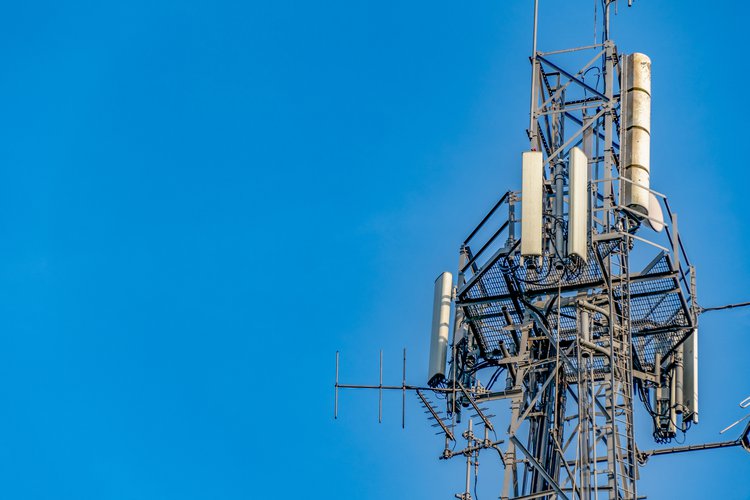
Vodafone states that the main aim of the program is to “further enhance the resilience in more than 10,000 critical mobile infrastructure sites that support emergency services across Europe.”
It is being rolled out throughout Vodafone’s European markets over the next two years, starting with Portugal, which was impacted significantly during the April outage.
Vodafone bolsters network resiliency
Vodafone said it will continue to use its Cells on Wheels (COW) solution for smaller localized outages, which typically impact up to ten mobile sites. These COWs are temporary mobile masts that are set up to provide connectivity.
The carrier adds that it will also continue to provide its Instant Network Emergency Response, which offers free WiFi and phone charging stations during disaster relief efforts.
For the wider regional blackouts, which affect tens or more than a hundred mobile sites, Vodafone will utilize its temporary and backup units, as well as deploy Adaptive Power Backup, which is a new AI-controlled intelligent technique to remotely extend the base station battery backup time, potentially doubling it in certain scenarios.
As part of Vodafone’s plans to beef up its network resilience, the telco will equip its core mobile sites, with battery backups and diesel generators, providing a minimum of 72 hours of backup power or guaranteed refueling support within at least 48 hours.
Vodafone refers to these sites as the “brain” of a mobile network. The telco’s core mobile sites include more than 400 mobile data centers and large backbone sites located across EU countries.
The telco added that it has also ensured that its aggregation mobile sites have a minimum of four hours of backup power for key locations that serve as network junctions to route customer data efficiently.
More than 10,000 radio and backhaul access sites in Europe will be equipped with a minimum of four hours’ backup power. This is the first phase of a wider program to equip many more sites with the latest generation of battery technology, said Vodafone.

AI deployments already
Vodafone added that it has already deployed its AI-driven Adaptive Power Backup service in Greece, and is trialing the technology in Turkey (officially Türkiye), before deploying to additional markets during 2026.
According to Vodafone, the system uses AI to predict outages and optimize power consumption, which enables nearly twice the backup duration and ensures emergency services remain connected three times longer than the industry standard.
“It works by remotely and autonomously shutting down non-essential equipment or putting it into a low-energy state (cell sleep mode) whilst leaving open crucial channels for emergency services, voice calls, and text messages,” explains Vodafone.
Vodafone claims that the use of AI will help mitigate the intensive capital outlay required to deploy additional backup batteries, which would also divert resources for network upgrades.
The program has also extended to Vodafone’s efforts in Africa, through its African business Vodacom.
Vodacom has utilized AI to overcome issues around frequent load-shedding, which is the temporary shutdown of electricity to certain areas to prevent the collapse of the entire power grid.
The company’s AI-on-the-Edge solution prioritizes energy sources intelligently during load-shedding, reducing diesel runtime and ensuring base stations operate on the most cost-effective energy source without compromising network availability.
Early results have so far led to a reduction of ten to 15 percent in the use of diesel, lowered operational costs, and minimized site visits.





Read the orginal article: https://www.datacenterdynamics.com/en/news/vodafone-leverages-ai-to-bolster-resilience-and-power-backup-across-mobile-infrastructure/