

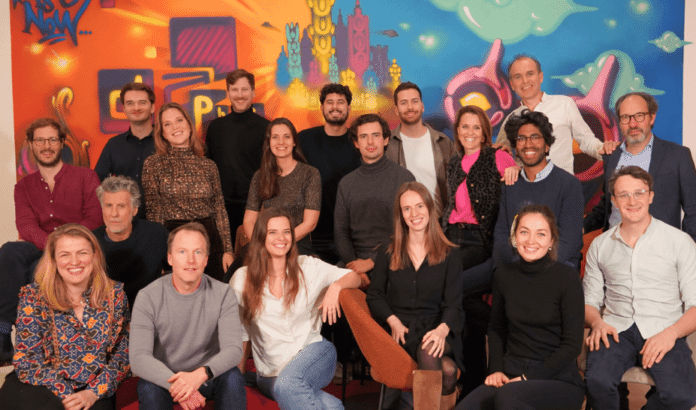
Paris-based VC firm daphni has reached the final closing of its latest fund, daphni Blue, at €260 million. The fund, which exceeded its initial target, is designed to transform Europe’s scientific strength into globally relevant startups tackling environmental and societal challenges.
The final closing was achieved in under nine months from the first, and daphni Blue has already deployed capital into nine early-stage science-based startups. These include OWLO, EverDye, and Karavela, with two additional TechBio investments in the pipeline — one in France and one in the UK.
“In a world where technology is increasingly commoditized and AI is redefining how innovation is built, we’re convinced the strongest long-term value comes from deep scientific breakthroughs. This second and final closing confirms strong investor support for a strategy focused on unlocking the potential of European science (biology, physics, chemistry, mathematics, life sciences) to serve entrepreneurship and address the major societal and environmental challenges of our time,” shared Pierre-Eric Leibovici, co-founder and managing partner of daphni, in a public statement.
Across 2025 and 2026, sector analysis to sustained capital deployment into European DeepTech, science-based and climate-oriented investment strategies, providing context for daphni’s €260 million final close.
In early 2026, Copenhagen-based VC Footprint Fund I announced a €76 million fund targeting around 30 early-stage climate and DeepTech startups across Northern Europe, while Berlin’s b2venture reached a €150 million hard cap for its fifth fund.
At the end of 2025, U2V, a spin-off from Earlybird-X, launched a €60 million vehicle focused specifically on pre-Seed and Seed DeepTech companies emerging from European technical universities, reinforcing the lab-to-market theme also central to daphni Blue. In Southern Europe, Lisbon-based Armilar Venture Partners raised €120 million for its fourth fund to invest in DeepTech and digital transformation startups across Spain, Portugal and the wider region.
Taken together with daphni Blue’s €260 million fund, these announcements represent approximately €666 million in disclosed capital flowing into adjacent DeepTech and science-driven strategies over the 2025–2026 period, highlighting continued institutional appetite for long-horizon, research-intensive innovation in Europe, with France featuring prominently through daphni’s latest fundraise.
“We’re proud to announce the final closing of daphni Blue at €260 million, above our initial target and completed just months after our first closing,” said the daphni team in a public statement. “Our strong conviction is that long-term technological leadership will be built on scientific excellence.”
Founded in 2015, daphni has made a name for itself through early investments in now-unicorns such as Back Market and Swile. But the thesis for daphni Blue signals a shift in strategy. In an environment where software and AI capabilities are increasingly commoditised, the firm is betting on what cannot be easily replicated: deep scientific intellectual property rooted in Europe’s public research system.
The new fund focuses on early-stage investments in ‘scientist-entrepreneurs’ whose startups are based on core research in biology, chemistry, physics, mathematics, and life sciences.
Tickets range from €500k to €10 million, with the potential for follow-ons up to €20 million. Over the fund’s lifecycle, around 40–50 companies are expected to be supported.
“To create sustainable value you need an additional element, which is intellectual property that comes from science,” noted Leibovici. “There’s going to be a brutal return to reality for many of the companies which raised cash and weren’t able to create value and gain market shares.”
daphni is already working with leading French institutions such as INRIA, INSERM, Institut Langevin, and Institut Curie, as well as broader European research ecosystems. Their model blends strong digital infrastructure with an active investor and founder community – an approach they believe is essential for accelerating lab-to-market transitions.
Among the first portfolio companies under the Blue fund are:
OWLO, spun out from Institut Langevin, which is developing real-time, non-invasive, label-free 3D microscopy for fertility and pharmaceutical research.
EverDye, offering an eco-conscious dyeing process using patented green chemistry to reduce environmental impact without needing new machinery.
Karavela, a spinoff from INRIA, building a brain foundation model using functional MRI data to unlock new digital biomarkers and brain–machine interfaces.
Neotis, focused on immunotherapies targeting senescent cells to treat age-related chronic diseases.
Although science-based investing remains niche compared to traditional VC models, daphni sees Europe’s 2.2 million researchers and public research infrastructure as a major advantage. “Europe has the depth to lead this shift,” added the daphni team.
As part of its mission-driven strategy, daphni Blue ties part of its carried interest to ESG performance, aiming to align impact with financial returns. This dual-goal approach reflects growing interest among LPs in both innovation and accountability.
With its latest fund, daphni is positioning itself not only as a backer of the next generation of startups, but also as a bridge between the scientific bench and the entrepreneurial world – and doing so at a scale that gives Europe’s best minds a shot at building globally significant companies.
Read the orginal article: https://www.eu-startups.com/2026/01/from-lab-coats-to-unicorns-french-vc-daphni-blue-closes-e260-million-fund-to-turn-science-into-startups/


