

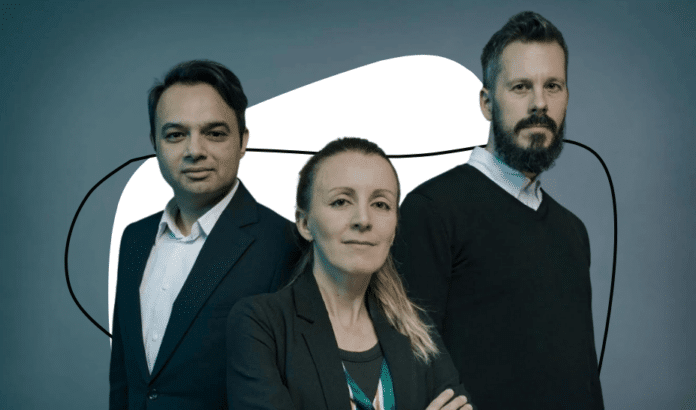
Quakenbrück-based BIOWEG, in partnership with Technische Universität Berlin (TU Berlin), has secured €1.5 million to support the development of its waste-to-value platform tech for water-based Rare Earth Element (REE) recovery.
The funding comes from SPRIND, Germany’s Federal Agency for Disruptive Innovation, as part of the Tech Metal Transformation Challenge; the aim of which is to develop and validate innovative processes for recovering critical metals from complex waste streams.
Dr Prateek Mahalwar, BIOWEG’s co-founder and CEO, said, “The funding from SPRIND will allow us to accelerate the development of a sustainable and bio-based REE recovery platform in collaboration with TU Berlin. It is built on BIOWEG’s expertise of waste stream based fermentation platform and green chemistry, extending the application of capabilities we already use at scale in bacterial cellulose production.”
2025 has shown a steady flow of early-stage capital into bio-based, fermentation and sustainable materials technologies across Europe.
In Denmark, EvodiaBio raised €6 million to scale its yeast-based fermentation platform for producing natural flavours for the beverage industry. Germany also featured in this landscape through Kynda, which secured €3 million in Seed funding to advance fungal protein production using fermentation processes. In the adjacent sustainable materials space, Finland-based Fiberdom raised €3.5 million to further develop plastic-free, wood-fibre-based materials aimed at circular economy applications.
Combined, these 2025 rounds amount to approximately €12.5 million invested into fermentation-driven and bio-based material technologies, providing context for BIOWEG’s €1.5 million funding to develop its waste-to-value platform for REE recovery.
BIOWEG, founded in 2019 by Dr Prateek Mahalwar and Srinivas Karuturi, uses precision fermentation and green chemistry to create high-performance, bio-based and biodegradable ingredients that replace intentionally added microplastics and fossil-derived polymers.
By converting food-industry side streams into high-purity bacterial cellulose and tailoring it into functional materials, BIOWEG supports reformulation in personal care, home care and agriculture.
The fermentation systems that underpin BIOWEG’s bacterial cellulose ingredients for cosmetics and personal care also generate bio-based acids as a secondary output, which is directed into other high-impact applications using secondary fermentation.
The company operates a demonstration site in Quakenbrück, Germany and a formulation, material science and applications lab in Monheim on the Bayer Crop Science campus. BIOWEG’s product families include Micbeads (micro-powders), RheoWeg (rheology control) and AgriWeg (seed and fertiliser coatings).
Professor Juri Rappsilber of TU Berlin adds: “This partnership allows us to bridge the gap between fundamental research within the UniSysCat Cluster of Excellence and industrial-scale application. By leveraging the principles of Green Chemistry, we are combining our world-leading peptide innovation with BIOWEG’s fermentation expertise to create a truly circular solution for Europe’s metals sector.”
Despite REE demand surging in Europe due to an explosion in demand for electric vehicles, wind turbines and consumer electronics, BIOWEG believes the EU faces dangerous supply risks due to geographically-concentrated global production.
Conventional REE recovery processes are highly energy-intensive, rely on solvents, and generate large quantities of toxic waste. These methods are also non-selective, environmentally harmful, and economically unsustainable for widespread circular use in Europe.
BIOWEG has made progress in developing an alternative to the current high-energy, waste-intensive and non-selective recovery platform.
The platform technology combines BIOWEG’s expertise in bioacid production from waste streams for bioleaching with TU Berlin’s peptide-based separation technology using column systems. The process operates in water at ambient temperature, applying green-chemistry bioleaching without the use of solvents or high heat.
The bio-based acids are generated as a secondary output of BIOWEG’s fermentation platform, requiring no additional downstream processing, resulting in a low-energy process with a reduced overall CO₂ footprint.
Alongside its established bacterial cellulose ingredients for cosmetics and personal care, the company applies the same waste-stream platform to additional applications where selective chemistry and low-energy processes can reportedly unlock significantly higher value.
Read the orginal article: https://www.eu-startups.com/2025/12/german-biotech-startup-bioweg-raises-e1-5-million-to-turn-industrial-waste-into-valuable-metals/


